2 526 kr
Skickas inom 10-15 vardagar
2 526 kr
Skickas inom 10-15 vardagar
695 kr
Skickas inom 10-15 vardagar
287 kr
Skickas inom 7-10 vardagar
165 kr
Skickas inom 7-10 vardagar
749 kr
Läs direkt efter köp
Ronald Reagan''s term in office was punctuated by four significant employments of military force: the deployment of Marines to Lebanon; the intervention in Grenada; the air strikes against Libya; and the deployment of naval forces to the Persian Gulf. In the aftermath of each of these military operations, critics questioned the constitutional basis for such unilateral presidential war-making, arguing that Congress alone is empowered to declare war. Debates over whether the President failed to comply with the statutory requirements of the War Powers Resolution further complicated these constitutional disagreements. In The Reagan Wars, David Hall seeks to overcome a key source of confusion in these heated debates—the failure to distinguish between the wisdom of Reagan''s actions and their legality. He demonstrates that the circumstances under which the Constitution permits unilateral presidential war-making were present when President Reagan waged war between 1980 and 1988. Hall first considers the thinking of the Constitution''s Framers on the question of war powers and the subsequent two hundred years of judicial interpretation regarding the proper balance between congressional and presidential authority to make war. In light of this historical background, he then closely examines the facts and the legal circumstances of each of the four "Reagan wars." Hall''s thought-provoking conclusions deserve the attention of anyone interested in the role of the Constitution in U.S. foreign policy-making.
744 kr
Läs direkt efter köp
Ronald Reagan''s term in office was punctuated by four significant employments of military force: the deployment of Marines to Lebanon; the intervention in Grenada; the air strikes against Libya; and the deployment of naval forces to the Persian Gulf. In the aftermath of each of these military operations, critics questioned the constitutional basis for such unilateral presidential war-making, arguing that Congress alone is empowered to declare war. Debates over whether the President failed to comply with the statutory requirements of the War Powers Resolution further complicated these constitutional disagreements. In The Reagan Wars, David Hall seeks to overcome a key source of confusion in these heated debates—the failure to distinguish between the wisdom of Reagan''s actions and their legality. He demonstrates that the circumstances under which the Constitution permits unilateral presidential war-making were present when President Reagan waged war between 1980 and 1988. Hall first considers the thinking of the Constitution''s Framers on the question of war powers and the subsequent two hundred years of judicial interpretation regarding the proper balance between congressional and presidential authority to make war. In light of this historical background, he then closely examines the facts and the legal circumstances of each of the four "Reagan wars." Hall''s thought-provoking conclusions deserve the attention of anyone interested in the role of the Constitution in U.S. foreign policy-making.
302 kr
Lyssna direkt efter köp
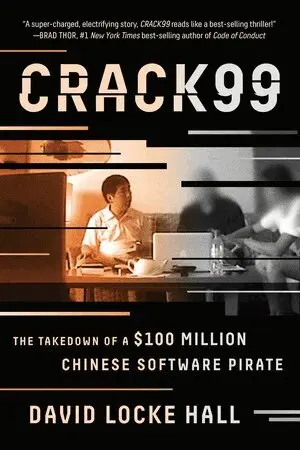
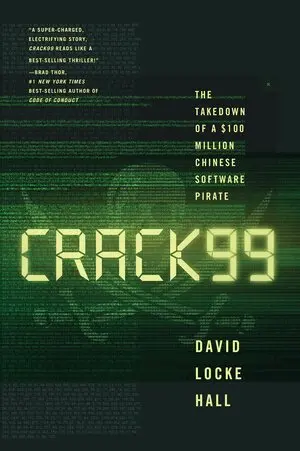
The utterly gripping story of the most outrageous case of cyber piracy prosecuted by the US Department of Justice
A former US Navy intelligence officer, David Locke Hall was a federal prosecutor when a bizarre-sounding website, CRACK99, came to his attention. It looked like Craigslist on acid, but what it sold was anything but amateurish: thousands of high-tech software products used largely by the military, and for mere pennies on the dollar. Want to purchase satellite tracking software? No problem. Aerospace and aviation simulations? No problem. Communications systems designs? No problem. Software for Marine One, the presidential helicopter? No problem. With delivery times and customer service to rival the world’s most successful online retailers, anybody, anywhere―including rogue regimes, terrorists, and countries forbidden from doing business with the United States―had access to these goods for any purpose whatsoever.
But who was behind CRACK99, and where were they? The Justice Department discouraged potentially costly, risky cases like this, preferring the low-hanging fruit that scored points from politicians and the public. But Hall and his colleagues were determined to find the culprit. They bought CRACK99’s products for delivery in the United States, buying more and more to appeal to the budding entrepreneur in the man they identified as Xiang Li. After winning his confidence, they lured him to Saipan―a US commonwealth territory where Hall’s own father had stormed the beaches with the marines during World War II. There they set up an audacious sting that culminated in Xiang Li’s capture and imprisonment. The value of the goods offered by CRACK99? A cool $100 million.
An eye-opening look at cybercrime and its chilling consequences for national security, CRACK99 reads like a caper that resonates with every amazing detail.