
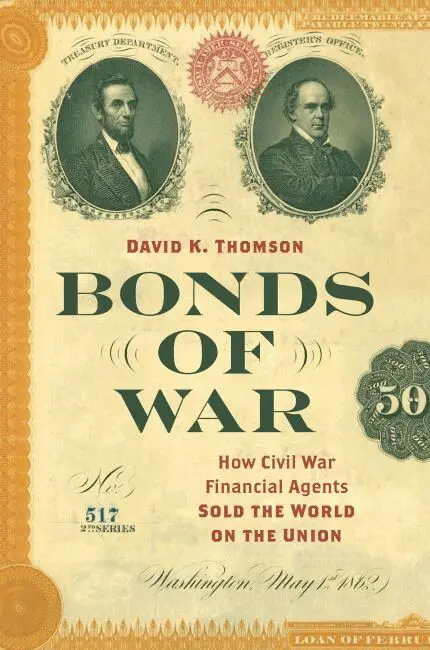
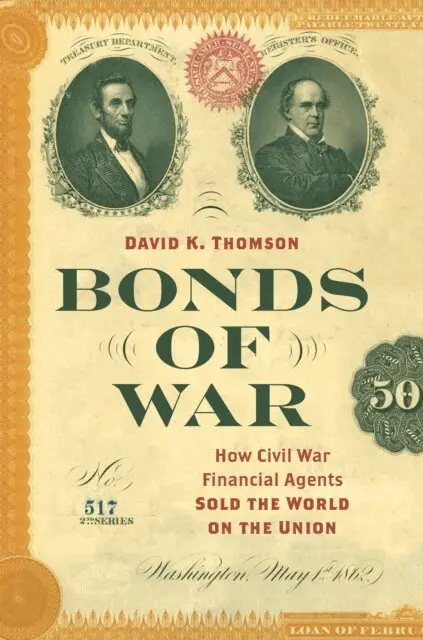
How does one package and sell confidence in the stability of a nation riven by civil strife? This was the question that loomed before the Philadelphia financial house of Jay Cooke & Company, entrusted by the US government with an unprecedented sale of bonds to finance the Union war effort in the early days of the American Civil War. How the government and its agents marketed these bonds revealed a version of the war the public was willing to buy and buy into, based not just in the full faith and credit of the United States but also in the success of its armies and its long-term vision for open markets. From Maine to California, and in foreign halls of power and economic influence, thousands of agents were deployed to sell a clear message: Union victory was unleashing the American economy itself.This fascinating work of financial and political history during the Civil War era shows how the marketing and sale of bonds crossed the Atlantic to Europe and beyond, helping ensure foreign countries' vested interest in the Union's success. Indeed, David K. Thomson demonstrates how Europe, and ultimately all corners of the globe, grew deeply interdependent on American finance during, and in the immediate aftermath of, the American Civil War.
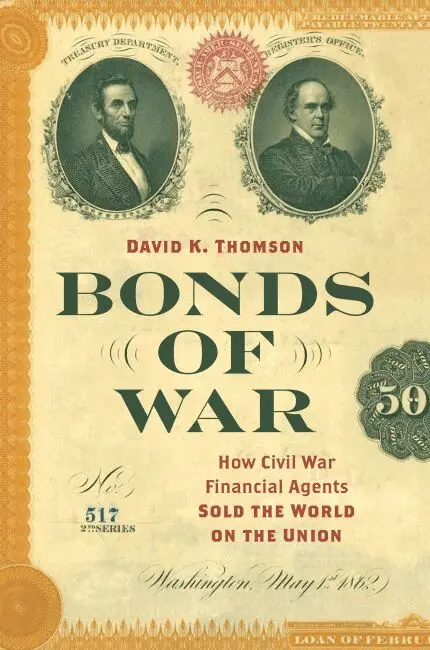
How does one package and sell confidence in the stability of a nation riven by civil strife? This was the question that loomed before the Philadelphia financial house of Jay Cooke & Company, entrusted by the US government with an unprecedented sale of bonds to finance the Union war effort in the early days of the American Civil War. How the government and its agents marketed these bonds revealed a version of the war the public was willing to buy and buy into, based not just in the full faith and credit of the United States but also in the success of its armies and its long-term vision for open markets. From Maine to California, and in foreign halls of power and economic influence, thousands of agents were deployed to sell a clear message: Union victory was unleashing the American economy itself.This fascinating work of financial and political history during the Civil War era shows how the marketing and sale of bonds crossed the Atlantic to Europe and beyond, helping ensure foreign countries’ vested interest in the Union’s success. Indeed, David K. Thomson demonstrates how Europe, and ultimately all corners of the globe, grew deeply interdependent on American finance during, and in the immediate aftermath of, the American Civil War.
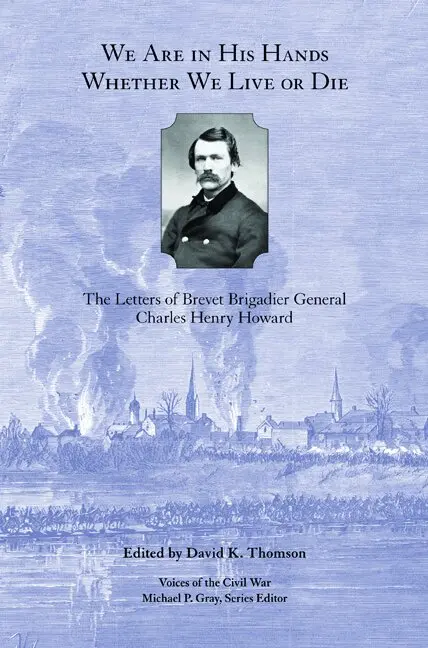
Many soldiers who served in the American Civil War found solace in their faith during the most trying times of the war. But few soldiers took such a providential view of life and the Civil War as Charles Henry Howard. Born in a small town in Maine, Howard came from a family with a distinguished history of soldiering: his grandfather was a Revolutionary War veteran and his brother, the older and more well-known Oliver Otis Howard, attended West Point and rose to command an army in the Civil War. Following in his brother’s footsteps, Charles Henry Howard graduated from Bowdoin College in 1859. Following graduation, Charles visited his older brother at West Point during the tumultuous election of 1860. While at West Point, Howard saw the tensions between Northern and Southern cadets escalate as he weighed his options for a military or theological career. The choice was made for him on April 12, 1861, with the firing on Fort Sumter.Responding to his brother’s plea for the sons of Maine to join the Union cause, Charles found himself a noncommissioned officer fighting in the disastrous Battle of First Bull Run. All told, Howard fought in several major battles of the Eastern Theater, including Antietam, Fredericksburg, Chancellorsville, and Gettysburg, and went on to participate in various military actions in the Western Theater including Sherman’s bloody Atlanta Campaign. He was wounded twice, first at the Battle of Fair Oaks and again at Fredericksburg. Yet, despite facing the worst horrors of war, Howard rarely wavered in his faith and rose steadily in rank throughout the conflict. By war’s end, he was a brevet brigadier general in command of the 128th U.S. Colored Troop Regiment.Howard’s letters cover a wide-ranging period, from 1852 to 1908. His concern for his family is typical of a Civil War soldier, but his exceptionally firm reliance on divine providence is what makes these letters an extraordinary window into the mind of a Civil War officer. Howard’s grounded faith was often tested by the viciousness of war, and as a result his letters are rife with stirring confessions and his emotional grappling with the harsh realities he faced. Howard’s letters expose the greater theological and metaphysical dilemmas of the war faced by so many on both sides.