As the importance of marketing to business grows, and as new concepts and applications of marketing emerge and evolve, so too does the need for up-to-date market intelligence. This book recognizes that the contribution which qualitative research can make to market understanding and insight is immense, and that statistical information flows are never enough but need to be compounded by market intelligence gained through qualitative methods.Qualitative Marketing Research clearly explains the use and importance of qualitative methods, clarifying the theories behind the methodology and providing concrete examples and exercises which illustrate its application to Management Studies and Marketing. This book is intended for all students of marketing who are required to complete their studies with a dissertation or research project.
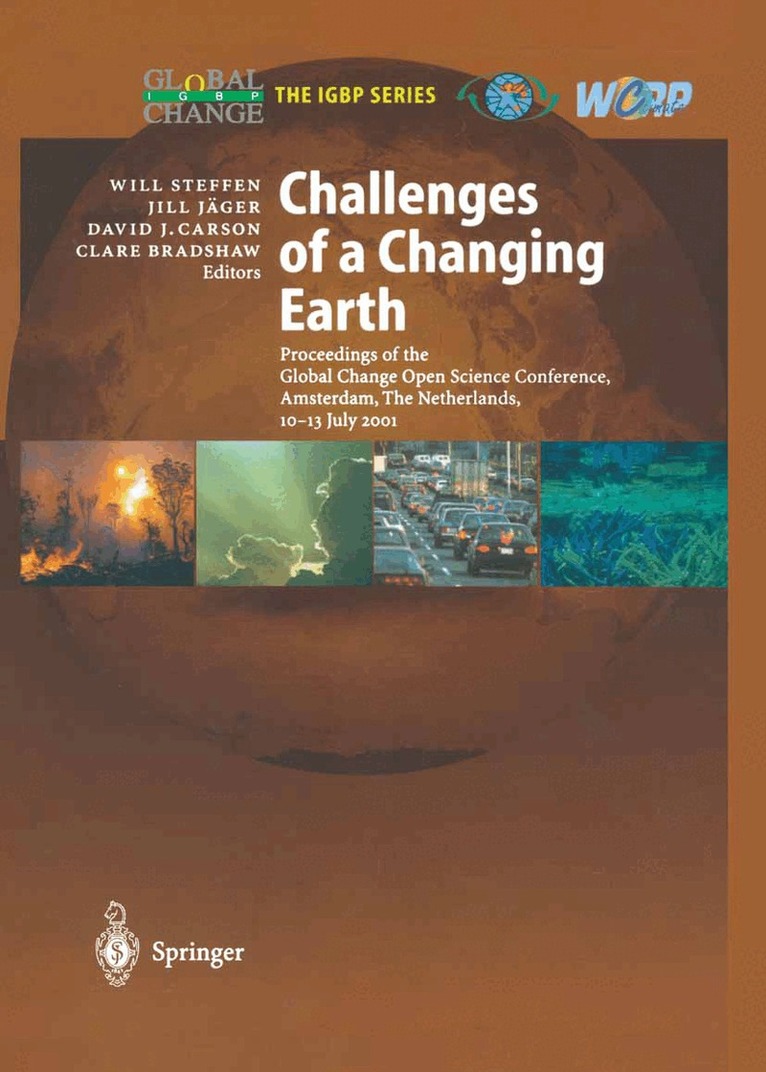
This book presents a state-of-the-science overview of global change and its consequences for human societies. It highlights four areas of critical importance - food, water resources, air quality and the carbon cycle - from both science and policy perspectives, and points the way towards the new scientific approaches needed to study the Earth System in the future. The book also summarises recent advances in understanding in global change science: the climate system, global biogeochemistry, land-ocean interactions and changing land cover and the Earth System.
This volume is based on plenary presentations from Challenges of a Changing Earth, a Global Change Open Science Conference held in Amsterdam, The Neth- lands, in July 2001. The meeting brought together about 1400 scientists from 105 co- tries around the world to describe, discuss and debate the latest scientific - derstanding of natural and human-driven changes to our planet. It examined the effects of these changes on our societies and our lives, and explored what the future might hold. The presentations drew upon global change science from an exceptionally wide range of disciplines and approaches. Issues of societal importance – the food system, air quality, the carbon cycle, and water resources – were highlighted from both policy and science perspectives. Many of the talks presented the exciting scientific advances of the past decade of international research on global change. Several challenged the scientific community in the future. What are the visionary and creative new approaches needed for studying a complex planetary system in which human activities are in- mately interwoven with natural processes? This volume aims to capture the timeliness and excitement of the science p- sented in Amsterdam. The plenary speakers were given a daunting task: to reproduce their presentations in a way that delivers their scientific messages accurately and in sufficient detail but at the same time reaches a very broad audience well beyond their own disciplines. Furthermore, they were required to do this in just a few pages.