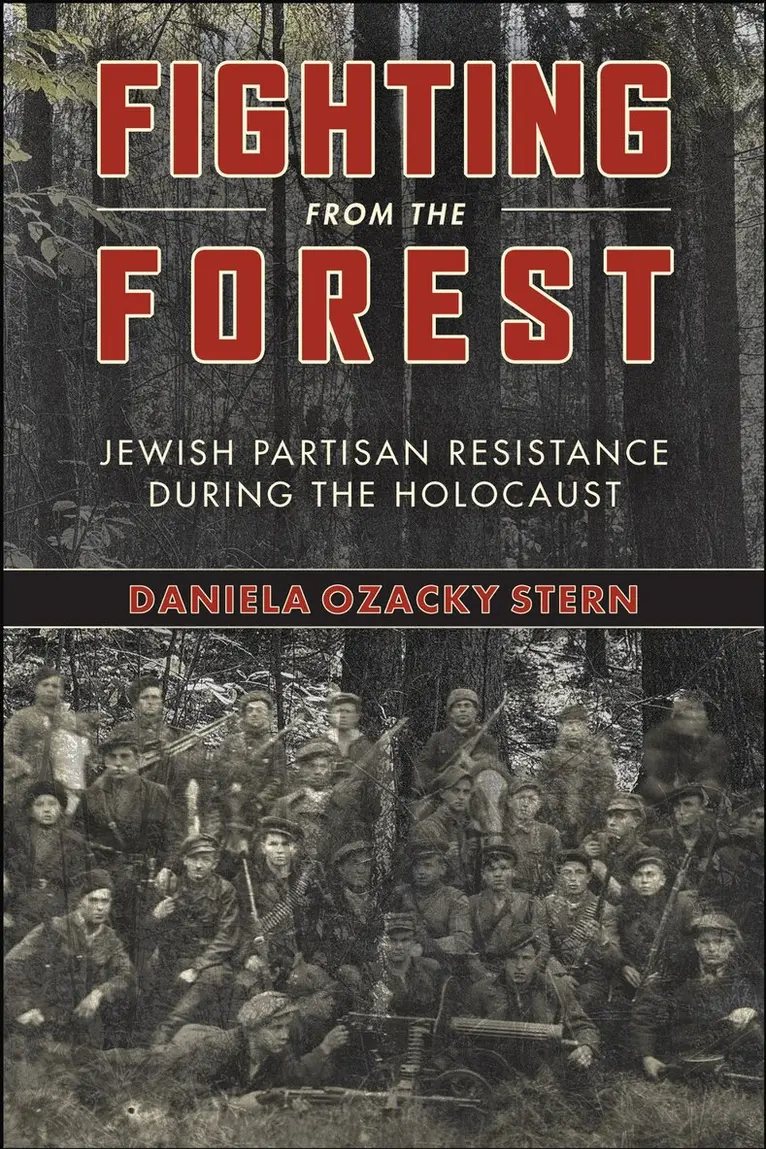
During the Holocaust, a vast number of Jews fled into the forests of Eastern Europe and joined partisan units, choosing armed resistance over passive survival. Fighting From the Forest tells the powerful and little-known story of these men and women who fought the Nazis while struggling to stay alive under some of the harshest conditions imaginable.Based on survivor testimonies, archival sources, and personal accounts, this book explores daily life in the forest camps, the dangers of guerrilla warfare, and the difficult choices and decisions partisans were forced to make. It reveals not only acts of courage and solidarity, but also internal conflicts, moral dilemmas, and encounters with discrimination and antisemitism—even within resistance movements themselves.Moving beyond familiar heroic myths, Fighting from the Forest offers a deeply human portrait of Jewish resistance: a story of fear and hope, love and loss, loyalty and betrayal. The book also follows the survivors into the postwar years, showing how their experiences shaped efforts to rebuild Jewish life and memory.This is a compelling account of resilience, survival, and the complex realities of fighting back during one of history's darkest times.
During the Holocaust, a vast number of Jews fled into the forests of Eastern Europe and joined partisan units, choosing armed resistance over passive survival. Fighting From the Forest tells the powerful and little-known story of these men and women who fought the Nazis while struggling to stay alive under some of the harshest conditions imaginable.Based on survivor testimonies, archival sources, and personal accounts, this book explores daily life in the forest camps, the dangers of guerrilla warfare, and the difficult choices and decisions partisans were forced to make. It reveals not only acts of courage and solidarity, but also internal conflicts, moral dilemmas, and encounters with discrimination and antisemitism—even within resistance movements themselves.Moving beyond familiar heroic myths, Fighting from the Forest offers a deeply human portrait of Jewish resistance: a story of fear and hope, love and loss, loyalty and betrayal. The book also follows the survivors into the postwar years, showing how their experiences shaped efforts to rebuild Jewish life and memory.This is a compelling account of resilience, survival, and the complex realities of fighting back during one of history's darkest times.
The Eastern Front and the Holocaust addresses a fundamental challenge in modern historiography: the persistent disconnect between the history of World War II and the history of the Holocaust. For too long, the operational, ideological, and institutional links between warfare and genocide have been analyzed in isolation from one another.This edited volume brings together preeminent scholars of military history and Holocaust studies—including Gerhard L. Weinberg, Richard Overy, Dina Porat, Dan Michman, and Edward Westermann—to examine Nazi war-making and mass murder as deeply interconnected historical processes.By exploring strategy, logistics, perpetration, resistance, and victim experience, as well as postwar interpretations, the contributors demonstrate how genocidal policies were embedded within military structures and how developments on the battlefield shaped the execution of racial violence.By integrating diverse methodologies and sources across disciplinary boundaries, The Eastern Front and the Holocaust establishes a synthetic framework for understanding the nature of Nazi violence. This volume represents a landmark contribution to the historiography of World War II, the Holocaust, and genocide studies, and will be an essential resource for researchers and advanced students in these fields.