582 kr
Skickas inom 10-15 vardagar
582 kr
Skickas inom 10-15 vardagar
1 076 kr
Skickas inom 10-15 vardagar
The Influence of Geography on Naval Warfare, 1861 to the Present
1 432 kr
Skickas inom 10-15 vardagar
1 108 kr
Skickas inom 10-15 vardagar
The Influence of Geography on Naval Warfare, 1861 to the Present
1 559 kr
Läs direkt efter köp
1 204 kr
Läs direkt efter köp
741 kr
Skickas inom 10-15 vardagar
727 kr
Läs direkt efter köp
This book, first published in 1985, presents a comprehensive overview of the world shipbuilding industry. It contrasts the conditions which foster its development in newly-industrialised countries such as Japan, South Korea and Brazil with the problems leading to its decline in Western Europe and North America. The book discusses the supply and demand factors peculiar to shipbuilding and notes the inherent instability of the industry due to the conditions placed upon it by the economic environment. Reactions to this instability are examined from the point of view of both shipbuilding enterprises and governments. The book concludes by assessing current trends and discussing likely future developments. It is shown that much will depend on shipping costs, industrial organisation and the level of state support.
727 kr
Läs direkt efter köp
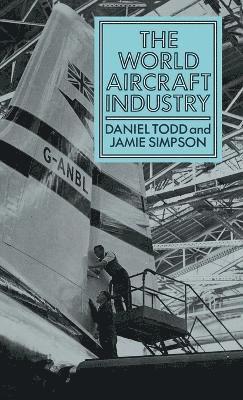
Aircraft building is a major industry for many developed countries. This book, first published in 1986, provides a comprehensive survey of the state of the world aircraft industry. It looks at how the industry developed, and at its problems. It examines the role of governments, showing how this differs from country to country. It concludes by assessing the prospects for the future shape of the industry, particularly as newly industrialised countries become more involved.
712 kr
Läs direkt efter köp
Aerospace is a major world industry. This handbook, first published in 1987, provides a world survey of the industry in statistical form. The first part covers production and distribution by sector – airframes (aircraft), aeroengines, avionics, systems, missiles / spacecraft – and by country. It includes a summary for each country of the degree of government intervention, which is a crucial factor as state involvement is essential for the aerospace sector. The second part covers technological change, and here graphical representations of trends in product and process technologies are given.
704 kr
Läs direkt efter köp
This book, first published in 1985, presents a comprehensive overview of the world shipbuilding industry. It contrasts the conditions which foster its development in newly-industrialised countries such as Japan, South Korea and Brazil with the problems leading to its decline in Western Europe and North America. The book discusses the supply and demand factors peculiar to shipbuilding and notes the inherent instability of the industry due to the conditions placed upon it by the economic environment. Reactions to this instability are examined from the point of view of both shipbuilding enterprises and governments. The book concludes by assessing current trends and discussing likely future developments. It is shown that much will depend on shipping costs, industrial organisation and the level of state support.
722 kr
Läs direkt efter köp
Aircraft building is a major industry for many developed countries. This book, first published in 1986, provides a comprehensive survey of the state of the world aircraft industry. It looks at how the industry developed, and at its problems. It examines the role of governments, showing how this differs from country to country. It concludes by assessing the prospects for the future shape of the industry, particularly as newly industrialised countries become more involved.
727 kr
Läs direkt efter köp
Aerospace is a major world industry. This handbook, first published in 1987, provides a world survey of the industry in statistical form. The first part covers production and distribution by sector – airframes (aircraft), aeroengines, avionics, systems, missiles / spacecraft – and by country. It includes a summary for each country of the degree of government intervention, which is a crucial factor as state involvement is essential for the aerospace sector. The second part covers technological change, and here graphical representations of trends in product and process technologies are given.
2 216 kr
Skickas inom 10-15 vardagar
2 216 kr
Skickas inom 10-15 vardagar
643 kr
Skickas inom 10-15 vardagar
1 535 kr
Skickas inom 10-15 vardagar
433 kr
Skickas inom 10-15 vardagar
2 216 kr
Skickas inom 10-15 vardagar
643 kr
Skickas inom 10-15 vardagar
2 216 kr
Skickas inom 10-15 vardagar
643 kr
Skickas inom 10-15 vardagar
2 216 kr
Skickas inom 10-15 vardagar
643 kr
Skickas inom 10-15 vardagar
654 kr
Läs direkt efter köp
Originally published in 1989 Defence Industries presents a worldwide survey of defence industries. It argues that modern weapon systems and electronic warfare have led to the transition of the military-industrial enterprise into a multifaceted entity where electronics production is the key. It analyses the extent of defence industries, showing that large portions of the aerospace, shipbuilding, motor vehicle and electronics industries are devoted to defence and discusses where the defence industries are located. It examines the differences in government policies, contrasting the superpowers, with newly industrialised countries.

639 kr
Läs direkt efter köp
Originally published in 1989 Defence Industries presents a worldwide survey of defence industries. It argues that modern weapon systems and electronic warfare have led to the transition of the military-industrial enterprise into a multifaceted entity where electronics production is the key. It analyses the extent of defence industries, showing that large portions of the aerospace, shipbuilding, motor vehicle and electronics industries are devoted to defence and discusses where the defence industries are located. It examines the differences in government policies, contrasting the superpowers, with newly industrialised countries.

499 kr
Läs direkt efter köp
First published in 1990, this book provides an overview of the global distribution of the electronics industry and the structural factors which promoted this distribution by the end of the 1980s. Regarded as a ‘flagship’ sector in both advanced and developing countries, the electronics industry is encouraged by governments everywhere. Covering both the civilian and the military sides of the industry, Professor Todd reflects on the future of civilian electronics in the light of its global segmentation, and hints at the fundamental role of governments in the unfolding of both civilian and defence-electronics developments. He also endorses the overwhelming significance of strategies being played by electronics enterprises in both the USA and Japan.
749 kr
Läs direkt efter köp
First published in 1991, this book offers a thorough examination of the decline of heavy industry in industrialised countries in the West, which focuses on problems in the shipbuilding industry. Todd argues that three points are central to its demise: industrial life cycles, the international division of labour and the energy crises of 1973. His work begins with despondency in western shipbuilding, going back as early as 1956, when Japan usurped Britain as the pre-eminent ship producer. The book goes on to explore international trade and industry in the second half of the 20th century, with analysis on industrial reorganisation and East Asian conglomerates, diversification with the marine industries, and shipbuilding in Brazil, India, and China.