Arkiv. Tidskrift för samhällsanalys nr 5. Det vita fältet : samtida forskning om högerextremism III, Specialnummer
197 kr
Skickas inom 5-8 vardagar
197 kr
Skickas inom 5-8 vardagar
524 kr
Skickas inom 5-8 vardagar
403 kr
Läs direkt efter köp
403 kr
Läs direkt efter köp
2 526 kr
Skickas inom 10-15 vardagar
823 kr
Skickas inom 10-15 vardagar
808 kr
Läs direkt efter köp
This book examines how de-radicalisation programmes have been portrayed in the media and details the role of public relations (PR) strategies employed by such programmes and Countering Violent Extremism (CVE) to create positive coverage of their work.
CVE and de-radicalisation programmes have seen a significant rise in recent years and are now cornerstones of many countries’ counterterrorism strategies. Despite the increased importance of these tools to counter violent radicalisation leading to terrorism, they remain controversial and sometimes receive fierce public criticism and opposition. This work looks at how CVE and de-radicalisation programs are able to influence a country’s discourse on de-radicalisation, and how far governmental programs differ from non-governmental initiatives in terms of their PR strategies. The book also provides a theoretical basis of how the discourse on CVE is constructed in the media. As major case studies, this book examines the United Kingdom, Germany and Nigeria. For these countries, the authors have gathered and assessed roughly 3,000 newspaper articles on de-radicalisation programmes over a decade to provide an empirical base.
This book will be of much interest to students of countering violent extremism, de-radicalisation, and terrorism studies.
814 kr
Läs direkt efter köp
This book examines how de-radicalisation programmes have been portrayed in the media and details the role of public relations (PR) strategies employed by such programmes and Countering Violent Extremism (CVE) to create positive coverage of their work.
CVE and de-radicalisation programmes have seen a significant rise in recent years and are now cornerstones of many countries’ counterterrorism strategies. Despite the increased importance of these tools to counter violent radicalisation leading to terrorism, they remain controversial and sometimes receive fierce public criticism and opposition. This work looks at how CVE and de-radicalisation programs are able to influence a country’s discourse on de-radicalisation, and how far governmental programs differ from non-governmental initiatives in terms of their PR strategies. The book also provides a theoretical basis of how the discourse on CVE is constructed in the media. As major case studies, this book examines the United Kingdom, Germany and Nigeria. For these countries, the authors have gathered and assessed roughly 3,000 newspaper articles on de-radicalisation programmes over a decade to provide an empirical base.
This book will be of much interest to students of countering violent extremism, de-radicalisation, and terrorism studies.
2 515 kr
Skickas inom 10-15 vardagar
651 kr
Skickas inom 10-15 vardagar
692 kr
Skickas inom 10-15 vardagar
642 kr
Läs direkt efter köp
*With a foreword by Mario Carpo*
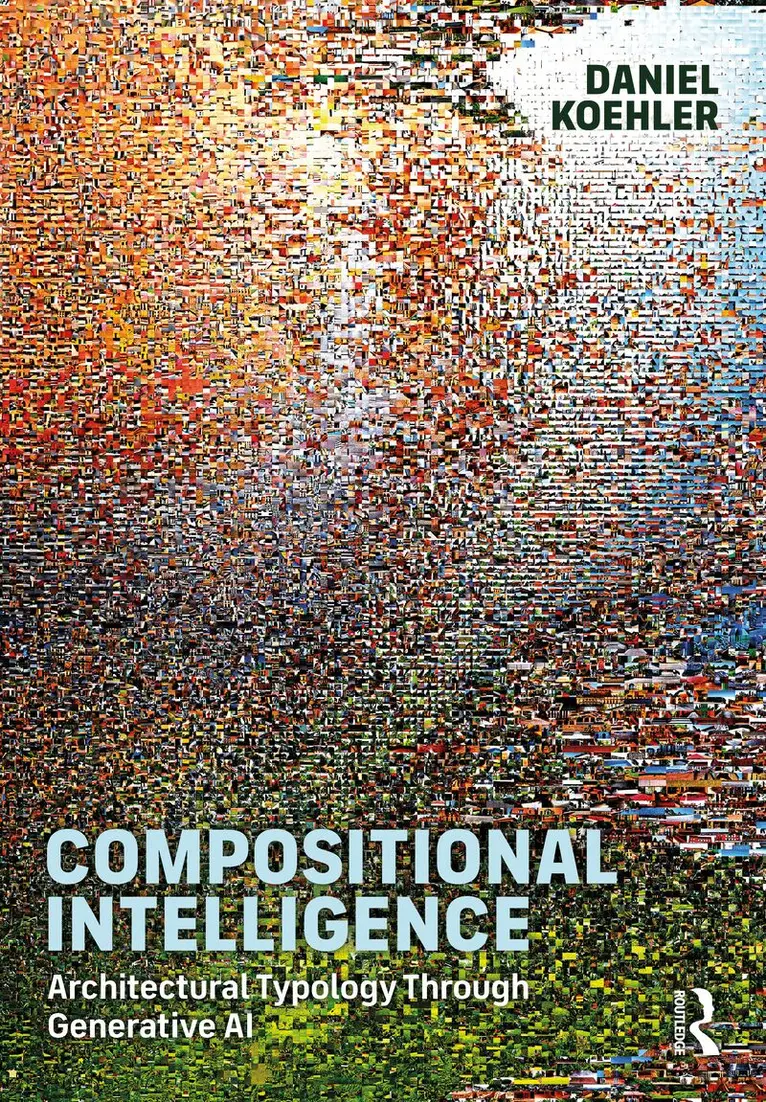
Given the extensive data sources represented by urban environments, this book investigates the potential of architecting for cities using large-scale models – the technological underpinning of Generative AI. Koehler examines Large Language Models (LLMs) in relation to architectural questions of typology – those critical junctures where architecture engages with the city itself. Typology becomes the interface between an AI model and its modeled audiences, represented languages, and scales of operation.
The investigation reveals how LLMs represent a fundamental shift from comprehending discrete elements to understanding entire languages – introducing a stochastic perspective that transforms how we read and shape urban reality. At the heart of this framework lies the concept of “inductive types†– threshold interfaces that superpose multiple value regimes and actively reconfigure themselves in response to changing urban conditions. By treating architecture as a form of representational materialism rather than a fixed language, designers can engage with complex urban systems while maintaining critical agency.
This approach envisions architecture as an embedding of languages, where buildings become processors of information that compute through their spatial arrangements. The synthetic knowledge produced by LLMs enables access to plural values and stakeholder perspectives, allowing architects to participate in broader material ecologies through computational superposition rather than traditional dialectical methods.
Providing a robust theoretical framework as well as practical insights into how architects can adapt their notational tools and design processes to embrace AI, this will be an essential read for any practicing or researching architect or urban designer interested in the implications of AI on the built environment.
638 kr
Läs direkt efter köp
*With a foreword by Mario Carpo*
Given the extensive data sources represented by urban environments, this book investigates the potential of architecting for cities using large-scale models – the technological underpinning of Generative AI. Koehler examines Large Language Models (LLMs) in relation to architectural questions of typology – those critical junctures where architecture engages with the city itself. Typology becomes the interface between an AI model and its modeled audiences, represented languages, and scales of operation.
The investigation reveals how LLMs represent a fundamental shift from comprehending discrete elements to understanding entire languages – introducing a stochastic perspective that transforms how we read and shape urban reality. At the heart of this framework lies the concept of “inductive types†– threshold interfaces that superpose multiple value regimes and actively reconfigure themselves in response to changing urban conditions. By treating architecture as a form of representational materialism rather than a fixed language, designers can engage with complex urban systems while maintaining critical agency.
This approach envisions architecture as an embedding of languages, where buildings become processors of information that compute through their spatial arrangements. The synthetic knowledge produced by LLMs enables access to plural values and stakeholder perspectives, allowing architects to participate in broader material ecologies through computational superposition rather than traditional dialectical methods.
Providing a robust theoretical framework as well as practical insights into how architects can adapt their notational tools and design processes to embrace AI, this will be an essential read for any practicing or researching architect or urban designer interested in the implications of AI on the built environment.
696 kr
Läs direkt efter köp
686 kr
Läs direkt efter köp
611 kr
Skickas inom 10-15 vardagar
2 602 kr
Skickas inom 10-15 vardagar
526 kr
Skickas inom 3-6 vardagar
1 832 kr
Skickas inom 7-10 vardagar
417 kr
Läs direkt efter köp
411 kr
Läs direkt efter köp
2 489 kr
Skickas inom 10-15 vardagar
2 761 kr
Skickas inom 10-15 vardagar
827 kr
Skickas inom 10-15 vardagar
992 kr
Läs direkt efter köp
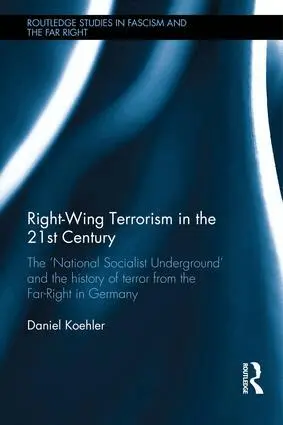
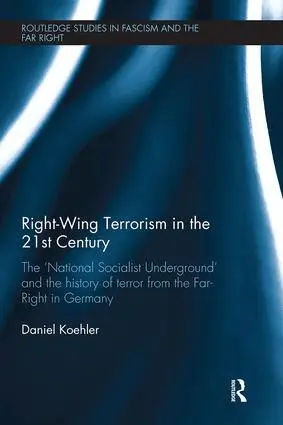
This book is the first comprehensive academic study of German right-wing terrorism since the early 1960s available in the English language. It offers a unique in-depth analysis of German violent, extremist right-wing movements, terrorist events, groups, networks and individuals. In addition, the book discusses the so-called ‘National Socialist Underground’ (NSU) terror cell, which was uncovered in late 2011 by the authorities. The NSU had been active for over a decade and had killed at least ten people, as well as executing numerous bombings and bank robberies. With an examination of the group’s support network and the reasons behind the failure of the German authorities, this book sheds light on right-wing terrorist group structures, tactics and target groups in Germany. The book also contains a complete list of all the German right-wing terrorist groups and incidents since the Second World War. Based on the most detailed dataset of right-wing terrorism in Germany, this book offers highly valuable insights into this specific form of political violence and terrorism, which has been widely neglected in international terrorism research.
977 kr
Läs direkt efter köp
This book is the first comprehensive academic study of German right-wing terrorism since the early 1960s available in the English language. It offers a unique in-depth analysis of German violent, extremist right-wing movements, terrorist events, groups, networks and individuals. In addition, the book discusses the so-called ‘National Socialist Underground’ (NSU) terror cell, which was uncovered in late 2011 by the authorities. The NSU had been active for over a decade and had killed at least ten people, as well as executing numerous bombings and bank robberies. With an examination of the group’s support network and the reasons behind the failure of the German authorities, this book sheds light on right-wing terrorist group structures, tactics and target groups in Germany. The book also contains a complete list of all the German right-wing terrorist groups and incidents since the Second World War. Based on the most detailed dataset of right-wing terrorism in Germany, this book offers highly valuable insights into this specific form of political violence and terrorism, which has been widely neglected in international terrorism research.
970 kr
Läs direkt efter köp
970 kr
Läs direkt efter köp
45 kr
Läs direkt efter köp
41 kr
Läs direkt efter köp