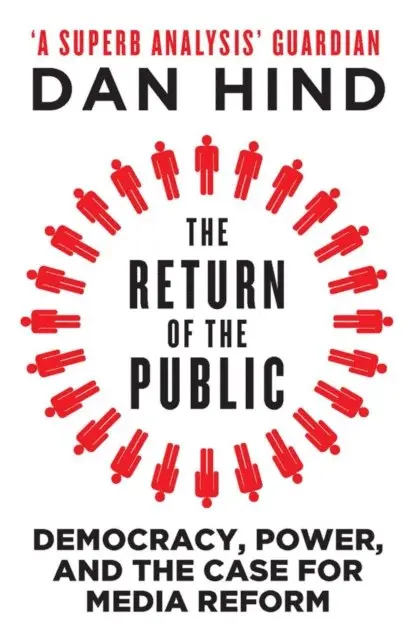
Under the incurious gaze of the major media, the political establishment and the financial sector have become increasingly deceitful and dangerous in recent years. At the same time, journalists at Rupert Murdoch''s News International and elsewhere have been breaking the law on an industrial scale. Now we are expected to stay quiet while those who presided over the shambles judge their own conduct.In The Return of the Public, Dan Hind argues for reform of the media as a necessary prelude to wider social transformation. A former commissioning editor, Hind urges us to focus on the powers of the media to instigate investigations and to publicize the results, powers that editors and owners are desperate to keep from general deliberation.Hind describes a programme of reform that is modest, simple and informed by years of experience. It is a programme that much of the media cannot bring themselves even to acknowledge, precisely because it threatens their private power. It is time the public had their say.
Today, media commentators, intellectuals and politicians declare that western science and rationality are threatened by irrational enemies. Evangelicals, postmodernists, and Islamists are on the march, they say. The Rome that science built is under siege. But there''s a problem with these stirring attempts to defend the truth. They aren''t true.In this urgent new book, Dan Hind confronts the great machinery of deception in which we live, and which now threatens to destroy our civilization. In particular, he takes to task a group of prominent intellectuals who have exaggerated the threat posed by the so-called forces of unreason-religion, postmodernism and other "mumbo-jumbo." The commentators, says Hind, distract us from much more pressing threats to an open democratic society based on freedom of speech and inquiry.This book shows that the real threats to reason aren''t wacky or foreign or stupid; they reside in our state and corporate bureaucracies - and, one way or another, they probably pay your salary. In recovering the idea of Enlightenment, Hind explores its vital importance and reveals how it can help us to achieve a truly democratic politics, in which we have a genuine say in the decisions that are taken on our behalf.
Today, media commentators, intellectuals and politicians declare that western science and rationality are threatened by irrational enemies. Evangelicals, postmodernists, and Islamists are on the march, they say. The Rome that science built is under siege. But there's a problem with these stirring attempts to defend the truth. They aren't true.In this urgent new book, Dan Hind confronts the great machinery of deception in which we live, and which now threatens to destroy our civilization. In particular, he takes to task a group of prominent intellectuals who have exaggerated the threat posed by the so-called forces of unreason-religion, postmodernism and other "mumbo-jumbo." The commentators, says Hind, distract us from much more pressing threats to an open democratic society based on freedom of speech and inquiry.This book shows that the real threats to reason aren't wacky or foreign or stupid; they reside in our state and corporate bureaucracies - and, one way or another, they probably pay your salary. In recovering the idea of Enlightenment, Hind explores its vital importance and reveals how it can help us to achieve a truly democratic politics, in which we have a genuine say in the decisions that are taken on our behalf.
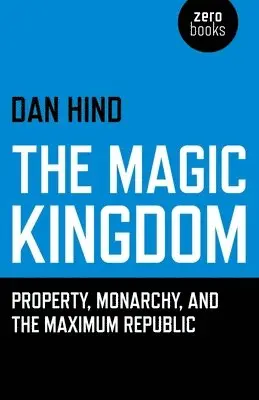
Anyone who knows anything about Britain knows that it is a democracy and a constitutional monarchy. The trouble is, it is neither. The United Kingdom of Great Britain and Northern Ireland is one of the most exotic nations on earth. In the republican form of government a defined public exercise sovereign power. Most modern states describe themselves as democratic republics. The United Kingdom of Great Britain and Northern Ireland is an anomaly, in that formal sovereignty is still denied to its people. In The Magic Kingdom Dan Hind explores what the republican tradition has to offer the British at a time of deep political, social and economic dislocation. He considers what innovations are necessary if liberty is to be secured in current conditions. His argument will surprise many who consider themselves republicans. It will upset those who benefit from the current arrangements. It offers a way forward for those who can no longer tolerate steepening inequality and its associated ills. Existing republican institutions have not been able to deliver public control of the state.If substantive democracy is to be possible in large and complex societies, the systems of communication, subsidy and credit must be made subject to popular oversight and control. In a disarmingly calm manner, Hind shows how this can be done, by minor adjustments to the existing institutions. Perhaps, unlikely as it sounds, Britain will provide the venue for the world's first truly republican society.