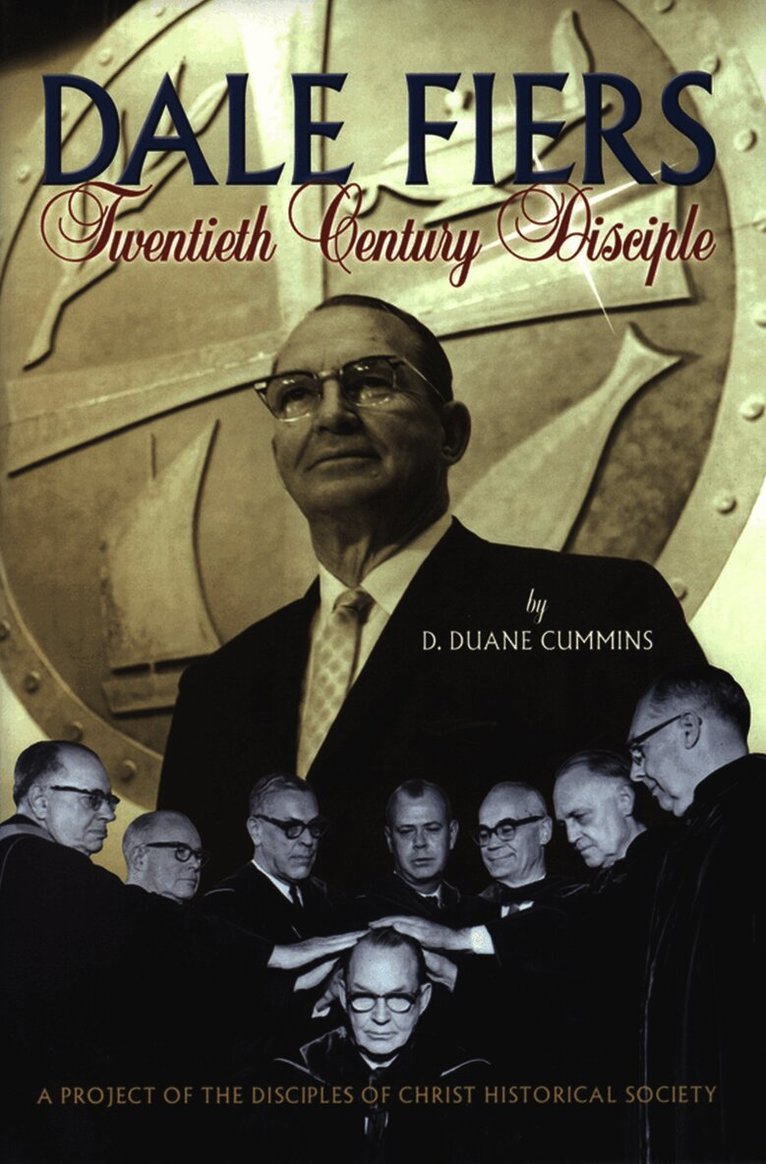
Many call A. Dale Fiers the most significant figure in the Christian Church (Disciples of Christ) of the twentieth century. Raised in a devout family—his mother was ordained—in Kankakee, Illinois, and West Palm Beach, Florida, Fiers went on to have major impact not only on his denomination but on American Protestantism in general, particularly its approach to such social issues as missionary work and civil rights.Fiers served as executive secretary of the International Convention of the Christian Church (Disciples of Christ), president of the United Christian Missionary Society, administrative secretary of the Commission on Restructure, and was the first general minister and president of the church.Restructure was the process by which thousands of scattered Disciples congregations became an expression of one Church. This 1960s development towers over the landscape of Disciples history like a great mountain range, and Fiers looms over the era as its central figure.In this biography, commissioned by the Disciples of Christ Historical Society, D. Duane Cummins crafts a picture of a remarkable church leader and chronicles the way a significant religious body dealt with the ambivalences of its own existence, how missionary work developed into less paternalistic relationships, how a church struggled between attempts to minister on the local scene and throughout the world.Fiers lived in Florida and remained active in Disciples affairs until his death at age ninety-six in 2003.
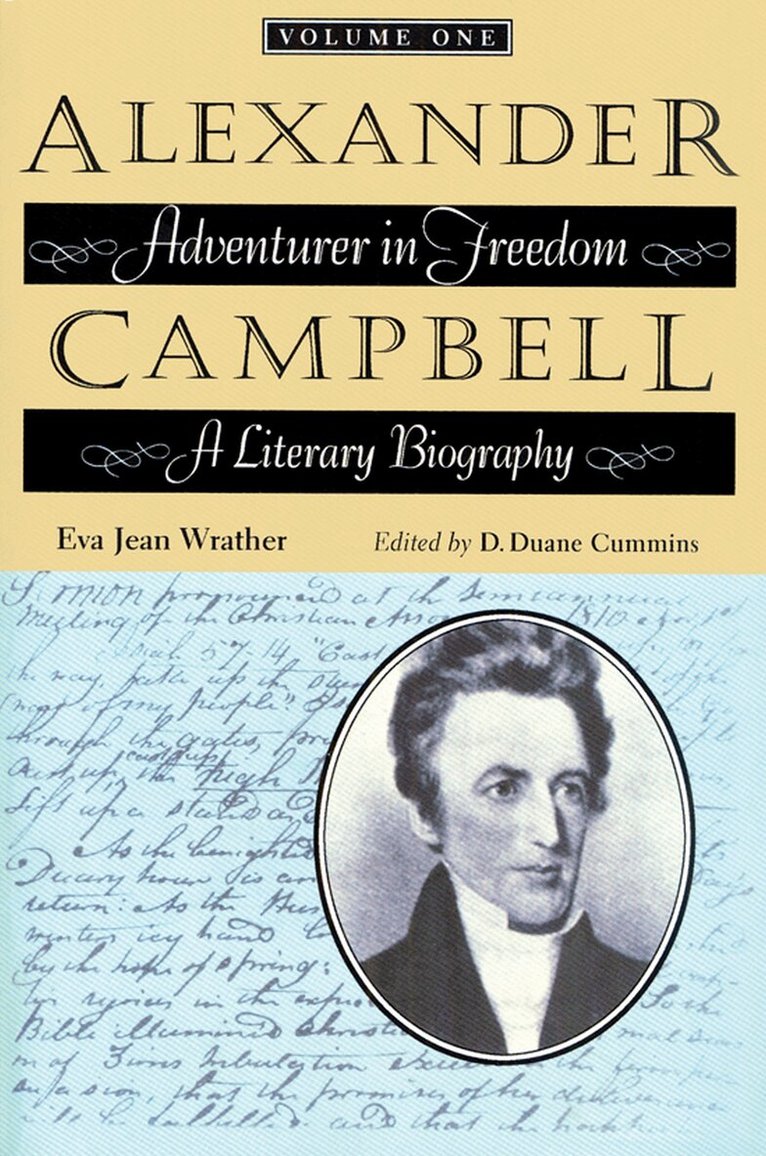
A biography of Christian Church (Disciples of Christ) founder Alexander Campbell that deals with the leader's early manhood, from his schooling to his turning from the Calvinistic doctrine of his youth and his arrival in America.
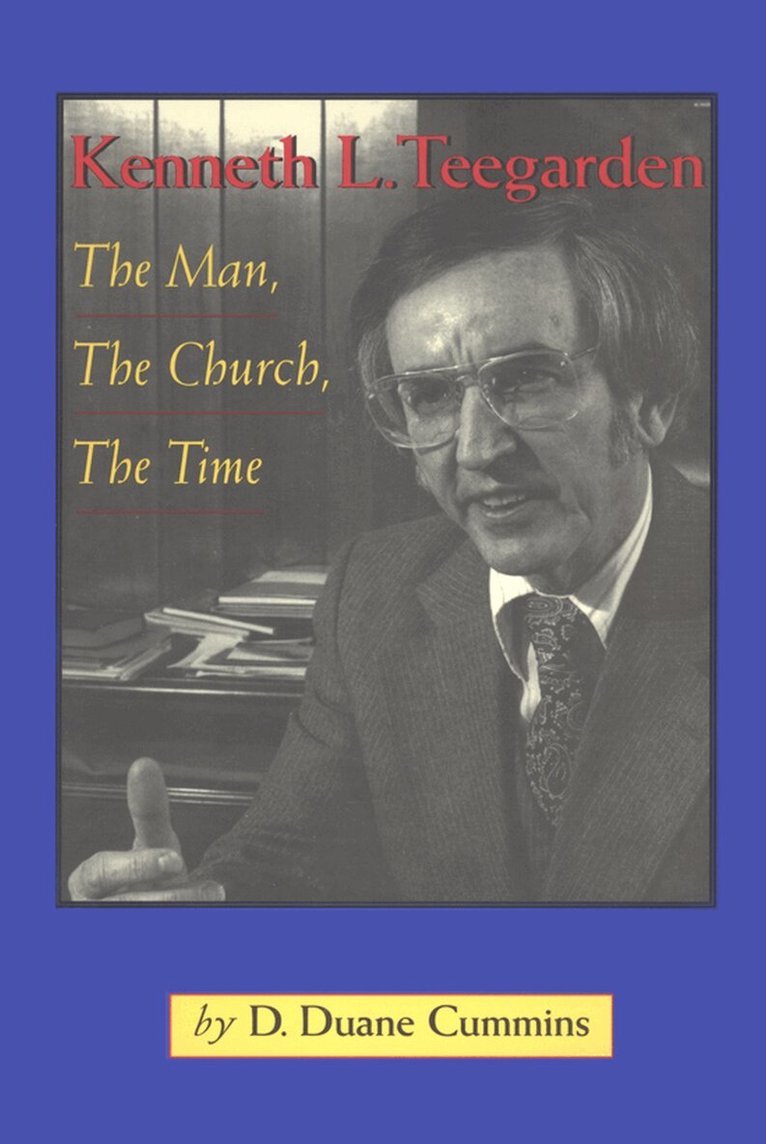
D. Duane Cummins describes this book as "an appreciative biography"; Cummins' approach combines the warmth of personal acquaintance with a lucid and well-researched account of Teegarden's life. Kenneth Teegarden was born in Cushing, Oklahoma, in 1921, "a fourth-generation Oklahoman and a sixth-generation Disciple," and the Christian Church (Disciples of Christ) never lost its importance in his life. Teegarden served as general minister and president of the Christian Church (Disciples of Christ) for many years. He was a central figure in planning and explaining the new ""design"" of the church through the Commission for Brotherhood Restructure and was ""a powerful and constant advocate of peace with justice,"" working toward the passage of peace resolutions and encouraging racial integration in the battle for civil rights. Kenneth Teegarden was minister in residence at the Brite Divinity School after he resigned as general minister and president of the Christian Church (Disciples of Christ), and he continued to teach and mentor students, parishioners, friends, and family until his death in 2002.
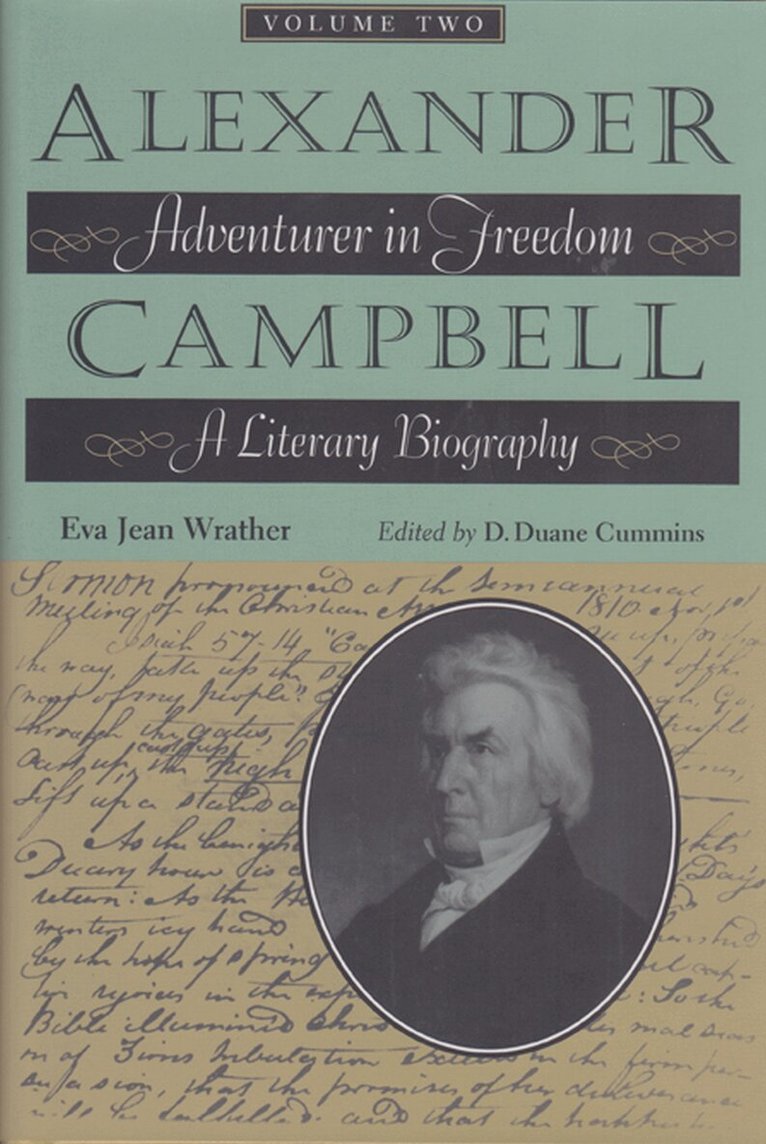
Eva Jean Wrather devoted seventy years to writing an 800,000-word biography of Alexander Campbell, founder of the Christian Church (Disciples of Christ), a monumental literary biography described by D. Duane Cummins as ""a creative and skillful blend of history and superb literary writing skills."" In the early 1990s, Cummins was asked to assist Ms. Wrather in revising her manuscript. Their work together makes up Volume One of Campbell's biography (TCU Press, 2005). Volume Two follows Campbell's life from 1823-1830, years filled with the storm of opinions in the pages of his successful magazine, ""The Christian Baptist"", which won mixed hostility and support in Baptist and Presbyterian communities. Wrather records Campbell's experience as a politician and delegate to the Virginia Constitutional Convention in 1829, where Campbell brushed shoulders with some of America's most famous politicians and rhetoricians. Wrather believed these years were a crucial chapter in Campbell's life, confirming his power as a thinker, speaker and writer.
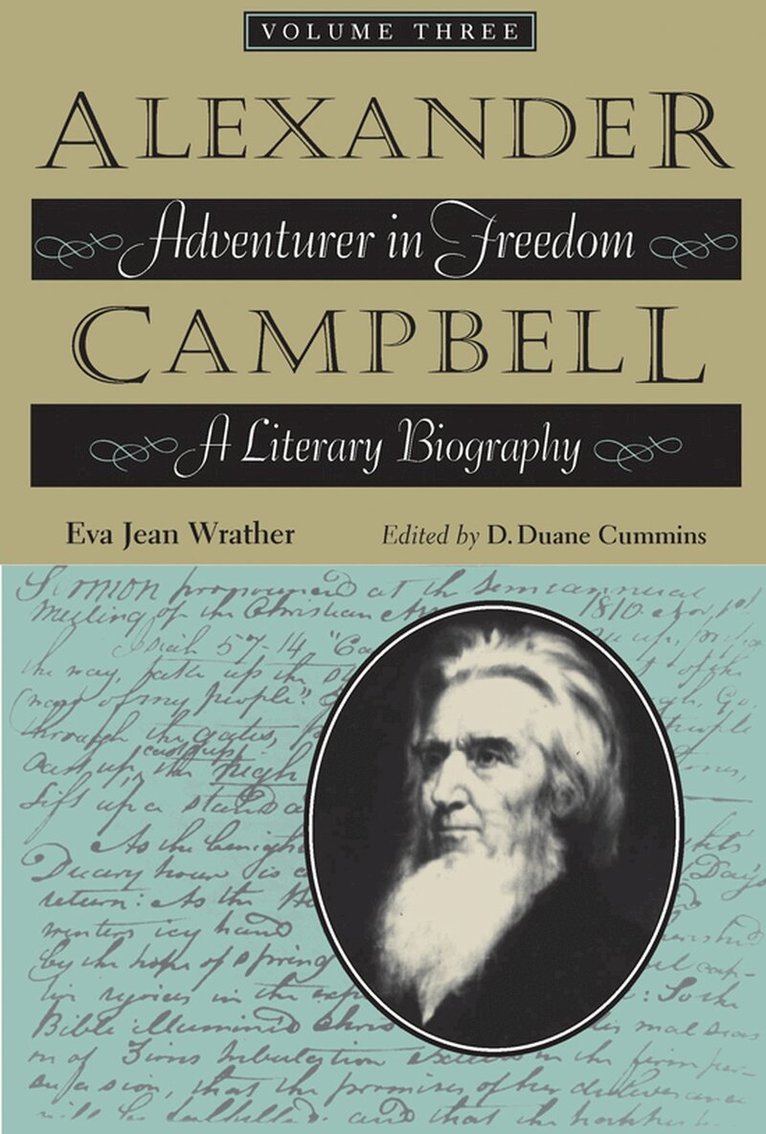
Eva Jean Wrather (1908-2001) spent most of her adult lifetime writing a biography of Alexander Campbell, founder of the Christian Church (Disciples of Christ), the only Protestant denomination to spring from American soil. Shortly before Wrather's death, the manuscript totaled 800,000 words or 3,254 pages. Historian D. Duane Cummins worked with her until her death and then afterwards to craft a three-volume work comprising Campbell's lifetime of theological doctrine and literary writing. Volume three of this work bears Cummins' organization and structure, along with some of his own research, preserving as much as possible Wrather's inimitable writing style.