2 210 kr
Skickas inom 10-15 vardagar
2 210 kr
Skickas inom 10-15 vardagar
671 kr
Skickas inom 10-15 vardagar
1 024 kr
Läs direkt efter köp
The eleven contributors to this volume come to grips with the hard realities of controlling war in our modern, interrelated world. All of them deal directly with the role of law in the management of conflict. From Cyril E. Black''s introductory chapter, "Conflict Management and World Order," to Richard J. Barnet''s concluding chapter, "Toward the Control of International Violence: The Limits and the Possibilities of Law," each expert moves from analysis of some immediate problem of international legal control to the direct application of law to war.The contributors include Tom J. Farer, Rosalyn Higgins, John Norton Moore, Daniel Wiles, William B. Bader, Arnold Kramish, Mason Willrich, W. Michael Reisman, and Harold Feiveson.Conflict Management is the third volume in a large-scale collaborative research project intended to focus the attention of international lawyers and social scientists on the near future of the international legal order. A brochure describing the entire series is available.Cyril E. Black is Duke Professor of Russian History and Director of the Center of International Studies, Princeton University. Richard A. Falk is Milbank Professor of International Law and Practice, Princeton University.Written under the auspices of the Center of Interntional Studies, Princeton University.Originally published in 1971.The Princeton Legacy Library uses the latest print-on-demand technology to again make available previously out-of-print books from the distinguished backlist of Princeton University Press. These editions preserve the original texts of these important books while presenting them in durable paperback and hardcover editions. The goal of the Princeton Legacy Library is to vastly increase access to the rich scholarly heritage found in the thousands of books published by Princeton University Press since its founding in 1905.
1 348 kr
Skickas inom 7-10 vardagar
1 618 kr
Skickas inom 3-6 vardagar
738 kr
Skickas inom 7-10 vardagar
660 kr
Skickas inom 3-6 vardagar
1 360 kr
Skickas inom 3-6 vardagar
671 kr
Skickas inom 7-10 vardagar
1 289 kr
Skickas inom 3-6 vardagar
3 498 kr
Skickas inom 7-10 vardagar
4 062 kr
Skickas inom 7-10 vardagar
2 325 kr
Skickas inom 7-10 vardagar
4 094 kr
Skickas inom 7-10 vardagar
1 613 kr
Skickas inom 3-6 vardagar
3 322 kr
Skickas inom 3-6 vardagar
3 035 kr
Skickas inom 7-10 vardagar
3 069 kr
Skickas inom 10-15 vardagar
751 kr
Skickas inom 10-15 vardagar
768 kr
Läs direkt efter köp
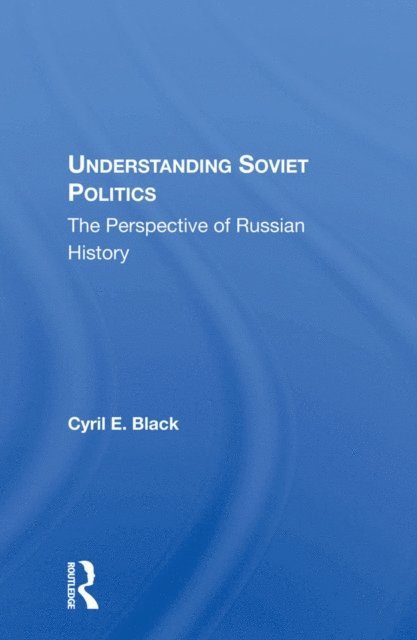
To what extent did the Russian revolution of 1917 bring about the changes wanted by the Bolsheviks? Why did many of these changes fail to materialize? How has the Russian heritage adapted to the challenges facing all modernizing societies? What does Russia''s past tell us about the present role of the USSR in world affairs?
In this collection of essays, which includes new part and chapter introductions, Dr. Black discusses these questions, examining the major issues that shape our understanding of Soviet politics. Beginning with a general exploration of the ways the traditional heritage of the Russian empire has both helped and hindered the adaptation of Soviet society to the contemporary world, he illustrates the extent to which the Russian empire was already evolving into a modern society before World War · I. The author analyzes the modernization of the USSR, emphasizing the interaction of tradition and modernity and the ways the Russian heritage of institutions and values has been adapted since 1861 to the needs of political development, economic growth, and social integration. Comparisons are made with a wide range of societies, first in 1967 the fiftieth anniversary of the Russian revolution and again in the 1980s.
The book considers the past and present relations of Russia/USSR with the outside world in the context of universal societal changes. Dr. Black discusses such questions as the differences between the foreign policy objectives of Czarist Russia and the Soviet Union; the degree to which Russia/USSR has been able to influence other countries through means other than military power; and, drawing on his experience in Bulgaria, the origins of the cold war. The book concludes with Dr. Black''s personal interview with Nikita Khrushchev, a discussion that provides rare insights into the thought processes of a leading Soviet statesman at the height of his power
779 kr
Läs direkt efter köp
To what extent did the Russian revolution of 1917 bring about the changes wanted by the Bolsheviks? Why did many of these changes fail to materialize? How has the Russian heritage adapted to the challenges facing all modernizing societies? What does Russia''s past tell us about the present role of the USSR in world affairs?
In this collection of essays, which includes new part and chapter introductions, Dr. Black discusses these questions, examining the major issues that shape our understanding of Soviet politics. Beginning with a general exploration of the ways the traditional heritage of the Russian empire has both helped and hindered the adaptation of Soviet society to the contemporary world, he illustrates the extent to which the Russian empire was already evolving into a modern society before World War · I. The author analyzes the modernization of the USSR, emphasizing the interaction of tradition and modernity and the ways the Russian heritage of institutions and values has been adapted since 1861 to the needs of political development, economic growth, and social integration. Comparisons are made with a wide range of societies, first in 1967 the fiftieth anniversary of the Russian revolution and again in the 1980s.
The book considers the past and present relations of Russia/USSR with the outside world in the context of universal societal changes. Dr. Black discusses such questions as the differences between the foreign policy objectives of Czarist Russia and the Soviet Union; the degree to which Russia/USSR has been able to influence other countries through means other than military power; and, drawing on his experience in Bulgaria, the origins of the cold war. The book concludes with Dr. Black''s personal interview with Nikita Khrushchev, a discussion that provides rare insights into the thought processes of a leading Soviet statesman at the height of his power

910 kr
Läs direkt efter köp
883 kr
Läs direkt efter köp
1 225 kr
Läs direkt efter köp
717 kr
Läs direkt efter köp
1 312 kr
Läs direkt efter köp
1 238 kr
Läs direkt efter köp
511 kr
Läs direkt efter köp
Neutralization is a technique for the management of power in international relations: for the restraint and, to a degree, regulation of the exercise of power in areas that become focal points of competitive struggle. In this volume four leading scholars assess the potential uses of neutralization in the contemporary world. In interlocking essays the authors discuss the functions of neutralization, relevant historical precedents, preconditions for its establishment, methods of negotiating neutralization, maintenance of neutralization, and the prospects for neutralization in Southeast Asia today.Originally published in 1968.The Princeton Legacy Library uses the latest print-on-demand technology to again make available previously out-of-print books from the distinguished backlist of Princeton University Press. These editions preserve the original texts of these important books while presenting them in durable paperback and hardcover editions. The goal of the Princeton Legacy Library is to vastly increase access to the rich scholarly heritage found in the thousands of books published by Princeton University Press since its founding in 1905.
992 kr
Läs direkt efter köp
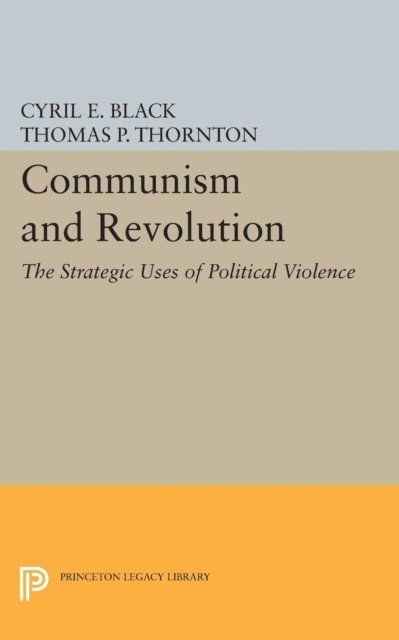
In a period marked by growing fluidity between the West and the Communist nations, the role of revolution as an instrument of political and social change takes on an intense, possibly dangerous importance. Owing to the unacceptable risks of international war, revolutions in the less developed countries are increasingly taking the place of war as the main arena of great-power conflict. Thus, the attitudes and policies of the Communist countries toward revolution are of vital concern. In this book, thirteen specialists on Communist affairs consider how the Communists have used revolutions in the past, what they have deduced from their experience, and what prospects they hold for revolution in light of their ideological commitments.Originally published in 1964.The Princeton Legacy Library uses the latest print-on-demand technology to again make available previously out-of-print books from the distinguished backlist of Princeton University Press. These editions preserve the original texts of these important books while presenting them in durable paperback and hardcover editions. The goal of the Princeton Legacy Library is to vastly increase access to the rich scholarly heritage found in the thousands of books published by Princeton University Press since its founding in 1905.