• Fri frakt över 249 kr
  • •
  • Snabba leveranser
  • •
  • Billiga böcker
Kundservice
Bokus logotyp. Gå till startsidan.
  • Erbjudanden
  • E-böcker
  • Jul
  • Nyheter
  • Pocket
  • Spel & pussel
  • Student
  • Topplistor
  • Barn & ungdom
  • Bokus Play
Black Week 15% på allt med kod:
Se alla aktuella erbjudanden

Mina sidor

    Hjälp

    • Kundservice
    • Vanliga frågor och svar
    • Frakt och leverans
    • Retur vid ångerrätt
    • Reklamera vara
    • Betalning
    • Köpvillkor
    • Allmänna villkor
    • Information om webbplatsens tillgänglighet

    Om Bokus

    • Om oss
    • Pressrum
    • För studenter
    • För företag
    • För bibliotek och offentlig verksamhet
    • För leverantörer
    • Hållbarhet

    Populärt

    • Aktuella erbjudanden
    • Bokus Play
    • Presentkort
    • Student
    • Nyheter
    • Topplistor
    • Black friday
    • Signerade böcker
    • Engelska böcker
    • Jul

    Inspiration

    • Boktips
    • BookTok
    • Populära bokserier
    • Barnbokskaraktärer
    • Populära författare
    • Bokcirkel
    • Prisbelönade böcker
    • Barn och läsning

    Mina sidor

      Hjälp

      • Kundservice
      • Vanliga frågor och svar
      • Frakt och leverans
      • Retur vid ångerrätt
      • Reklamera vara
      • Betalning
      • Köpvillkor
      • Allmänna villkor
      • Information om webbplatsens tillgänglighet

      Om Bokus

      • Om oss
      • Pressrum
      • För studenter
      • För företag
      • För bibliotek och offentlig verksamhet
      • För leverantörer
      • Hållbarhet

      Populärt

      • Aktuella erbjudanden
      • Bokus Play
      • Presentkort
      • Student
      • Nyheter
      • Topplistor
      • Black friday
      • Signerade böcker
      • Engelska böcker
      • Jul

      Inspiration

      • Boktips
      • BookTok
      • Populära bokserier
      • Barnbokskaraktärer
      • Populära författare
      • Bokcirkel
      • Prisbelönade böcker
      • Barn och läsning
      Logotyp för Bokus
      Följ oss på Facebook (extern länk)Följ oss på Instagram (extern länk)Följ oss på YouTube (extern länk)Följ oss på TikTok (extern länk)
      Bokus @ CookiesIntegritetspolicyKöpvillkor
      Till Citymail hemsida (extern länk)Till DHL hemsida (extern länk)Till Instabox hemsida (extern länk)Till Bring hemsida (extern länk)Till Budbee hemsida (extern länk)Till Postnord hemsida (extern länk)Till Schenker hemsida (extern länk)Till Early Bird hemsida (extern länk)Till Walleys hemsida (extern länk)
      • Skönlitteratur
      • Barn och ungdom
      • Deckare
      • Samhälle och politik
      • Spel och pussel
      • Kalender
      • Fantasy, SciFi och skräck
      • Psykologi och pedagogik
      • Biografier
      • Sport, fritid och hobby
      • Historia och arkeologi
      • Mat och dryck
      • Hälsa och familj
      • Tecknade serier
      • Ekonomi och Ledarskap
      • Filosofi och religion
      • Kultur
      • Pennor och tillbehör
      • Naturvetenskap och teknik
      • Medicin
      • Läromedel
      • Juridik
      • Djur och Natur
      • Språk och ordböcker
      • Ande, kropp och själ
      • Måla och pyssla
      • Reseguider
      • Hem och Trädgård
      • Data och IT
      • Anteckning
      • Kort, Kuvert och Brevpapper
      • Kontorsmaterial
      • Lästillbehör
      • Garn stickning
      • Presentinslagning
      • Romaner
      • Romance
      • Feelgood
      • Action och Äventyrsromaner
      • Komedi
      • Poesi
      • Noveller
      • Litteraturvetenskap
      • Essäer
      • Myter
      • Dramatik
      • Erotiska böcker
      • Antologier
      • Sagor
      • Folksagor
      • Barnböcker 3-6 år
      • Barnböcker 6-9 år
      • Barnböcker 9-12 år
      • Barnböcker 0-3 år
      • Faktaböcker
      • Pysselböcker
      • Kapitelböcker
      • Böcker 12-15 år
      • Lättlästa barnböcker
      • Ungdomsböcker
      • Böcker om känslor
      • Klassiska barnböcker
      • Populära teman
      • Kokböcker för barn
      • Presentböcker
      • Godnattsagor
      • Thriller
      • Polisromaner
      • Deckare
      • Psykologisk spänning
      • Mysdeckare
      • Historiska deckare
      • Klassiska deckare
      • Samhälle och kultur
      • Politik och statsskick
      • Social välfärd och brottslighet
      • Reportage, journalistik och krönikor
      • Krig och försvar
      • Sociologi och antropologi
      • Spel
      • Pussel
      • Leksaker
      • Adventskalender
      • Kalender och almanacka
      • Fantasy
      • Science fiction
      • Skräck
      • Psykologi
      • Pedagogik
      • Sanna berättelser
      • Biografier
      • Självbiografier och Memoarer
      • Tal
      • Hantverk och handarbete
      • Hobby, spel och lekar
      • Sportböcker
      • Humor och presentböcker
      • Fordonsböcker
      • Fiske, jakt och skytte
      • Antikviteter och samlarobjekt
      • Fest och bröllop
      • Livsstil och stilguider
      • Historia
      • Arkeologi
      • Kokböcker
      • Kokböcker från kända kockar
      • Drycker
      • Tobak
      • Hälsa
      • Relationer
      • Självhjälp och praktiska råd
      • Föräldraböcker
      • Självförsörjning och grön livsstil
      • Prepping och överlevnadskunskap
      • Tecknade serier och romaner
      • Manga
      • Företagsekonomi
      • Ledarskapsböcker
      • Nationalekonomi
      • Industrier och branscher
      • Karriärplanering
      • Privatekonomi
      • Religion och tro
      • Filosofi
      • Musikböcker
      • Konstböcker
      • Scenkonst och film
      • Arkitektur
      • Fotoböcker
      • Designböcker
      • Pennor
      • Penntillbehör
      • Matematik och naturvetenskap
      • Teknik och industri
      • Geovetenskap
      • Andra medicinska specialiteter
      • Medicin: allmänt
      • Omvårdnad och medicinska stödfunktioner
      • Klinisk medicin och internmedicin
      • Medicin: icke kliniska discipliner
      • Medicinska studiehandledningar och referensmaterial
      • Veterinärmedicin
      • Alternativ medicin och terapier
      • Kirurgi
      • Läromedel: språk
      • Läromedel: matematik och naturvetenskap
      • Läromedel: samhälle och humaniora
      • Läromedel: yrkesutbildning och övriga ämnen
      • Läromedel: estetiska ämnen
      • Läromedel: studiehandledningar och handböcker
      • Särskilda rättsområden
      • Rättsvetenskap
      • Lagtextsamlingar, lagböcker
      • Internationell rätt
      • Juridik: handböcker
      • Djurböcker
      • Naturböcker
      • Språk: referensverk och allmänt
      • Språkundervisning och språkinlärning
      • Språkvetenskap och lingvistik
      • Ande, kropp och själ
      • Övernaturliga fenomen / det paranormala
      • Pyssel & DIY
      • Kreativitet
      • Måla och teckna
      • Fotoalbum och tillbehör
      • Reseböcker
      • Kartböcker
      • Parlörer
      • Trädgårdsböcker
      • Hus och hem
      • Heminredning
      • Systemvetenskap och AI
      • Informationsteknik: allmänt
      • Programmeringsböcker
      • Digital livsstil och datorspel
      • Grafik och bildbehandling
      • Databaser
      • Affärsapplikationer
      • Människa – datorinteraktion
      • Tillämpad datateknik
      • IT-säkerhet
      • Nätverk och kommunikation
      • Operativsystem
      • Hårdvara
      • It-certifieringar
      • Anteckningsböcker och block
      • Notisblock och flikar
      • Anteckning för barn
      • Gästböcker och adressböcker
      • Kort
      • Kuvert
      • Brevpapper
      • Etiketter
      • Placeringskort
      • Skrivbordsprodukter
      • Skrivbordsförvaring
      • Kopieringspapper
      • Arkivering och bokföring
      • Bokstöd och Book Nook
      • Läslampor
      • Bokmärken
      • Läsglasögon
      • Garn
      • Stickor
      • Presentsnören
      • Presentpapper
      • Presentpåsar
      1. Författare
      2. Committee on Planetary and Lunar Exploration

      Committee on Planetary and Lunar Exploration – författare

      Visar alla böcker från författaren Committee on Planetary and Lunar Exploration. Handla med fri frakt och snabb leverans.
      18 produkter
      Information om vår produktsortering

      Lär dig mer om vår produktsortering och varför vissa produkter visas och prioriteras framför andra.

      Hoppa över filtreringsmeny
      Böcker
      18 produkter
      Information om vår produktsortering

      Lär dig mer om vår produktsortering och varför vissa produkter visas och prioriteras framför andra.

      • Committee on Planetary and Lunar Exploration, Space Studies Board, Division on Engineering and Physical Sciences, National Research Council - Assessment of Mars Science and Mission Priorities, E-bok. Tillgänglighet: Lägg i varukorg

        Assessment of Mars Science and Mission Priorities

        AvCommittee on Planetary and Lunar Exploration,Space Studies Boardm. fl.

        E-bok
        Engelska, 2003

        661 kr

        Läs direkt efter köp

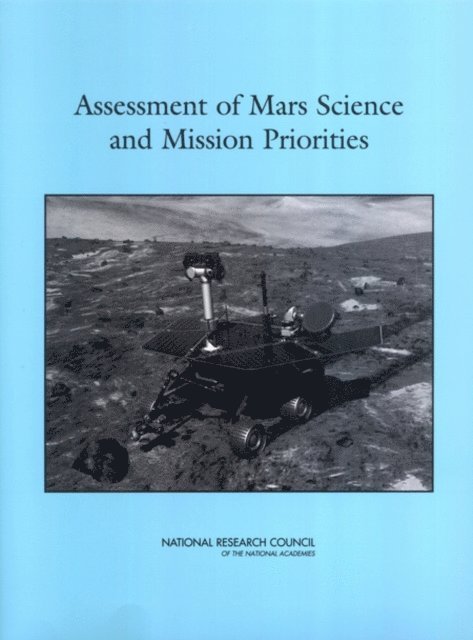
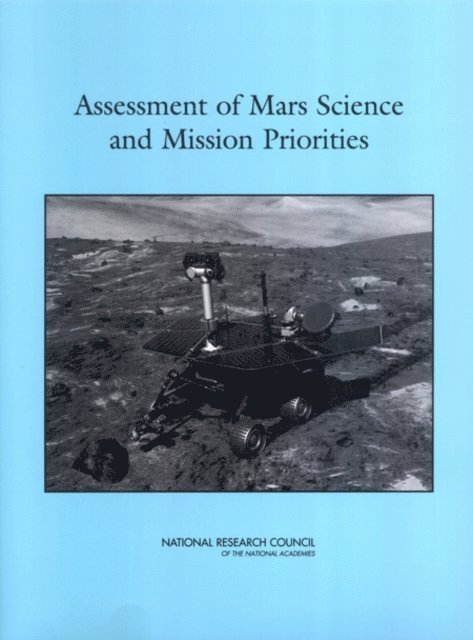
        Within the Office of Space Science of the National Aeronautics and Space Administration (NASA) special importance is attached to exploration of the planet Mars, because it is the most like Earth of the planets in the solar system and the place where the first detection of extraterrestrial life seems most likely to be made. The failures in 1999 of two NASA missions—Mars Climate Orbiter and Mars Polar Lander—caused the space agency''s program of Mars exploration to be systematically rethought, both technologically and scientifically. A new Mars Exploration Program plan (summarized in Appendix A) was announced in October 2000. The Committee on Planetary and Lunar Exploration (COMPLEX), a standing committee of the Space Studies Board of the National Research Council, was asked to examine the scientific content of this new program. This goals of this report are the following:

        -Review the state of knowledge of the planet Mars, with special emphasis on findings of the most recent Mars missions and related research activities;

        -Review the most important Mars research opportunities in the immediate future;

        -Review scientific priorities for the exploration of Mars identified by COMPLEX (and other scientific advisory groups) and their motivation, and consider the degree to which recent discoveries suggest a reordering of priorities; and

        -Assess the congruence between NASA''s evolving Mars Exploration Program plan and these recommended priorities, and suggest any adjustments that might be warranted.
      • Committee on Planetary and Lunar Exploration, Space Studies Board, Division on Engineering and Physical Sciences, National Research Council - Quarantine and Certification of Martian Samples, E-bok. Tillgänglighet: Lägg i varukorg

        Quarantine and Certification of Martian Samples

        AvCommittee on Planetary and Lunar Exploration,Space Studies Boardm. fl.

        E-bok
        Engelska, 2002

        416 kr

        Läs direkt efter köp

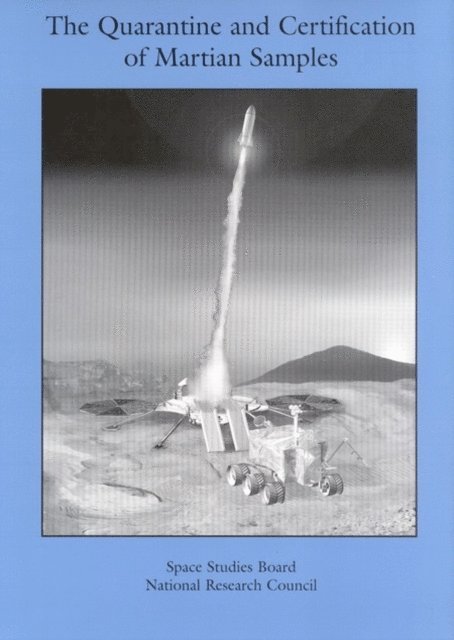
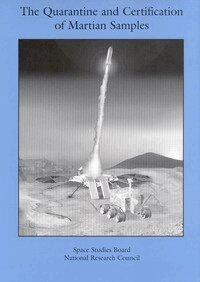
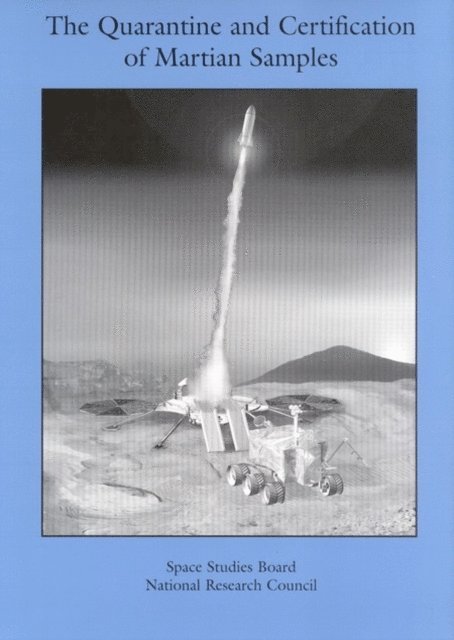
        One of the highest-priority activities in the planetary sciences identified in published reports of the Space Studies Board''s Committee on Planetary and Lunar Exploration (COMPLEX) and in reports of other advisory groups is the collection and return of extraterrestrial samples to Earth for study in terrestrial laboratories. In response to recommendations made in such studies, NASA has initiated a vigorous program that will, within the next decade, collect samples from a variety of solar system environments. In particular the Mars Exploration Program is expected to launch spacecraft that are designed to collect samples of martian soil, rocks, and atmosphere and return them to Earth, perhaps as early as 2015.

        International treaty obligations mandate that NASA conduct such a program in a manner that avoids the cross-contamination of both Earth and Mars. The Space Studies Board''s 1997 report Mars Sample Return: Issues and Recommendations examined many of the planetary-protection issues concerning the back contamination of Earth and concluded that, although the probability that martian samples will contain dangerous biota is small, it is not zero.1 Steps must be taken to protect Earth against the remote possibility of contamination by life forms that may have evolved on Mars. Similarly, the samples, collected at great expense, must be protected against contamination by terrestrial biota and other matter. Almost certainly, meeting these requirements will entail opening the sample-return container in an appropriate facility on Earth-presumably a BSL-4 laboratory-where testing, biosafety certification, and quarantine of the samples will be carried out before aliquots are released to the scientific community for study in existing laboratory facilities. The nature of the required quarantine facility, and the decisions required for disposition of samples once they are in it, were regarded as issues of sufficient importance and complexity to warrant a study by the Committee on Planetary and Lunar Exploration (COMPLEX) in isolation from other topics. (Previous studies have been much broader, including also consideration of the mission that collects samples on Mars and brings them to Earth, atmospheric entry, sample recovery, and transport to the quarantine facility.) The charge to COMPLEX stated that the central question to be addressed in this study is the following: What are the criteria that must be satisfied before martian samples can be released from a quarantine facility?

      • Committee on Planetary and Lunar Exploration, and Applications Commission on Physical Sciences, Mathematics, Space Studies Board, Division on Engineering and Physical Sciences, National Research Council - Science Strategy for the Exploration of Europa, E-bok. Tillgänglighet: Lägg i varukorg

        Science Strategy for the Exploration of Europa

        AvCommittee on Planetary and Lunar Exploration,and Applications Commission on Physical Sciences, Mathematicsm. fl.

        E-bok
        Engelska, 1999

        654 kr

        Läs direkt efter köp

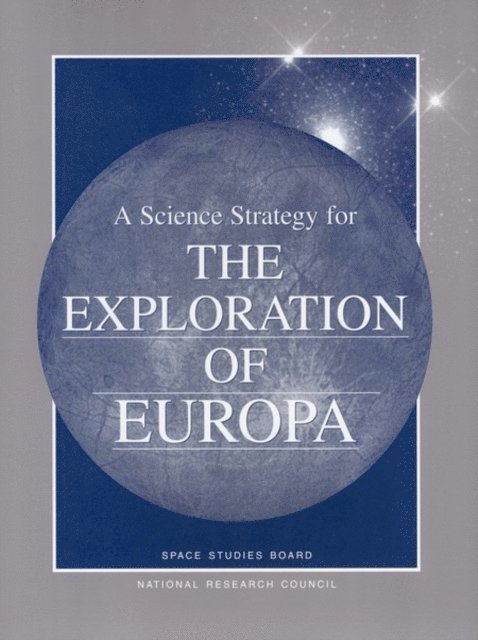
        Since its discovery in 1610, Europa—one of Jupiter''s four large moons—has been an object of interest to astronomers and planetary scientists. Much of this interest stems from observations made by NASA''s Voyager and Galileo spacecraft and from Earth-based telescopes indicating that Europa''s surface is quite young, with very little evidence of cratering, and made principally of water ice.

        More recently, theoretical models of the jovian system and Europa have suggested that tidal heating may have resulted in the existence of liquid water, and perhaps an ocean, beneath Europa''s surface. NASA''s ongoing Galileo mission has profoundly expanded our understanding of Europa and the dynamics of the jovian system, and may allow us to constrain theoretical models of Europa''s subsurface structure.

        Meanwhile, since the time of the Voyagers, there has been a revolution in our understanding of the limits of life on Earth. Life has been detected thriving in environments previously thought to be untenable—around hydrothermal vent systems on the seafloor, deep underground in basaltic rocks, and within polar ice. Elsewhere in the solar system, including on Europa, environments thought to be compatible with life as we know it on Earth are now considered possible, or even probable. Spacecraft missions are being planned that may be capable of proving their existence.

        Against this background, the Space Studies Board charged its Committee on Planetary and Lunar Exploration (COMPLEX) to perform a comprehensive study to assess current knowledge about Europa, outline a strategy for future spacecraft missions to Europa, and identify opportunities for complementary Earth-based studies of Europa. (See the preface for a full statement of the charge.)

      • Committee on Planetary and Lunar Exploration, and Applications Commission on Physical Sciences, Mathematics, Space Studies Board, Division on Engineering and Physical Sciences, National Research Council - Scientific Rationale for Mobility in Planetary Environments, E-bok. Tillgänglighet: Lägg i varukorg

        Scientific Rationale for Mobility in Planetary Environments

        AvCommittee on Planetary and Lunar Exploration,and Applications Commission on Physical Sciences, Mathematicsm. fl.

        E-bok
        Engelska, 1999

        644 kr

        Läs direkt efter köp

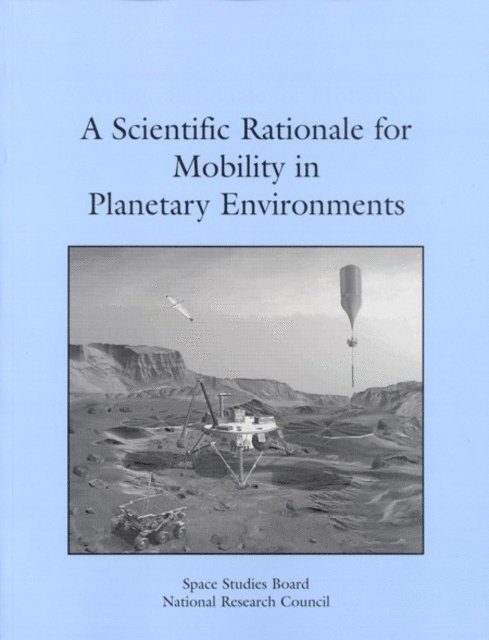
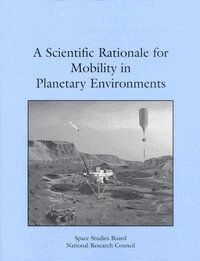
        For the last several decades, the Committee on Planetary and Lunar Exploration (COMPLEX) has advocated a systematic approach to exploration of the solar system; that is, the information and understanding resulting from one mission provide the scientific foundations that motivate subsequent, more elaborate investigations. COMPLEX''s 1994 report, An Integrated Strategy for the Planetary Sciences: 1995-2010, advocated an approach to planetary studies emphasizing "hypothesizing and comprehending" rather than "cataloging and categorizing." More recently, NASA reports, including The Space Science Enterprise Strategic Plan and, in particular, Mission to the Solar System: Exploration and Discovery-A Mission and Technology Roadmap, have outlined comprehensive plans for planetary exploration during the next several decades. The missions outlined in these plans are both generally consistent with the priorities outlined in the Integrated Strategy and other NRC reports, and are replete with examples of devices embodying some degree of mobility in the form of rovers, robotic arms, and the like.

        Because the change in focus of planetary studies called for in the Integrated Strategy appears to require an evolutionary change in the technical means by which solar system exploration missions are conducted, the Space Studies Board charged COMPLEX to review the science that can be uniquely addressed by mobility in planetary environments.

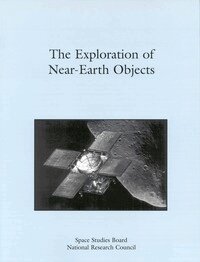
      • Committee on Planetary and Lunar Exploration, and Applications Commission on Physical Sciences, Mathematics, Space Studies Board, Division on Engineering and Physical Sciences, National Research Council - Exploration of Near Earth Objects, E-bok. Tillgänglighet: Lägg i varukorg

        Exploration of Near Earth Objects

        AvCommittee on Planetary and Lunar Exploration,and Applications Commission on Physical Sciences, Mathematicsm. fl.

        E-bok
        Engelska, 1998

        658 kr

        Läs direkt efter köp

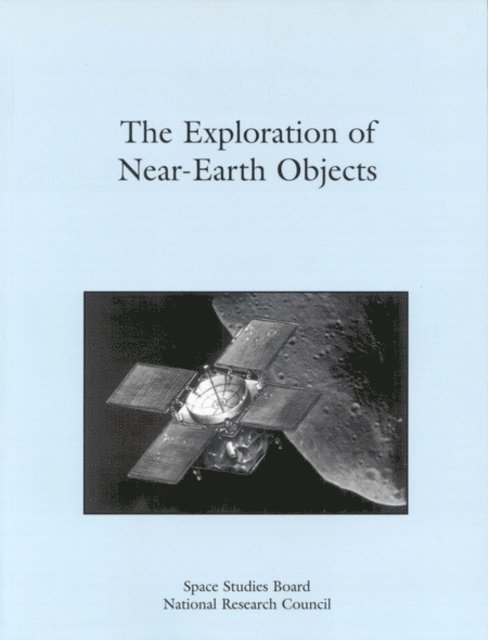
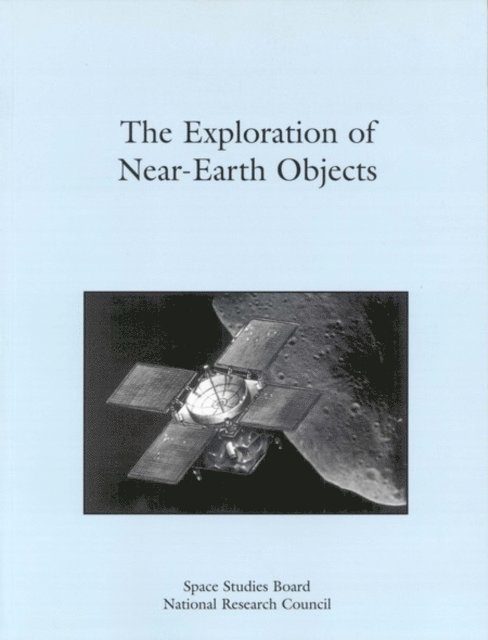
        Comets and asteroids are in some sense the fossils of the solar system. They have avoided most of the drastic physical processing that shaped the planets and thus represent more closely the properties of the primordial solar nebula. What processing has taken place is itself of interest in decoding the history of our solar neighborhood. Near-Earth objects are also of interest because one or more large ones have been blamed for the rare but devastating events that caused mass extinctions of species on our planet, as attested by recent excitement over the impending passage of asteroid 1997 XF11.

        The comets and asteroids whose orbits bring them close to Earth are clearly the most accessible to detailed investigation, both from the ground and from spacecraft. When nature kindly delivers the occasional asteroid to the surface of Earth as a meteorite, we can scrutinize it closely in the laboratory; a great deal of information about primordial chemical composition and primitive processes has been gleaned from such objects.

        This report reviews the current state of research on near-Earth objects and considers future directions. Attention is paid to the important interplay between ground-based investigations and spaceborne observation or sample collection and return. This is particularly timely since one U.S. spacecraft is already on its way to rendezvous with a near-Earth object, and two others plus a Japanese mission are being readied for launch. In addition to scientific issues, the report considers technologies that would enable further advances in capability and points out the possibilities for including near-Earth objects in any future expansion of human exploration beyond low Earth orbit.

      • Committee on Planetary and Lunar Exploration, and Applications Commission on Physical Sciences, Mathematics, Space Studies Board, Division on Engineering and Physical Sciences, National Research Council - Exploring the Trans-Neptunian Solar System, E-bok. Tillgänglighet: Lägg i varukorg

        Exploring the Trans-Neptunian Solar System

        AvCommittee on Planetary and Lunar Exploration,and Applications Commission on Physical Sciences, Mathematicsm. fl.

        E-bok
        Engelska, 1998

        658 kr

        Läs direkt efter köp

        In the last decade, our knowledge of the outer solar system has been transformed as a result of the Voyager 2 encounter with Neptune and its satellite Triton and from Earth-based observations of the Pluto-Charon system. However, the planetary system does not simply end at the distance of Pluto and Neptune. In the past few years, dozens of bodies have been discovered in near-circular, low inclination orbits near or beyond the orbit of Neptune. These bodies are now believed to be directly related to each other and to Pluto, Charon, and Triton, and as a class they define and occupy the inner boundary of a hitherto unexplored component of the solar system, the trans-neptunian region. Exploring the Trans-Neptunian Solar System reviews current understanding of the trans-neptunian solar system and makes recommendations for the future exploration of this distant realm.

      • Committee on Planetary and Lunar Exploration, Space Studies Board, Division on Engineering and Physical Sciences, National Research Council - Assessment of Mars Science and Mission Priorities, E-bok. Tillgänglighet: Lägg i varukorg

        Assessment of Mars Science and Mission Priorities

        AvCommittee on Planetary and Lunar Exploration,Space Studies Boardm. fl.

        E-bok
        PDF, Engelska, 2003

        465 kr

        Läs direkt efter köp

        Within the Office of Space Science of the National Aeronautics and Space Administration (NASA) special importance is attached to exploration of the planet Mars, because it is the most like Earth of the planets in the solar system and the place where the first detection of extraterrestrial life seems most likely to be made. The failures in 1999 of two NASA missions—Mars Climate Orbiter and Mars Polar Lander—caused the space agency''s program of Mars exploration to be systematically rethought, both technologically and scientifically. A new Mars Exploration Program plan (summarized in Appendix A) was announced in October 2000. The Committee on Planetary and Lunar Exploration (COMPLEX), a standing committee of the Space Studies Board of the National Research Council, was asked to examine the scientific content of this new program. This goals of this report are the following:

        -Review the state of knowledge of the planet Mars, with special emphasis on findings of the most recent Mars missions and related research activities;

        -Review the most important Mars research opportunities in the immediate future;

        -Review scientific priorities for the exploration of Mars identified by COMPLEX (and other scientific advisory groups) and their motivation, and consider the degree to which recent discoveries suggest a reordering of priorities; and

        -Assess the congruence between NASA''s evolving Mars Exploration Program plan and these recommended priorities, and suggest any adjustments that might be warranted.
      • Committee on Planetary and Lunar Exploration, Space Studies Board, Division on Engineering and Physical Sciences, National Research Council - Quarantine and Certification of Martian Samples, E-bok. Tillgänglighet: Lägg i varukorg

        Quarantine and Certification of Martian Samples

        AvCommittee on Planetary and Lunar Exploration,Space Studies Boardm. fl.

        E-bok
        PDF, Engelska, 2002

        284 kr

        Läs direkt efter köp

        One of the highest-priority activities in the planetary sciences identified in published reports of the Space Studies Board''s Committee on Planetary and Lunar Exploration (COMPLEX) and in reports of other advisory groups is the collection and return of extraterrestrial samples to Earth for study in terrestrial laboratories. In response to recommendations made in such studies, NASA has initiated a vigorous program that will, within the next decade, collect samples from a variety of solar system environments. In particular the Mars Exploration Program is expected to launch spacecraft that are designed to collect samples of martian soil, rocks, and atmosphere and return them to Earth, perhaps as early as 2015.

        International treaty obligations mandate that NASA conduct such a program in a manner that avoids the cross-contamination of both Earth and Mars. The Space Studies Board''s 1997 report Mars Sample Return: Issues and Recommendations examined many of the planetary-protection issues concerning the back contamination of Earth and concluded that, although the probability that martian samples will contain dangerous biota is small, it is not zero.1 Steps must be taken to protect Earth against the remote possibility of contamination by life forms that may have evolved on Mars. Similarly, the samples, collected at great expense, must be protected against contamination by terrestrial biota and other matter. Almost certainly, meeting these requirements will entail opening the sample-return container in an appropriate facility on Earth-presumably a BSL-4 laboratory-where testing, biosafety certification, and quarantine of the samples will be carried out before aliquots are released to the scientific community for study in existing laboratory facilities. The nature of the required quarantine facility, and the decisions required for disposition of samples once they are in it, were regarded as issues of sufficient importance and complexity to warrant a study by the Committee on Planetary and Lunar Exploration (COMPLEX) in isolation from other topics. (Previous studies have been much broader, including also consideration of the mission that collects samples on Mars and brings them to Earth, atmospheric entry, sample recovery, and transport to the quarantine facility.) The charge to COMPLEX stated that the central question to be addressed in this study is the following: What are the criteria that must be satisfied before martian samples can be released from a quarantine facility?

      • Committee on Planetary and Lunar Exploration, and Applications Commission on Physical Sciences, Mathematics, Space Studies Board, Division on Engineering and Physical Sciences, National Research Council - Science Strategy for the Exploration of Europa, E-bok. Tillgänglighet: Lägg i varukorg

        Science Strategy for the Exploration of Europa

        AvCommittee on Planetary and Lunar Exploration,and Applications Commission on Physical Sciences, Mathematicsm. fl.

        E-bok
        PDF, Engelska, 1999

        465 kr

        Läs direkt efter köp

        Since its discovery in 1610, Europa—one of Jupiter''s four large moons—has been an object of interest to astronomers and planetary scientists. Much of this interest stems from observations made by NASA''s Voyager and Galileo spacecraft and from Earth-based telescopes indicating that Europa''s surface is quite young, with very little evidence of cratering, and made principally of water ice.

        More recently, theoretical models of the jovian system and Europa have suggested that tidal heating may have resulted in the existence of liquid water, and perhaps an ocean, beneath Europa''s surface. NASA''s ongoing Galileo mission has profoundly expanded our understanding of Europa and the dynamics of the jovian system, and may allow us to constrain theoretical models of Europa''s subsurface structure.

        Meanwhile, since the time of the Voyagers, there has been a revolution in our understanding of the limits of life on Earth. Life has been detected thriving in environments previously thought to be untenable—around hydrothermal vent systems on the seafloor, deep underground in basaltic rocks, and within polar ice. Elsewhere in the solar system, including on Europa, environments thought to be compatible with life as we know it on Earth are now considered possible, or even probable. Spacecraft missions are being planned that may be capable of proving their existence.

        Against this background, the Space Studies Board charged its Committee on Planetary and Lunar Exploration (COMPLEX) to perform a comprehensive study to assess current knowledge about Europa, outline a strategy for future spacecraft missions to Europa, and identify opportunities for complementary Earth-based studies of Europa. (See the preface for a full statement of the charge.)

      • Committee on Planetary and Lunar Exploration, and Applications Commission on Physical Sciences, Mathematics, Space Studies Board, Division on Engineering and Physical Sciences, National Research Council - Scientific Rationale for Mobility in Planetary Environments, E-bok. Tillgänglighet: Lägg i varukorg

        Scientific Rationale for Mobility in Planetary Environments

        AvCommittee on Planetary and Lunar Exploration,and Applications Commission on Physical Sciences, Mathematicsm. fl.

        E-bok
        PDF, Engelska, 1999

        465 kr

        Läs direkt efter köp

        For the last several decades, the Committee on Planetary and Lunar Exploration (COMPLEX) has advocated a systematic approach to exploration of the solar system; that is, the information and understanding resulting from one mission provide the scientific foundations that motivate subsequent, more elaborate investigations. COMPLEX''s 1994 report, An Integrated Strategy for the Planetary Sciences: 1995-2010, advocated an approach to planetary studies emphasizing "hypothesizing and comprehending" rather than "cataloging and categorizing." More recently, NASA reports, including The Space Science Enterprise Strategic Plan and, in particular, Mission to the Solar System: Exploration and Discovery-A Mission and Technology Roadmap, have outlined comprehensive plans for planetary exploration during the next several decades. The missions outlined in these plans are both generally consistent with the priorities outlined in the Integrated Strategy and other NRC reports, and are replete with examples of devices embodying some degree of mobility in the form of rovers, robotic arms, and the like.

        Because the change in focus of planetary studies called for in the Integrated Strategy appears to require an evolutionary change in the technical means by which solar system exploration missions are conducted, the Space Studies Board charged COMPLEX to review the science that can be uniquely addressed by mobility in planetary environments.

      • Committee on Planetary and Lunar Exploration, and Applications Commission on Physical Sciences, Mathematics, Space Studies Board, Division on Engineering and Physical Sciences, National Research Council - Exploring the Trans-Neptunian Solar System, E-bok. Tillgänglighet: Lägg i varukorg

        Exploring the Trans-Neptunian Solar System

        AvCommittee on Planetary and Lunar Exploration,and Applications Commission on Physical Sciences, Mathematicsm. fl.

        E-bok
        PDF, Engelska, 1998

        468 kr

        Läs direkt efter köp

        In the last decade, our knowledge of the outer solar system has been transformed as a result of the Voyager 2 encounter with Neptune and its satellite Triton and from Earth-based observations of the Pluto-Charon system. However, the planetary system does not simply end at the distance of Pluto and Neptune. In the past few years, dozens of bodies have been discovered in near-circular, low inclination orbits near or beyond the orbit of Neptune. These bodies are now believed to be directly related to each other and to Pluto, Charon, and Triton, and as a class they define and occupy the inner boundary of a hitherto unexplored component of the solar system, the trans-neptunian region. Exploring the Trans-Neptunian Solar System reviews current understanding of the trans-neptunian solar system and makes recommendations for the future exploration of this distant realm.

      • Committee on Planetary and Lunar Exploration, and Applications Commission on Physical Sciences, Mathematics, Space Studies Board, Division on Engineering and Physical Sciences, National Research Council - Exploration of Near Earth Objects, E-bok. Tillgänglighet: Lägg i varukorg

        Exploration of Near Earth Objects

        AvCommittee on Planetary and Lunar Exploration,and Applications Commission on Physical Sciences, Mathematicsm. fl.

        E-bok
        PDF, Engelska, 1998

        465 kr

        Läs direkt efter köp

        Comets and asteroids are in some sense the fossils of the solar system. They have avoided most of the drastic physical processing that shaped the planets and thus represent more closely the properties of the primordial solar nebula. What processing has taken place is itself of interest in decoding the history of our solar neighborhood. Near-Earth objects are also of interest because one or more large ones have been blamed for the rare but devastating events that caused mass extinctions of species on our planet, as attested by recent excitement over the impending passage of asteroid 1997 XF11.

        The comets and asteroids whose orbits bring them close to Earth are clearly the most accessible to detailed investigation, both from the ground and from spacecraft. When nature kindly delivers the occasional asteroid to the surface of Earth as a meteorite, we can scrutinize it closely in the laboratory; a great deal of information about primordial chemical composition and primitive processes has been gleaned from such objects.

        This report reviews the current state of research on near-Earth objects and considers future directions. Attention is paid to the important interplay between ground-based investigations and spaceborne observation or sample collection and return. This is particularly timely since one U.S. spacecraft is already on its way to rendezvous with a near-Earth object, and two others plus a Japanese mission are being readied for launch. In addition to scientific issues, the report considers technologies that would enable further advances in capability and points out the possibilities for including near-Earth objects in any future expansion of human exploration beyond low Earth orbit.

      • Committee on Planetary and Lunar Exploration, Space Studies Board, Division on Engineering and Physical Sciences, National Research Council - Strategy for the Detection and Study of Other Planetary Systems and Extrasolar Planetary Materials, E-bok. Tillgänglighet: Lägg i varukorg

        Strategy for the Detection and Study of Other Planetary Systems and Extrasolar Planetary Materials

        1990-2000

        AvCommittee on Planetary and Lunar Exploration,Space Studies Boardm. fl.

        E-bok
        PDF, Engelska, 1990

        200 kr

        Läs direkt efter köp

        This volume addresses a new opportunity in the planetary sciences—to extend our exploration outward to discover and study planetary systems that may have formed or are forming around other stars.

        It concludes that a coordinated program of astronomical observation, laboratory research, theoretical development, and understanding of the dynamics and origins of whatever may be found would be a technologically feasible and potentially richly rewarding extension of the study of bodies within the solar system.

      • National Research Council, Division on Engineering and Physical Sciences, Space Studies Board, Committee on Planetary and Lunar Exploration - Strategy for the Detection and Study of Other Planetary Systems and Extrasolar Planetary Materials, Häftad. Tillgänglighet: Tillfälligt slut

        Strategy for the Detection and Study of Other Planetary Systems and Extrasolar Planetary Materials

        1990-2000

        AvNational Research Council,Division on Engineering and Physical Sciencesm. fl.

        Häftad, Engelska, 1990

        1 767 kr

        Tillfälligt slut

        This volume addresses a new opportunity in the planetary sciences--to extend our exploration outward to discover and study planetary systems that may have formed or are forming around other stars. It concludes that a coordinated program of astronomical observation, laboratory research, theoretical development, and understanding of the dynamics and origins of whatever may be found would be a technologically feasible and potentially richly rewarding extension of the study of bodies within the solar system.
      • National Research Council, Division on Engineering and Physical Sciences, Space Studies Board, and Applications Commission on Physical Sciences, Mathematics, Committee on Planetary and Lunar Exploration - Exploring the Trans-Neptunian Solar System, Häftad. Tillgänglighet: Tillfälligt slut

        Exploring the Trans-Neptunian Solar System

        AvNational Research Council,Division on Engineering and Physical Sciencesm. fl.

        Häftad, Engelska, 1998

        1 376 kr

        Tillfälligt slut

        In the last decade, our knowledge of the outer solar system has been transformed as a result of the Voyager 2 encounter with Neptune and its satellite Triton and from Earth-based observations of the Pluto-Charon system. However, the planetary system does not simply end at the distance of Pluto and Neptune. In the past few years, dozens of bodies have been discovered in near-circular, low inclination orbits near or beyond the orbit of Neptune. These bodies are now believed to be directly related to each other and to Pluto, Charon, and Triton, and as a class they define and occupy the inner boundary of a hitherto unexplored component of the solar system, the trans-neptunian region. Exploring the Trans-Neptunian Solar System reviews current understanding of the trans-neptunian solar system and makes recommendations for the future exploration of this distant realm.
      • National Research Council, Division on Engineering and Physical Sciences, Space Studies Board, and Applications Commission on Physical Sciences, Mathematics, Committee on Planetary and Lunar Exploration - Exploration of Near Earth Objects, Häftad. Tillgänglighet: Tillfälligt slut

        Exploration of Near Earth Objects

        AvNational Research Council,Division on Engineering and Physical Sciencesm. fl.

        Häftad, Engelska, 1998

        1 376 kr

        Tillfälligt slut

        Comets and asteroids are in some sense the fossils of the solar system. They have avoided most of the drastic physical processing that shaped the planets and thus represent more closely the properties of the primordial solar nebula. What processing has taken place is itself of interest in decoding the history of our solar neighborhood. Near-Earth objects are also of interest because one or more large ones have been blamed for the rare but devastating events that caused mass extinctions of species on our planet, as attested by recent excitement over the impending passage of asteroid 1997 XF11. The comets and asteroids whose orbits bring them close to Earth are clearly the most accessible to detailed investigation, both from the ground and from spacecraft. When nature kindly delivers the occasional asteroid to the surface of Earth as a meteorite, we can scrutinize it closely in the laboratory; a great deal of information about primordial chemical composition and primitive processes has been gleaned from such objects. This report reviews the current state of research on near-Earth objects and considers future directions.Attention is paid to the important interplay between ground-based investigations and spaceborne observation or sample collection and return. This is particularly timely since one U.S. spacecraft is already on its way to rendezvous with a near-Earth object, and two others plus a Japanese mission are being readied for launch. In addition to scientific issues, the report considers technologies that would enable further advances in capability and points out the possibilities for including near-Earth objects in any future expansion of human exploration beyond low Earth orbit.
      • National Research Council, Division on Engineering and Physical Sciences, Space Studies Board, and Applications Commission on Physical Sciences, Mathematics, Committee on Planetary and Lunar Exploration - A Scientific Rationale for Mobility in Planetary Environments, Häftad. Tillgänglighet: Tillfälligt slut

        A Scientific Rationale for Mobility in Planetary Environments

        AvNational Research Council,Division on Engineering and Physical Sciencesm. fl.

        Häftad, Engelska, 1999

        1 376 kr

        Tillfälligt slut

        For the last several decades, the Committee on Planetary and Lunar Exploration (COMPLEX) has advocated a systematic approach to exploration of the solar system; that is, the information and understanding resulting from one mission provide the scientific foundations that motivate subsequent, more elaborate investigations. COMPLEX's 1994 report, An Integrated Strategy for the Planetary Sciences: 1995-2010,1 advocated an approach to planetary studies emphasizing "hypothesizing and comprehending" rather than "cataloging and categorizing." More recently, NASA reports, including The Space Science Enterprise Strategic Plan2 and, in particular, Mission to the Solar System: Exploration and Discovery-A Mission and Technology Roadmap,3 have outlined comprehensive plans for planetary exploration during the next several decades. The missions outlined in these plans are both generally consistent with the priorities outlined in the Integrated Strategy and other NRC reports,4,5 and are replete with examples of devices embodying some degree of mobility in the form of rovers, robotic arms, and the like.Because the change in focus of planetary studies called for in the Integrated Strategy appears to require an evolutionary change in the technical means by which solar system exploration missions are conducted, the Space Studies Board charged COMPLEX to review the science that can be uniquely addressed by mobility in planetary environments.
      • National Research Council, Division on Engineering and Physical Sciences, Space Studies Board, Committee on Planetary and Lunar Exploration - The Quarantine and Certification of Martian Samples, Häftad. Tillgänglighet: Tillfälligt slut

        The Quarantine and Certification of Martian Samples

        AvNational Research Council,Division on Engineering and Physical Sciencesm. fl.

        Häftad, Engelska, 2002

        508 kr

        Tillfälligt slut

        One of the highest-priority activities in the planetary sciences identified in published reports of the Space Studies Board's Committee on Planetary and Lunar Exploration (COMPLEX) and in reports of other advisory groups is the collection and return of extraterrestrial samples to Earth for study in terrestrial laboratories. In response to recommendations made in such studies, NASA has initiated a vigorous program that will, within the next decade, collect samples from a variety of solar system environments. In particular the Mars Exploration Program is expected to launch spacecraft that are designed to collect samples of martian soil, rocks, and atmosphere and return them to Earth, perhaps as early as 2015. International treaty obligations mandate that NASA conduct such a program in a manner that avoids the cross-contamination of both Earth and Mars. The Space Studies Board's 1997 report Mars Sample Return: Issues and Recommendations examined many of the planetary-protection issues concerning the back contamination of Earth and concluded that, although the probability that martian samples will contain dangerous biota is small, it is not zero.1Steps must be taken to protect Earth against the remote possibility of contamination by life forms that may have evolved on Mars. Similarly, the samples, collected at great expense, must be protected against contamination by terrestrial biota and other matter. Almost certainly, meeting these requirements will entail opening the sample-return container in an appropriate facility on Earth-presumably a BSL-4 laboratory-where testing, biosafety certification, and quarantine of the samples will be carried out before aliquots are released to the scientific community for study in existing laboratory facilities. The nature of the required quarantine facility, and the decisions required for disposition of samples once they are in it, were regarded as issues of sufficient importance and complexity to warrant a study by the Committee on Planetary and Lunar Exploration (COMPLEX) in isolation from other topics. (Previous studies have been much broader, including also consideration of the mission that collects samples on Mars and brings them to Earth, atmospheric entry, sample recovery, and transport to the quarantine facility.)The charge to COMPLEX stated that the central question to be addressed in this study is the following: What are the criteria that must be satisfied before martian samples can be released from a quarantine facility?