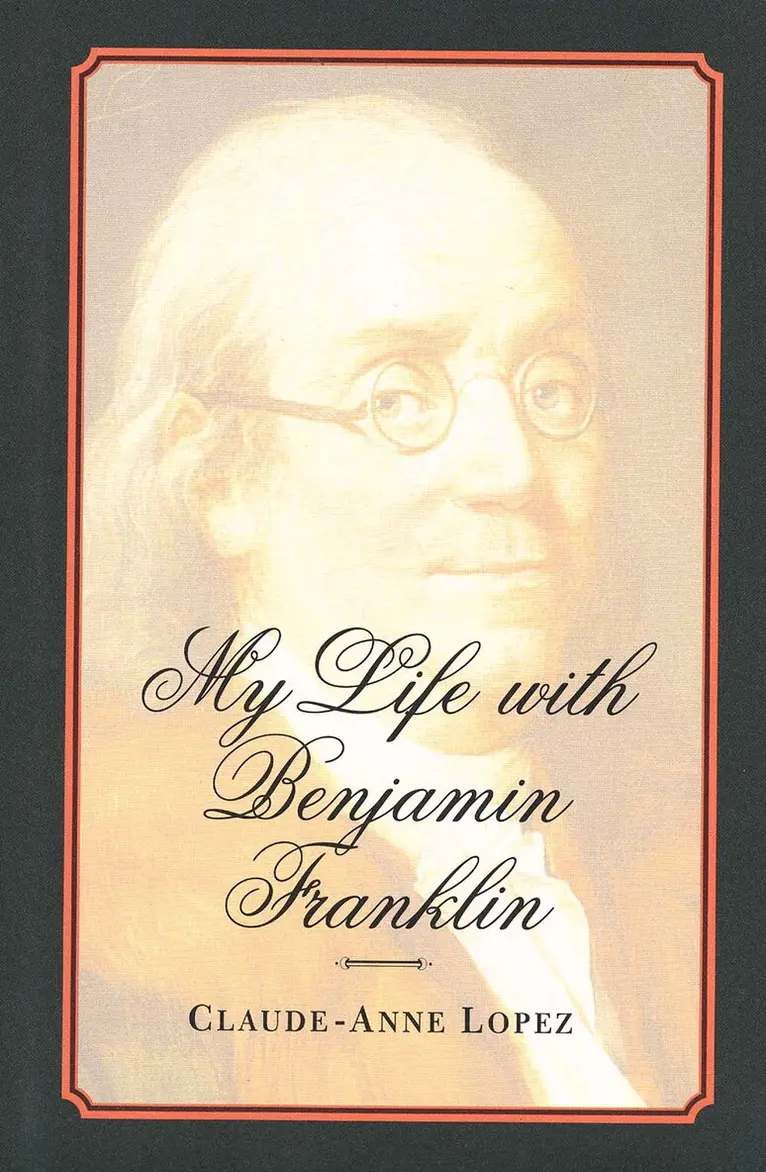
This delightful book is a collection of incidental pieces that reveal little-known aspects of the life and personality of Benjamin Franklin. Written by the doyenne of Franklin scholars, it conveys Franklin’s humor, resiliency, courage, and intelligence, and his faith in a better future.The selections are based on Claude-Anne Lopez’s research in the treasure trove of nearly thirty thousand documents on Franklin assembled at Yale University. They include a detailed refutation of an anti-Semitic forgery attributed to Franklin and currently circulating on the Internet; three mini-detective stories showing Franklin on the fringes of the espionage world; discussions of Franklin’s efforts to outfit Washington’s army and to choose the first dinner set for the Foreign Service; and the tale of the misadventures of a French utopian scheme he sponsored. The only piece of fiction in the book is an imaginary party during which, on the first anniversary of his death, six illustrious Frenchmen discuss Franklin’s influence on their country. Lopez has provided brief personal introductions to each of the pieces, giving her reasons for writing them and in the process threading the essays together.
This book has been written primarily from original sources, published and unpublished, and in particular from the surviving letters that passed between Franklin and his family and friends—only a fraction, alas, of the total written—and including a good many not likely to be printed anywhere else ( for even the monumental edition of the Franklin Papers at Yale has to be limited to letters by or to Franklin in person ). It is not intended as a general biography of Franklin: Claude-Anne Lopez and Eugenia W. Herbert have filled in the background of his life only to the extent that it seemed necessary to their theme, and they have tried to see his many activities first and foremost from the vantage point of his family. At the same time they have endeavored to keep the cast of characters down, excluding many worthy relatives, friends, and enemies, out of consideration for the non-specialist reader, preferring to offer a sample rather than a multitude.
This volume marks the beginning of hostilities between Britain and France. Although Franklin and his fellow commissioners do not play a major role in the new wartime diplomacy and military strategy, the documents richly illustrate his relationship with his American colleagues, his neighbors in Passy, and a wide variety of French correspondents. Franklin, in a moment of personal discouragement at the failure of his amorous pursuit of Mme. Brillon, writes a haunting literary piece the “Ephemera.” Part of his wistful mood undoubtedly stems from his expectation of recall by Congress. Instead Congress at the end of this volume elects him America’s first minister plenipotentiary to the French court.