1 062 kr
Skickas inom 10-15 vardagar
1 062 kr
Skickas inom 10-15 vardagar
2 761 kr
Skickas inom 10-15 vardagar
1 207 kr
Läs direkt efter köp
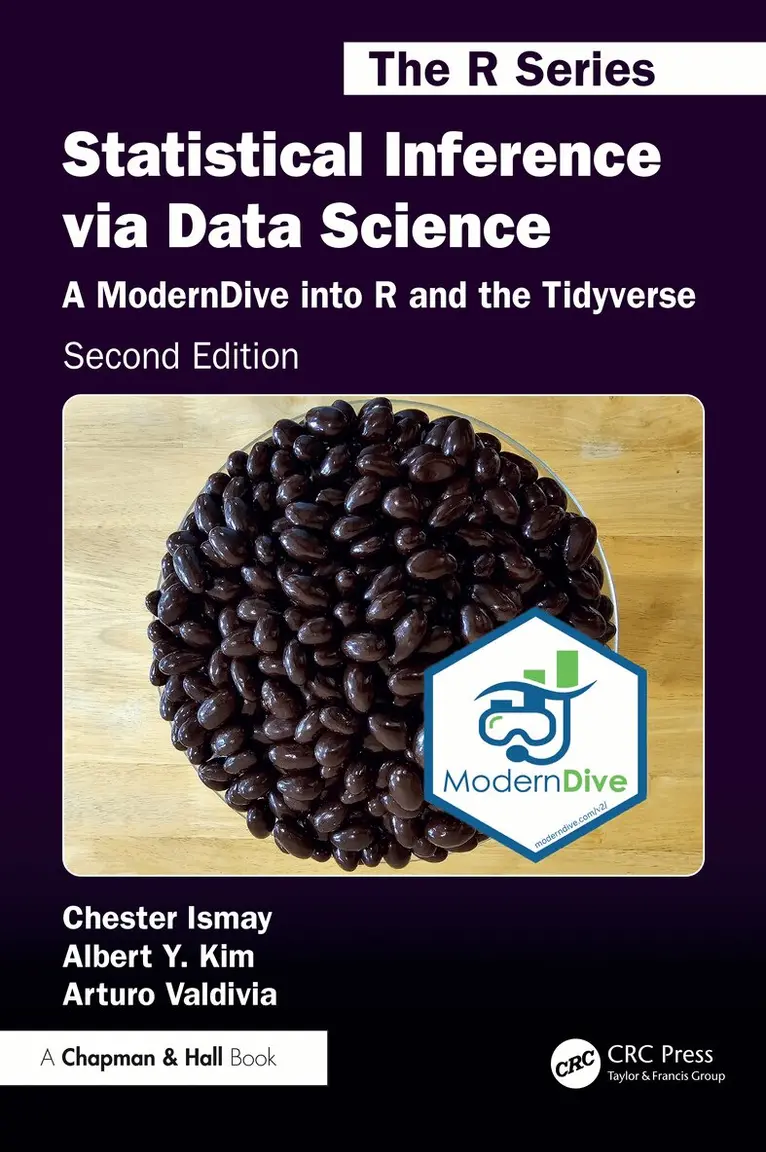
Statistical Inference via Data Science: A ModernDive into R and the Tidyverse, Second Edition offers a comprehensive guide to learning statistical inference with data science tools widely used in industry, academia, and government. The first part of this book introduces the tidyverse suite of R packages, including ggplot2 for data visualization and dplyr for data wrangling. The second part introduces data modeling via simple and multiple linear regression. The third part presents statistical inference using simulation-based methods within a general framework implemented in R via the infer package, a suitable complement to the tidyverse. By working with these methods, readers can implement effective exploratory data analyses, conduct statistical modeling with data, and carry out statistical inference via confidence intervals and hypothesis testing. All of these tasks are performed by strongly emphasizing data visualization.
Key Features in the Second Edition:
Minimal Prerequisites: No prior calculus or coding experience is needed, making the content accessible to a wide audience. Real-World Data: Learn with real-world datasets, including all domestic flights leaving New York City in 2023, the Gapminder project, FiveThirtyEight.com data, and new datasets on health, global development, music, coffee quality, and geyser eruptions. Simulation-Based Inference: Statistical inference through simulation-based methods. Expanded Theoretical Discussions: Includes deeper coverage of theory-based approaches, their connection with simulation-based approaches, and a presentation of intuitive and formal aspects of these methods. Enhanced Use of the infer Package: Leverages the infer package for “tidy” and transparent statistical inference, enabling readers to construct confidence intervals and conduct hypothesis tests through multiple linear regression and beyond. Dynamic Online Resources: All code and output are embedded in the text, with additional interactive exercises, discussions, and solutions available online. Broadened Applications: Suitable for undergraduate and graduate courses, including statistics, data science, and courses emphasizing reproducible research.The first edition of the book has been used in so many different ways--for courses in statistical inference, statistical programming, business analytics, and data science for social policy, and by professionals in many other means. Ideal for those new to statistics or looking to deepen their knowledge, this edition provides a clear entry point into data science and modern statistical methods.
1 220 kr
Läs direkt efter köp
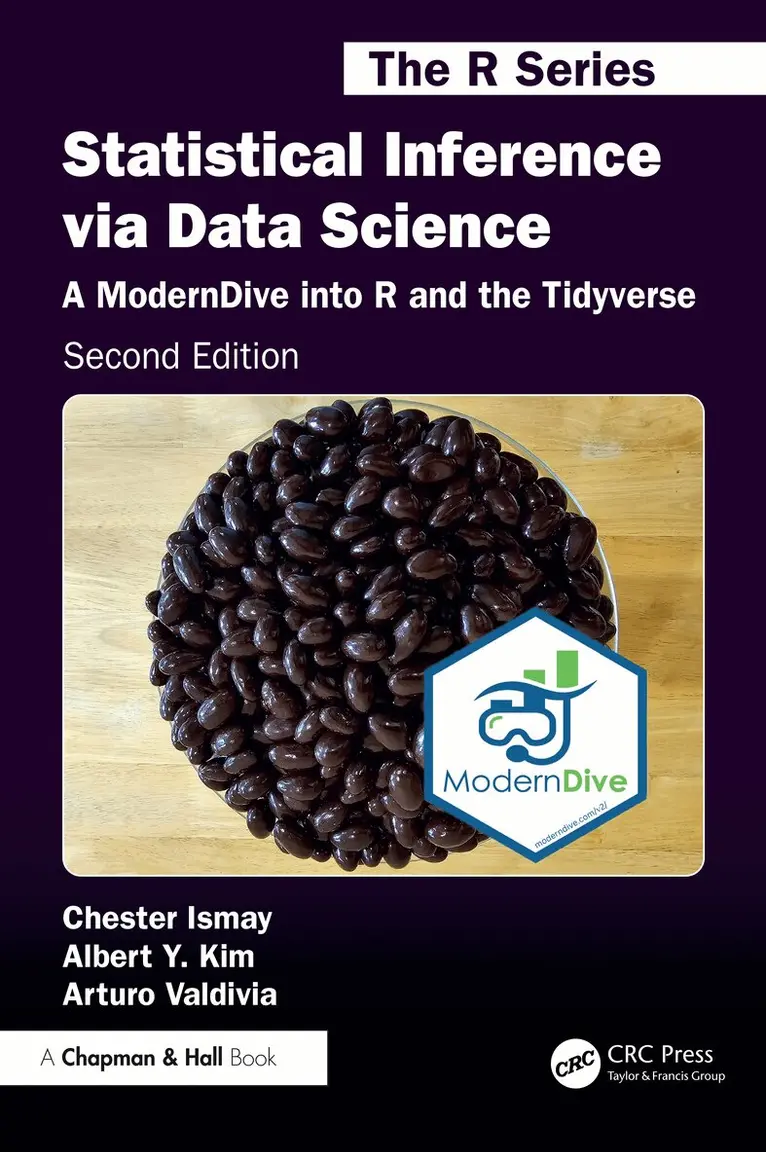
Statistical Inference via Data Science: A ModernDive into R and the Tidyverse, Second Edition offers a comprehensive guide to learning statistical inference with data science tools widely used in industry, academia, and government. The first part of this book introduces the tidyverse suite of R packages, including ggplot2 for data visualization and dplyr for data wrangling. The second part introduces data modeling via simple and multiple linear regression. The third part presents statistical inference using simulation-based methods within a general framework implemented in R via the infer package, a suitable complement to the tidyverse. By working with these methods, readers can implement effective exploratory data analyses, conduct statistical modeling with data, and carry out statistical inference via confidence intervals and hypothesis testing. All of these tasks are performed by strongly emphasizing data visualization.
Key Features in the Second Edition:
Minimal Prerequisites: No prior calculus or coding experience is needed, making the content accessible to a wide audience. Real-World Data: Learn with real-world datasets, including all domestic flights leaving New York City in 2023, the Gapminder project, FiveThirtyEight.com data, and new datasets on health, global development, music, coffee quality, and geyser eruptions. Simulation-Based Inference: Statistical inference through simulation-based methods. Expanded Theoretical Discussions: Includes deeper coverage of theory-based approaches, their connection with simulation-based approaches, and a presentation of intuitive and formal aspects of these methods. Enhanced Use of the infer Package: Leverages the infer package for “tidy” and transparent statistical inference, enabling readers to construct confidence intervals and conduct hypothesis tests through multiple linear regression and beyond. Dynamic Online Resources: All code and output are embedded in the text, with additional interactive exercises, discussions, and solutions available online. Broadened Applications: Suitable for undergraduate and graduate courses, including statistics, data science, and courses emphasizing reproducible research.The first edition of the book has been used in so many different ways--for courses in statistical inference, statistical programming, business analytics, and data science for social policy, and by professionals in many other means. Ideal for those new to statistics or looking to deepen their knowledge, this edition provides a clear entry point into data science and modern statistical methods.

835 kr
Kommande
Parallel simulation is usually presented as a supercomputing topic, wrapped in clusters, schedulers, and specialized languages. Parallel Simulation Experiments on a Personal Computer argues the opposite: the multicore laptop or desktop you already own is enough to run serious simulation experiments, quickly and reproducibly, in both R and Python.
The book is built around sim_template, a compact, extensible program presented in matching R and Python versions, that distributes a simulation across worker processes while giving each worker its own high-quality random number stream. From that foundation the book works through complete, honest examples, with timing tables, missteps, and diagnostics included, showing not just how to parallelize a simulation but how to trust the numbers that come back.
Key Features:
Reproducible parallel random number streams built on the PCG64 generator, via dqrng in R and NumPy's SeedSequence in Python Two full case studies: bootstrap interval estimation for a segmented regression change point in R, and a SIRD epidemic model with inter-process migration in Python Practical chapters on counting cores, memory pressure, benchmarking properly, load A look beyond the personal computer (GPUs, cloud instances, and clusters) and at working alongside AI coding assistants Optional appendices explaining how random number generators work, from congruential generators and RANDU to PCG64Written for applied statisticians, data scientists, and graduate students who use simulation in their work, the book assumes only basic statistics and some familiarity with R or Python. No parallel computing background is required.
2 128 kr
Kommande
Parallel simulation is usually presented as a supercomputing topic, wrapped in clusters, schedulers, and specialized languages. Parallel Simulation Experiments on a Personal Computer argues the opposite: the multicore laptop or desktop you already own is enough to run serious simulation experiments, quickly and reproducibly, in both R and Python.
The book is built around sim_template, a compact, extensible program presented in matching R and Python versions, that distributes a simulation across worker processes while giving each worker its own high-quality random number stream. From that foundation the book works through complete, honest examples, with timing tables, missteps, and diagnostics included, showing not just how to parallelize a simulation but how to trust the numbers that come back.
Key Features:
Reproducible parallel random number streams built on the PCG64 generator, via dqrng in R and NumPy's SeedSequence in Python Two full case studies: bootstrap interval estimation for a segmented regression change point in R, and a SIRD epidemic model with inter-process migration in Python Practical chapters on counting cores, memory pressure, benchmarking properly, load A look beyond the personal computer (GPUs, cloud instances, and clusters) and at working alongside AI coding assistants Optional appendices explaining how random number generators work, from congruential generators and RANDU to PCG64Written for applied statisticians, data scientists, and graduate students who use simulation in their work, the book assumes only basic statistics and some familiarity with R or Python. No parallel computing background is required.