927 kr
Skickas inom 10-15 vardagar
927 kr
Skickas inom 10-15 vardagar
671 kr
Skickas inom 10-15 vardagar
927 kr
Skickas inom 10-15 vardagar
768 kr
Skickas inom 10-15 vardagar
490 kr
Skickas inom 10-15 vardagar
791 kr
Skickas inom 10-15 vardagar
2 209 kr
Skickas inom 10-15 vardagar
1 951 kr
Skickas inom 10-15 vardagar
1 229 kr
Skickas inom 10-15 vardagar
2 602 kr
Skickas inom 10-15 vardagar
2 602 kr
Skickas inom 10-15 vardagar
2 602 kr
Skickas inom 10-15 vardagar
2 602 kr
Skickas inom 10-15 vardagar
1 380 kr
Skickas inom 10-15 vardagar
2 602 kr
Skickas inom 10-15 vardagar
1 455 kr
Skickas inom 10-15 vardagar
2 602 kr
Skickas inom 10-15 vardagar
957 kr
Skickas inom 10-15 vardagar
921 kr
Läs direkt efter köp
927 kr
Läs direkt efter köp
1 576 kr
Läs direkt efter köp
The Toxic Schoolhouse is a collection of articles on chemical hazards endangering students, teachers, and staff in the education system of the United States and Canada. Some of the articles were originally published in a special issue of New Solutions: A Journal of Occupational and Environmental Policy, but all have been updated and several new articles have been added. The book is organized in three sections. The first describes problems ranging from the failures of coordination, monitoring, and siting of school buildings to the hazards of exposure to toxic substances, including lead and PCBs. The second section captures the voices of activists seeking change and describes community and union organizing efforts to improve school conditions. The third section covers policy "solutions." The authors include academics, union staff and rank-and-file activists, parent organization leaders, and public health professionals.
1 612 kr
Läs direkt efter köp
The Toxic Schoolhouse is a collection of articles on chemical hazards endangering students, teachers, and staff in the education system of the United States and Canada. Some of the articles were originally published in a special issue of New Solutions: A Journal of Occupational and Environmental Policy, but all have been updated and several new articles have been added. The book is organized in three sections. The first describes problems ranging from the failures of coordination, monitoring, and siting of school buildings to the hazards of exposure to toxic substances, including lead and PCBs. The second section captures the voices of activists seeking change and describes community and union organizing efforts to improve school conditions. The third section covers policy "solutions." The authors include academics, union staff and rank-and-file activists, parent organization leaders, and public health professionals.
559 kr
Läs direkt efter köp
571 kr
Läs direkt efter köp
927 kr
Läs direkt efter köp
927 kr
Läs direkt efter köp
1 080 kr
Läs direkt efter köp
''Northern Exposures'' is an important and thought-provoking book that shows how the labor movement has embraced environmental protection and is beginning to create a new and more sustainable vision for the future. Dave Bennett''s knowledge and commitment shine through. He is, by turns, the skeptical philosopher sifting the evidence and the passionate partisan arguing for the rights of the people. It makes for a rich and exhilarating mixture.-Nigel Crisp, Permanent Secretary, U.K. Department of Health, and Chief Executive, National Health Service (2000-2006), Author, Turning the World Upside Down: The Search for Global Health in the 21st Century (Royal Society of Medicine Press, 2010)
1 056 kr
Läs direkt efter köp
''Northern Exposures'' is an important and thought-provoking book that shows how the labor movement has embraced environmental protection and is beginning to create a new and more sustainable vision for the future. Dave Bennett''s knowledge and commitment shine through. He is, by turns, the skeptical philosopher sifting the evidence and the passionate partisan arguing for the rights of the people. It makes for a rich and exhilarating mixture.-Nigel Crisp, Permanent Secretary, U.K. Department of Health, and Chief Executive, National Health Service (2000-2006), Author, Turning the World Upside Down: The Search for Global Health in the 21st Century (Royal Society of Medicine Press, 2010)
1 445 kr
Läs direkt efter köp
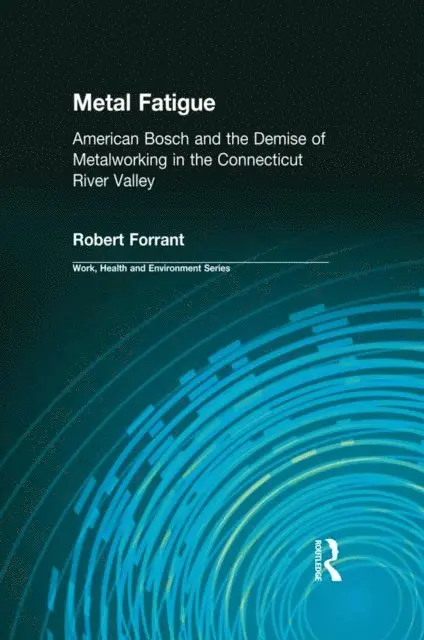
On February 4, 1986, the lives of thousands of workers changed in ways they could only begin to imagine. On that day, United Technologies Corporation ordered the closure of the 76-year-old American Bosch manufacturing plant in Springfield, Massachusetts, capping a nearly 32-year history of job loss and work relocation from the sprawling factory. The author, a former Bosch worker and the business agent for the union representing nearly 1,200 Bosch employees when the plant closed, interjects his personal recollections into the story.For more than 150 years Springfield stood at the center of a prosperous 200-mile industrial corridor along the Connecticut River, between Bridgeport, Connecticut, and Springfield, Vermont, populated with hundreds of machine tool and metalworking plants and thousands of workers. This book is a historical account of the profound economic collapse of the Connecticut River Valley region, with a particular focus on Bosch, its workers, and its union. The shutdown is placed in the context of the wider region''s deindustrialization. The closure marked the watershed for large-firm metalworking and metalworking unions in the Connecticut River Valley. The book also describes how the United States, in a ten-year period from the mid-1970s to the mid-1980s, went from being the world''s leading exporter of machine tools to its leading importer, and how that sharp decline affected the region''s leading city, Springfield, Massachusetts, which by 2005 was in danger of bankruptcy.
1 413 kr
Läs direkt efter köp
On February 4, 1986, the lives of thousands of workers changed in ways they could only begin to imagine. On that day, United Technologies Corporation ordered the closure of the 76-year-old American Bosch manufacturing plant in Springfield, Massachusetts, capping a nearly 32-year history of job loss and work relocation from the sprawling factory. The author, a former Bosch worker and the business agent for the union representing nearly 1,200 Bosch employees when the plant closed, interjects his personal recollections into the story.For more than 150 years Springfield stood at the center of a prosperous 200-mile industrial corridor along the Connecticut River, between Bridgeport, Connecticut, and Springfield, Vermont, populated with hundreds of machine tool and metalworking plants and thousands of workers. This book is a historical account of the profound economic collapse of the Connecticut River Valley region, with a particular focus on Bosch, its workers, and its union. The shutdown is placed in the context of the wider region''s deindustrialization. The closure marked the watershed for large-firm metalworking and metalworking unions in the Connecticut River Valley. The book also describes how the United States, in a ten-year period from the mid-1970s to the mid-1980s, went from being the world''s leading exporter of machine tools to its leading importer, and how that sharp decline affected the region''s leading city, Springfield, Massachusetts, which by 2005 was in danger of bankruptcy.