"Some theories of [psychology] are based largely on the behavior of sick and anxious people or upon the antics of captive and desperate rats. Fewer theories have been derived from the study of healthy human beings, those who strive not so much to preserve life as to make it worth living. Thus we find . . . many studies of criminals, few of law-abiders; many of fear, few of courage; more on hostility than on affiliation; much on the blindness in man, little on his vision; much on his past, little on his outreaching into the future." —Gordon Allport, 1955Originally the field of psychology had a threefold mission: to cure mental illness, yes, but also to find ways to make life fulfilling for all and to maximize talent. Over the last century, a focus on mental illness has often been prioritized over studies of health, to the point that many people assume "psychologist" is just another way of saying "psychotherapist." This book is about one attempt to restore the discipline''s larger mission.Positive psychology attends to what philosophers call "the good life." It is about fostering strength and living well—about how to do a good job at being human. Some of that will involve cheerful emotions, and some of it will not. There are vital roles to be played by archetypal challenges such as those involving self-control, guilt, and grit, and even the terror of death enters into positive psychology''s vision of human flourishing.Charles Hackney connects this still-new movement to foundational concepts in philosophy and Christian theology. He then explores topics such as subjective states, cognitive processes, and the roles of personality, relationships, and environment, also considering relevantpractices in spheres from the workplace to the church and even the martial arts dojo. Hackney takes seriously the range of critiques positive psychology has faced as he frames a constructive future for Christian contributions to the field.Christian Association for Psychological Studies (CAPS) Books explore how Christianity relates to mental health and behavioral sciences including psychology, counseling, social work, and marriage and family therapy in order to equip Christian cliniciansto support the well-being of their clients.
This martial arts books explores the role of martial philosophy and history in personal character development. Martial Virtues explores the role of martial arts in character development. It focuses on the spiritual aspects of martial arts training, attempting to answer the question of what it means to be a good warrior.In this ground-breaking analysis, Charles Hackney draws from the psychological literature on the development of positive character traits, and from the lives and experiences of admirable warriors of fact and fiction. He analyzes how the virtues of ancient and modern warriors can be developed by practicing the martial arts. Using examples from the ancient Greeks to the samurai practitioners of bushido, from Confucius to Bruce Lee, Martial Virtues explores such qualities as courage, wisdom, justice and benevolence in turn, employing the lessons of modern psychology to understand how these virtues can be cultivated within ourselves and others. You will learn what Bruce Lee and Sun Tzu have to say about wisdom, what Miyamoto Musashi has to say about audacity and courage, and what Yagyu Munenori has to say about justice. You will also learn the stories of many of history and literature''s greatest warriors including: Aeneas and Hector of Troy; William the Marshal, called the greatest knight who ever lived; Kuo Chieh, the Chinese Robin Hood; the famous Shaolin master Tid Kiu Sam; the 300 Spartans that turned aside a Persian Army at Thermopylae; the 47 Ronin of Japan who revenged the unjust punishment of their master; Korean General Kim Yu-shin, and Toshitsugu Takamatsu, 33rd Grandmaster of Togakure Ryu Ninjutsu.
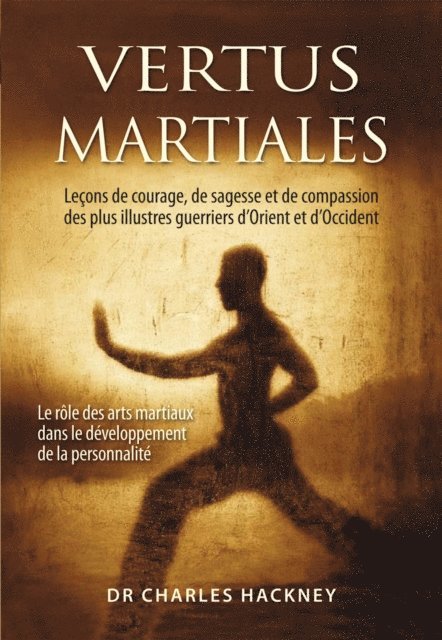
Embrassant le globe d’est en ouest, étudiant les philosophes, les guerriers et les civilisations, des anciens Grecs aux samouraïs du Japon médiéval jusqu’aux héros d’aujourd’hui, Charles Hackney se sert des outils du psychologue moderne pour examiner le développement des vertus martiales. Dans ces pages, vous lirez l’histoire des plus grands guerriers de tous les temps, les héros de l’Histoire ou des légendes: Enée et Hector de Troie, les héros d’Homère ; Guillaume le Conquérant, le plus grand chevalier occidental ; Kuo Chieh, le Robin des bois chinois; Tid Kiu Sam, le fameux maître du temple Shaolin ; les 300 Spartes qui refoulèrent l’armée perse aux Thermopyles ; les 47 rônins du Japon qui vengèrent l’injustice faite à leur maître; le général coréen Kim Yu-Shin et Toshitsugu Takamatsu, 33e maître ninja de la Togakure-ryu. Dans ce livre, vous apprendrez ce que Bruce Lee et Sun Tzu ont dit de la sagesse, ce que Miyamoto Musashi pensait de l’audace et du courage et ce que Yagyu Munenori entendait par justice. Enfin, vous découvrirez quels moyens la psychologie moderne peut mettre en œuvre pour vous aider à cultiver ces mêmes vertus en vous et chez les autres. Dr. Charles HACKNEY, professeur de psychologie spécialiste des désordres sociaux et des troubles de la personnalité à l’université de Hamilton (Ontario, Canada), est chercheur en psychologie positive basée sur l’étude des traits de caractère forts et des vertus. Il pratique les arts martiaux depuis 1995 et s’est spécialisé dans le hapkido, le ninjutsu (Bujinkan Budo Taijutsu) et l’escrime ancienne (Fiore dei Libe ri Armizare). Il est passionné par le baritsu, une forme de combat avec canne du XIXe siècle.
Embrassant le globe d’est en ouest, étudiant les philosophes, les guerriers et les civilisations, des anciens Grecs aux samouraïs du Japon médiéval jusqu’aux héros d’aujourd’hui, Charles Hackney se sert des outils du psychologue moderne pour examiner le développement des vertus martiales. Dans ces pages, vous lirez l’histoire des plus grands guerriers de tous les temps, les héros de l’Histoire ou des légendes: Enée et Hector de Troie, les héros d’Homère ; Guillaume le Conquérant, le plus grand chevalier occidental ; Kuo Chieh, le Robin des bois chinois; Tid Kiu Sam, le fameux maître du temple Shaolin ; les 300 Spartes qui refoulèrent l’armée perse aux Thermopyles ; les 47 rônins du Japon qui vengèrent l’injustice faite à leur maître; le général coréen Kim Yu-Shin et Toshitsugu Takamatsu, 33e maître ninja de la Togakure-ryu. Dans ce livre, vous apprendrez ce que Bruce Lee et Sun Tzu ont dit de la sagesse, ce que Miyamoto Musashi pensait de l’audace et du courage et ce que Yagyu Munenori entendait par justice. Enfin, vous découvrirez quels moyens la psychologie moderne peut mettre en œuvre pour vous aider à cultiver ces mêmes vertus en vous et chez les autres. Dr. Charles HACKNEY, professeur de psychologie spécialiste des désordres sociaux et des troubles de la personnalité à l’université de Hamilton (Ontario, Canada), est chercheur en psychologie positive basée sur l’étude des traits de caractère forts et des vertus. Il pratique les arts martiaux depuis 1995 et s’est spécialisé dans le hapkido, le ninjutsu (Bujinkan Budo Taijutsu) et l’escrime ancienne (Fiore dei Libe ri Armizare). Il est passionné par le baritsu, une forme de combat avec canne du XIXe siècle.