Whether one views it as an indictment of our lifestyle or merely as a The present volume is offered as a contribution to the information failure in the progress of science and medicine, the AIDS epidemic is campaign in the battle against the epidemic. It rests on the conviction undoubted I y one of the most agonizing experiences of our time. There that the increase of knowledge about AIDS will help to elevate the is hope for control of the disease--especially so in the development of power of public judgement, including a sense of moral restraint, to the an anti-AIDS vaccine-but the following stark facts are too over point necessary to bring about control and halt further spread of this powering for anyone to behold without sensing pain. Already close to terrible disease. The study as a whole, as well as the epidemic itself, 100,000 (or possibly more at this date) Americans have died of the raises questions about social ethics and about whether we may have disease, another 161,000 cases have been diagnosed, and estimates adopted a social philosophy which allows us to exceed appropriate place the additional number of infected persons at 1 million. 35,000 limits of independent personal behavior on the assumption that the new AIDS cases are reported annually in America, with a nearly equal consequences of our acts can always be managed by some sort of distribution among heterosexual and homosexual persons. technological fix.
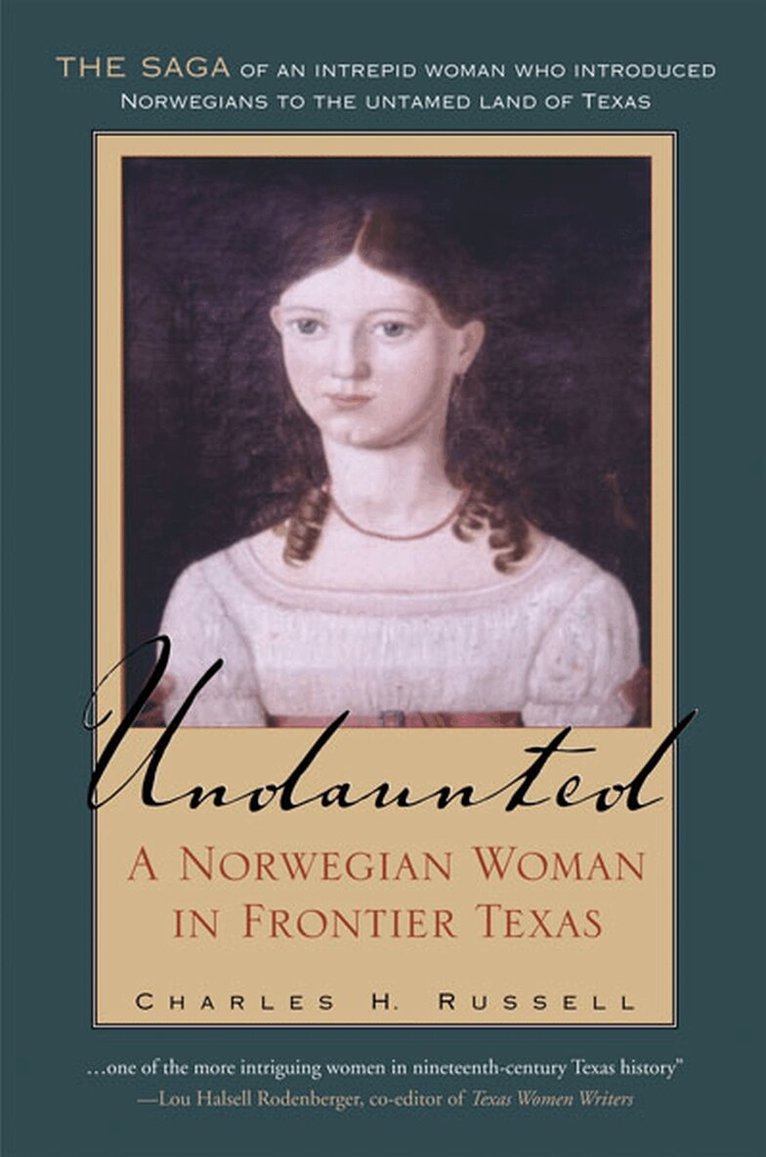
Elise Waerenskjold is known to fans of Texas women writers as ""the lady with the pen,"" from the title of a book of her writings. A forward-looking journalist, she sent letters and articles back to Norway, encouraging others to follow her footsteps to Texas, where a small colony of Norwegian settlers was making a new life alongside - but distinct from - other European immigrants. ""Undaunted"" is the first full biography of Waerenskjold during her Texas years, a life story that shows much about Texas, especially in the Norwegian colonies, from 1847 to the end of the nineteenth century. Moreover, it tells the story of a strong and independent thinker who championed women's rights, who was pro-Union and against slavery (though her husband was in the Confederate army and was subsequently murdered in Reconstruction-era violence), and who left an intriguing body of writing about life on the edges of Texas settlement. Charles H. Russell's vivid account of Waerenskjold describes not only her influence among her countrymen but also her own life, which was a saga of considerable drama itself. Russell offers a clear and entertaining window onto immigrant life in frontier Texas and the issues that shaped women's lives and elicited their talents.