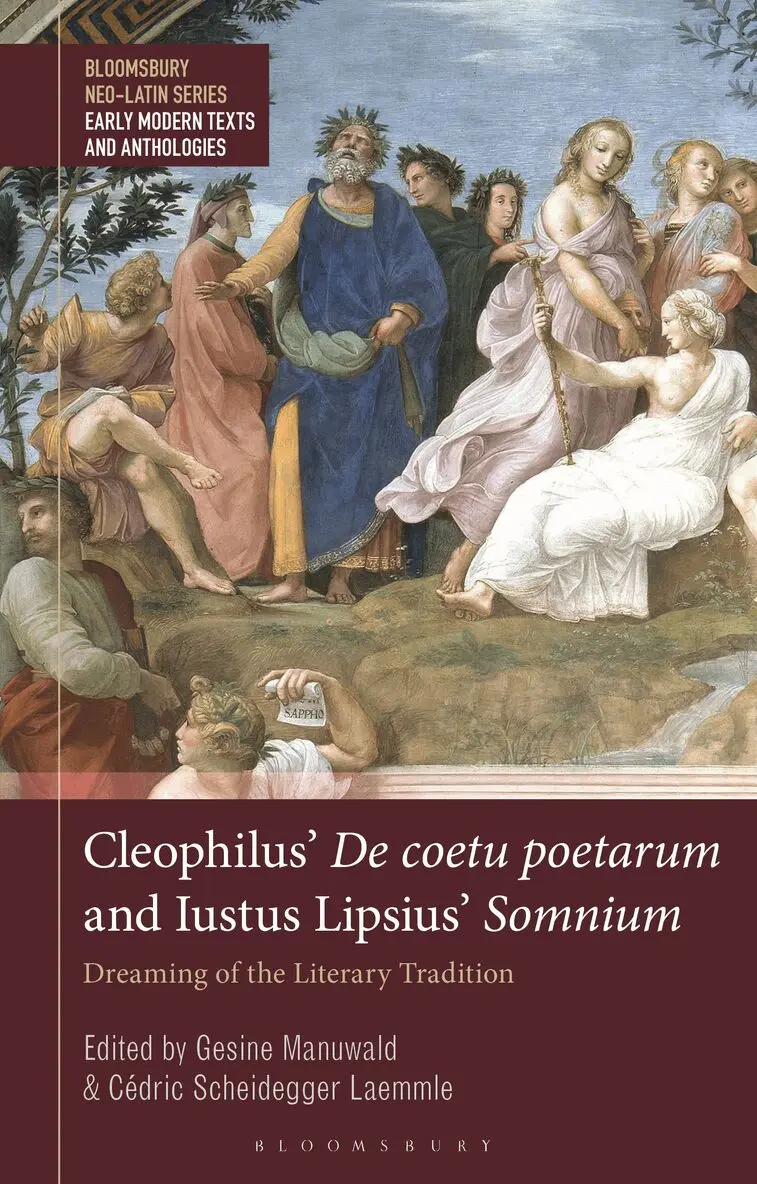
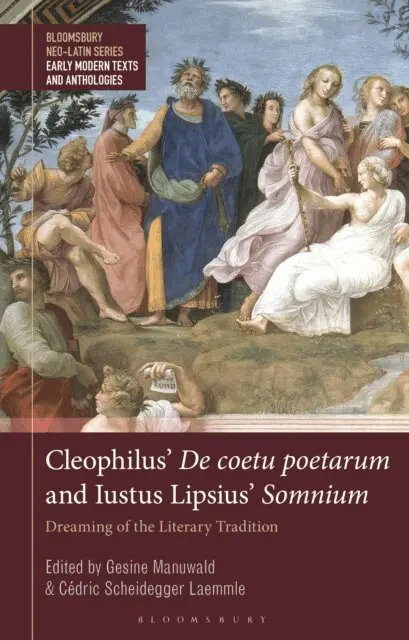
Providing the first edited text, translation and commentary of two Renaissance dream-narrative satires, this edition sheds light on the period's literary history and reception of classical texts. Cleophilus' De coetu poetarum (first printed 1483–1485) and Iustus Lipsius' Somnium (first printed 1581) are both framed as dreams in which their authors encounter ancient authors and compare ancient literary works to the deplorable state of literature in their own times. They belong to a tradition of reflections on the characteristics of literature and the value attached to it over time, while also themselves imitating ancient poetic structures. Lipsius' Somnium, written in a mixture of prose and verse that characterises the so-called Menippean satire, has attracted much scholarly attention as a central text in the tradition of satirical dream narratives that held sway in Humanist circles from the late sixteenth century onwards. By contrast, Cleophilus' elegiac poem has failed to make its mark in scholarship even though it was an important forerunner of this tradition and enjoyed widespread popularity at the time, contributing, among other things, to the impact of Dante’s Divine Comedy on Neo-Latin literature. The present edition makes these two important texts more accessible and allows their assessment side by side, thereby contributing to a deeper understanding of Renaissance-Humanist satire and the wider development of literary history as well as the reception of classical literature in the early modern period.
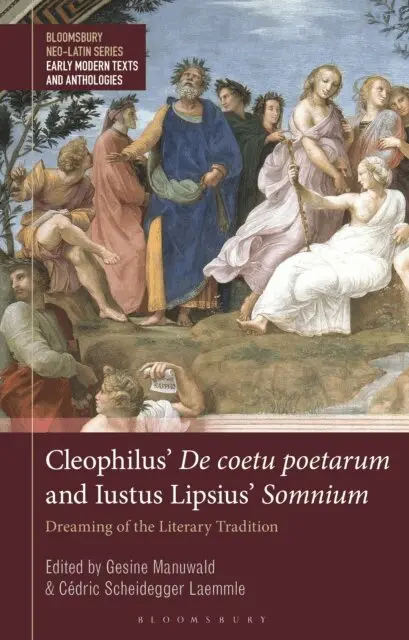
Providing the first edited text, translation and commentary of two Renaissance dream-narrative satires, this edition sheds light on the period''s literary history and reception of classical texts. Cleophilus'' De coetu poetarum (first printed 1483–1485) and Iustus Lipsius'' Somnium (first printed 1581) are both framed as dreams in which their authors encounter ancient authors and compare ancient literary works to the deplorable state of literature in their own times. They belong to a tradition of reflections on the characteristics of literature and the value attached to it over time, while also themselves imitating ancient poetic structures. Lipsius'' Somnium, written in a mixture of prose and verse that characterises the so-called Menippean satire, has attracted much scholarly attention as a central text in the tradition of satirical dream narratives that held sway in Humanist circles from the late sixteenth century onwards. By contrast, Cleophilus'' elegiac poem has failed to make its mark in scholarship even though it was an important forerunner of this tradition and enjoyed widespread popularity at the time, contributing, among other things, to the impact of Dante''s Divine Comedy on Neo-Latin literature. The present edition makes these two important texts more accessible and allows their assessment side by side, thereby contributing to a deeper understanding of Renaissance-Humanist satire and the wider development of literary history as well as the reception of classical literature in the early modern period.
Lists and catalogues have been en vogue in philosophy, cultural, media and literary studies for more than a decade. These explorations of enumerative modes, however, have not yet had the impact on classical scholarship that they deserve. While they routinely take (a limited set of) ancient models as their starting point, there is no comparably comprehensive study that focuses on antiquity; conversely, studies on lists and catalogues in Classics remain largely limited to individual texts, and – with some notable exceptions – offer little in terms of explicit theorising. The present volume is an attempt to close this gap and foster the dialogue between the recent theoretical re-appraisal of enumerative modes and scholarship on ancient cultures.The 16 contributions to the volume juxtapose literary forms of enumeration with an abundance of ancient non-, sub- or para-literary practices of listing and cataloguing. In their different approaches to this vast and heterogenous corpus, they offer a sense of the hermeneutic, epistemic and methodological challenges with which the study of enumeration is faced, and elucidate how pragmatics, materiality, performativity and aesthetics are mediated in lists and catalogues.
The fifteen contributions to the multilingual volume together chart Cicero’s presence in the cultural history of Basel – from the city’s foundation to the heyday of humanist print culture, to the cultural politics of the modern day. Written by scholars working from different academic traditions and organised in four sections, they trace a broad range of engagements with Cicero in Basel across time, thus offering the rudiments of a localised form of reception history: "Ciceronian Foundations" focuses on Cicero’s role in the city’s (and her university’s) foundation myths; "Editions and Commentaries" centres on the Ciceronian editions and commentaries in the heyday of humanist printing culture; "Discussions and Engagements" situates his reception in the intellectual currents that define humanist Basel – from stylistic and literary debates to the controversies of the theologians; lastly, "Scholarship and Education" explores the entanglements of academic and civic life that come to define Cicero’s place in Basel from the 17th century. For all their diversity, the contributions are united in their aim to contribute both to the study of Ciceronian reception and to the cultural history and development of Basel in its European context.