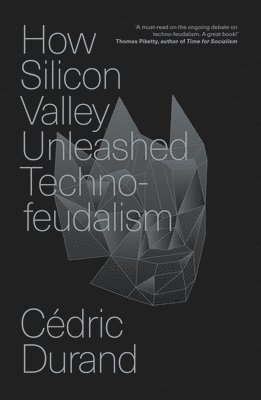
The rise of the IT industry in the nineties promised a new era of freedom and prosperity. It didn't deliver. Today, algorithms are everywhere, but digital monopolies push us towards the feudal logic of rent, dispossession, and personal domination. How Silicon Valley Unleashed Techno-feudalism tears apart the Silicon Valley consensus to reveal the new economic order, in which capital has abandoned production to focus on predation.

Humanity has charted a course for environmental disaster. Our one hope is to break with capitalist productivism. How to Change Course reaches back into the history of twentieth-century economic planning - wareconomies, developmental states racing to catch up, and socialist experiments - to grasp new forms of socio-ecological governance thatare within our reach. With foresight and planning, we can escape thestraitjacket of the free market and achieve a sustainable economy.
The 2007-08 credit crisis and the long recession that followed brutally exposed the economic and social costs of financialization. Understanding what lay behind these events, the rise of "fictitious capital" and its opaque logic, is crucial to grasping the social and political conditions under which we live. Yet, for most people, the operations of the financial system remain shrouded in mystery.In this lucid and compelling book, economist Cédric Durand offers a concise and critical introduction to the world of finance, unveiling the truth behind the credit crunch. Fictitious Capital moves beyond moralizing tales about greedy bankers, short-sighted experts and compromised regulators to look at the big picture. Using comparative data covering the last four decades, Durand examines the relationship between trends such as the rise in private and public debt and the proliferation of financial products; norms such as our habitual assumptions about the production of value and financial stability; and the relationship of all this to political power.Fictitious Capital offers a stark warning about the direction that the international economy is taking. Durand argues that the accelerated expansion of financial operations is a sign of the declining power of the economies of the Global North. The City, Wall Street and other centres of the power of money, he suggests, may already be caked with the frosts of winter.
The 2007-08 credit crisis and the long recession that followed brutally exposed the economic and social costs of financialization. Understanding what lay behind these events, the rise of "fictitious capital" and its opaque logic, is crucial to grasping the social and political conditions under which we live. Yet, for most people, the operations of the financial system remain shrouded in mystery.In this lucid and compelling book, economist C�dric Durand offers a concise and critical introduction to the world of finance, unveiling the truth behind the credit crunch. Fictitious Capital moves beyond moralizing tales about greedy bankers, short-sighted experts and compromised regulators to look at the big picture. Using comparative data covering the last four decades, Durand examines the relationship between trends such as the rise in private and public debt and the proliferation of financial products; norms such as our habitual assumptions about the production of value and financial stability; and the relationship of all this to political power.Fictitious Capital offers a stark warning about the direction that the international economy is taking. Durand argues that the accelerated expansion of financial operations is a sign of the declining power of the economies of the Global North. The City, Wall Street and other centres of the power of money, he suggests, may already be caked with the frosts of winter.
The rise of the IT industry in the nineties promised a new era of freedom and prosperity. It didn't deliver. Certainly, algorithms are everywhere, but capitalism is no more civilised than ever. In fact, in the hands of private corporations, the digitalisation of the world drives us towards a darker future. The return of monopolies, the dominance of a few platforms, the blurred distinction between the economic and the political all epitomise a systemic mutation. Information and data networks push the digital economy in the direction of the feudal logic of rent, dispossession, and personal domination.How Silicon Valley Unleashed Techno-feudalism offers a fresh genealogy of the Silicon Valley consensus and its contradictions. It disentangles the principles of an emerging systemwide rationale. Large firms compete in cyberspace to gain control over data, and ordinary people are increasingly at the mercy of tech giants. In this new economic order, capital is moving away from production to focus on predation.
The rise of the IT industry in the nineties promised a new era of freedom and prosperity. It didn''t deliver. Certainly, algorithms are everywhere, but capitalism is no more civilised than ever. In fact, in the hands of private corporations, the digitalisation of the world drives us towards a darker future. The return of monopolies, the dominance of a few platforms, the blurred distinction between the economic and the political all epitomise a systemic mutation. Information and data networks push the digital economy in the direction of the feudal logic of rent, dispossession, and personal domination.How Silicon Valley Unleashed Techno-feudalism offers a fresh genealogy of the Silicon Valley consensus and its contradictions. It disentangles the principles of an emerging systemwide rationale. Large firms compete in cyberspace to gain control over data, and ordinary people are increasingly at the mercy of tech giants. In this new economic order, capital is moving away from production to focus on predation.
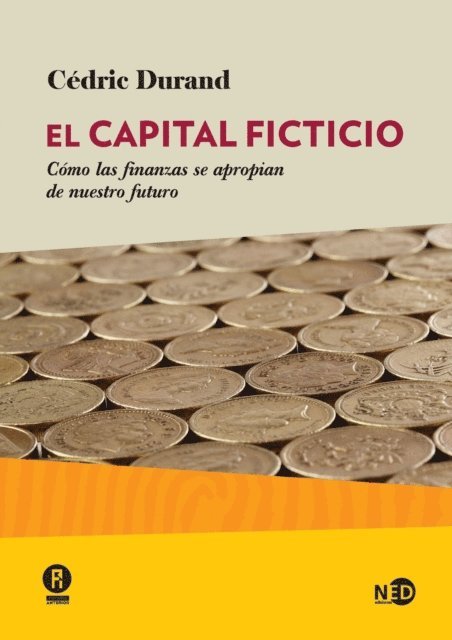
A menudo nos explican que las turbulencias del mercado financiero se deben a la inmoralidad de los agentes, los errores de la teoría económica o a una regulación inadecuada. Aunque estas explicaciones no son falsas, dejan de lado el problema principal: la naturaleza y el origen del valor financiero. Cédric Durand esclarece en este libro cómo el aumento del "capital ficticio" —otorgar valor a flujos de ingresos aún por llegar— es una clara apropiación de nuestro futuro, y cómo estar a favor de la "estabilidad financiera" es seguir velando por los beneficios financieros.El capital ficticio es un brillante ensayo para comprender el papel de los mercados en nuestra sociedad y para orientarnos en las luchas que hay que emprender contra las finanzas. Constituye también un aporte crítico al pensamiento de Thomas Piketty, quien en opinión de Durand orilla en exceso la singularidad del capital financiero y sus mecanismos de dominación.