An increasing number of families around the world are now living apart from one another, subsequently causing the defining and redefining of their relationships, roles within the family unit, and how to effectively maintain a sense of familial cohesion through distance. Edited by Maria Rosario T. de Guzman, Jill Brown, and Carolyn Pope Edwards, Parenting From Afar and the Reconfiguration of Family Across Distance uniquely highlights how families--both in times of crisis and within normative cultural practices--organize and configure themselves and their parenting through physical separation. In this volume, readers are given a unique look into the lives of families around the world that are affected by separation due to a wide range of circumstances including economic migration, fosterage, divorce, military deployment, education, and orphanhood. Contributing authors from the fields of psychology, anthropology, sociology, education, and geography all delve deep into the daily realities of these families and share insight on why they live apart from one another, how families are redefined across long distances, and the impact absence has on various members within the unit. An especially timely volume, Parenting From Afar and the Reconfiguration of Family Across Distance offers readers an important understanding and examination of family life in response to social change and shifts in the caregiving context.
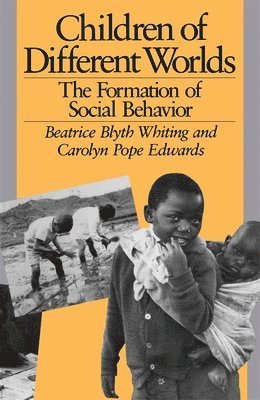
The culmination of twenty years of research, this book is a cross-cultural exploration of the ways in which age, gender, and culture affect the development of social behavior in children. The authors and their associates observed children between the ages of two and ten going about their daily lives in communities in Africa, India, the Philippines, Okinawa, Mexico, and the United States. This rich fund of data has enabled them to identify the types of social behavior that are universal and those which differ from one cultural environment to another.Whiting and Edwards shed new light on the nature-nurture question: in analyzing the behavior of young children, they focus on the relative contributions of universal physiological maturation and universal social imperatives. They point out cross-cultural similarities, but also note the differences in experience between children who grow up in simple and in complex societies. They show that knowledge of the company children keep, and of the proportion of time they spend with various categories of people, makes it possible to predict important aspects of their interpersonal behavior.An extension and elaboration of the classic Children of Six Cultures (Harvard, 1975), Children of Different Worlds will appeal to the same audience—developmental psychologists, social psychologists, anthropologists, and educators—and is sure to be equally influential.
Moral Motivation through the Life Span is the fifty-first volume in the Nebraska Symposium on Motivation series, the longest continuously running symposium in the field of psychology. This work focuses on moral development theory and research, an area of academic study that began early in the twentieth century but has never before been addressed by the Symposium. What is morality, such theorists ask, and what exactly makes a "moral person"? The contributors to this volume are of diverse theoretical orientations and take different stances on a number of major themes: What motivates moral behavior? Are there certain universal moral values, or are such values always subjective? Does an individual's will or an individual's environment play a greater role in determining moral conduct? What influence can we attribute to spirituality? Finally, the contributors explore the practical applications of their research on moral motivation: What implications do such theories have for child-rearing or our educational system? How do we raise the next generation to be empathetic toward their fellow human beings?
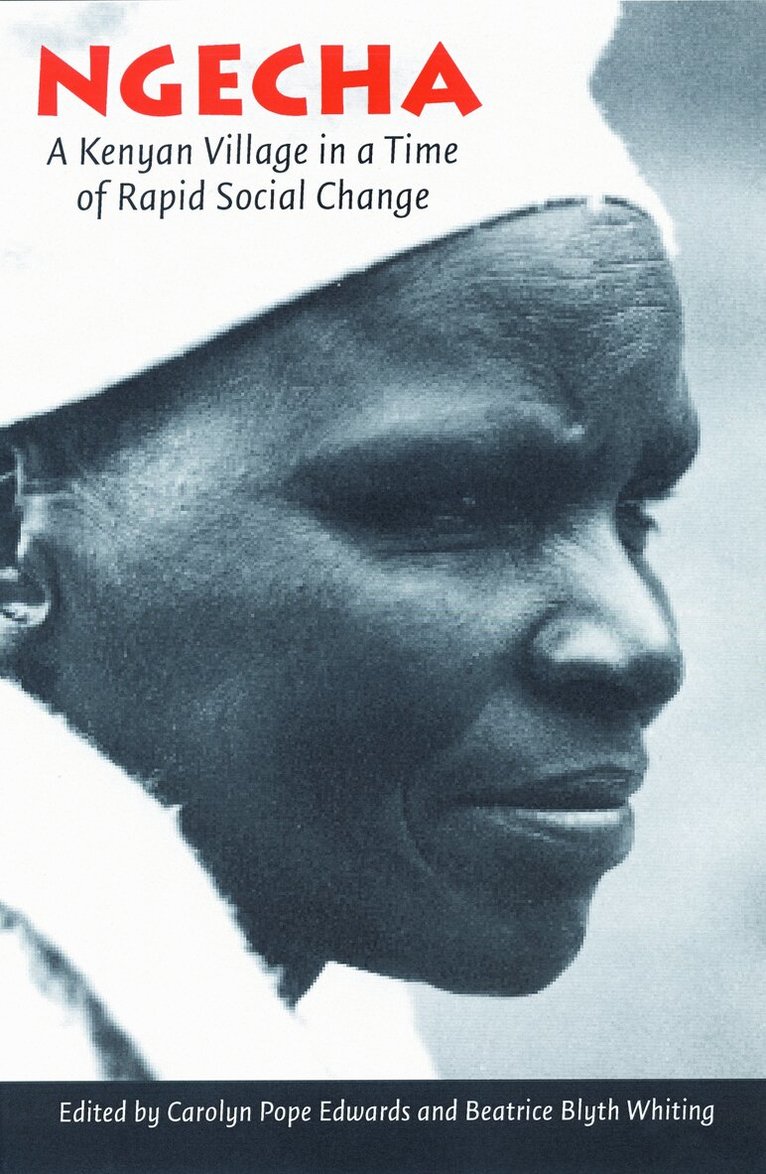
Ngecha is the monumental and intimate study of modernization and nationalization in rural Africa in the early years following Kenyan independence in 1963, as experienced by the people of Ngecha, a village outside Nairobi. From 1968 to 1973 Ngecha was a research site of the Child Development Research Unit, a team that brought together Kenyan and non-Kenyan social scientists under the leadership of John Whiting and Beatrice Blyth Whiting. The study documents how families adapted to changing opportunities and conditions as their former colony became a modern nation, and the key role that women played as agents of change as they became small-scale cash-crop farmers and entrepreneurs. Mothers modified the culture of their parents to meet the evolving national economy, and they participated in the shift from an agrarian to a wage economy in ways that transformed their workloads and perceptions of isolation and individualism within and between households, thereby challenging traditional family-based morals and obligations. Their children, in turn, experienced evolving educational practices and achievement expectations. The elders faced new situations as well as new modes of treatment. Completing this valuable record of a nation in transition are the long-term reassessments of the observations and conclusions of the research team, and a description of Ngecha today as viewed by Kenyans who participated in the original study.
This book examines the relationship-promoting approach to child care. The authors use the metaphor of the dance to explain the give and take interactions between caregivers and children that help promote emotional, physical, cognitive, and language development. Throughout the book, programs from the United States and around the world are examined to highlight features that work. ""Extending the Dance"" gives early childhood professionals the tools they need to develop an environment that encourages development and attachment.