1 231 kr
Skickas inom 7-10 vardagar
1 231 kr
Skickas inom 7-10 vardagar
2 580 kr
Skickas inom 10-15 vardagar
3 276 kr
Läs direkt efter köp
This up-to-date volume presents a set of differentiation and assay protocols useful to researchers involved in disease modeling, drug discovery, and the cell biology of a variety of tissues. The book begins with chapters on culture of induced pluripotent stem cells (iPSCs) and iPSC-derived cells with detailed protocols for culturing and differentiation of iPSC-derived endoderm, hepatocytes, vascular endothelial cells, cardiomyocytes, renal podocytes, neurons, and astrocytes. This is accompanied by newer protocols for the use of 3D cultures in assays adapted for drug development purposes, with new techniques such as high content analysis and microphysiological systems. Written for the highly successful Methods in Molecular Biology series, chapters include introductions to their respective topics, lists of the necessary materials and reagents, step-by-step and readily reproducible laboratory protocols, and tips on troubleshooting and avoiding known pitfalls.
Authoritative and practical, Cell-Based Assays Using iPSCs for Drug Development and Testing, Second Edition serves as an ideal guide for scientists working to develop human iPSC-derived cellular models for drug discovery, efficacy, and safety purposes.
1 909 kr
Skickas inom 10-15 vardagar
1 424 kr
Läs direkt efter köp
“… a must-read for all modern bio-scientists and engineers working in the field of biotechnology.” – Biotechnology Journal, 2012, 7
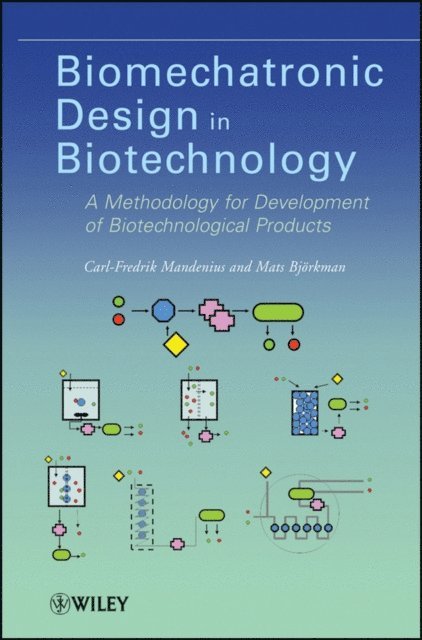
A cutting-edge guide on the fundamentals, theory, and applications of biomechatronic design principles
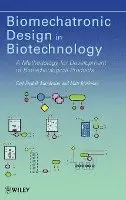
Biomechatronic Design in Biotechnology presents a complete methodology of biomechatronics, an emerging variant of the mechatronics field that marries biology, electronics, and mechanics to create products where biological and biochemical, technical, human, management-and-goal, and information systems are combined and integrated in order to solve a mission that fulfills a human need. A biomechatronic product includes a biological, mechanical, and electronic part.
Beginning with an overview of the fundamentals and theory behind biomechatronic technology, this book describes how general engineering design science theory can be applied when designing a technical system where biological species or components are integrated. Some research methods explored include schemes and matrices for analyzing the functionality of the designed products, ranking methods for screening and scoring the best design solutions, and structuring graphical tools for a thorough investigation of the subsystems and sub-functions of products.
This insightful guide also:
Discusses tools for creating shorter development times, thereby reducing the need for prototype testing and verification Presents case study-like examples of the technology used such as a surface plasmon resonance sensor and a robotic cell culturing system for human embryonic stem cells Provides an interdisciplinary and unifying approach of the many fields of engineering and biotechnology used in biomechatronic designBy combining designs between traditional electronic and mechanical subsystems and biological systems, this book demonstrates how biotechnology and bioengineering design can utilize and benefit from commonly used design tools— and benefit humanity itself.

1 403 kr
Läs direkt efter köp
“… a must-read for all modern bio-scientists and engineers working in the field of biotechnology.” – Biotechnology Journal, 2012, 7
A cutting-edge guide on the fundamentals, theory, and applications of biomechatronic design principles
Biomechatronic Design in Biotechnology presents a complete methodology of biomechatronics, an emerging variant of the mechatronics field that marries biology, electronics, and mechanics to create products where biological and biochemical, technical, human, management-and-goal, and information systems are combined and integrated in order to solve a mission that fulfills a human need. A biomechatronic product includes a biological, mechanical, and electronic part.
Beginning with an overview of the fundamentals and theory behind biomechatronic technology, this book describes how general engineering design science theory can be applied when designing a technical system where biological species or components are integrated. Some research methods explored include schemes and matrices for analyzing the functionality of the designed products, ranking methods for screening and scoring the best design solutions, and structuring graphical tools for a thorough investigation of the subsystems and sub-functions of products.
This insightful guide also:
Discusses tools for creating shorter development times, thereby reducing the need for prototype testing and verification Presents case study-like examples of the technology used such as a surface plasmon resonance sensor and a robotic cell culturing system for human embryonic stem cells Provides an interdisciplinary and unifying approach of the many fields of engineering and biotechnology used in biomechatronic designBy combining designs between traditional electronic and mechanical subsystems and biological systems, this book demonstrates how biotechnology and bioengineering design can utilize and benefit from commonly used design tools— and benefit humanity itself.

1 799 kr
Skickas inom 10-15 vardagar
1 659 kr
Läs direkt efter köp
1 295 kr
Skickas inom 10-15 vardagar
1 011 kr
Skickas inom 10-15 vardagar
1 325 kr
Läs direkt efter köp
1 681 kr
Skickas
2 194 kr
Läs direkt efter köp
2 265 kr
Läs direkt efter köp
3 266 kr
Skickas inom 10-15 vardagar
4 066 kr
Läs direkt efter köp
3 266 kr
Skickas inom 10-15 vardagar