327 kr
Skickas inom 7-10 vardagar
327 kr
Skickas inom 7-10 vardagar
171 kr
Skickas
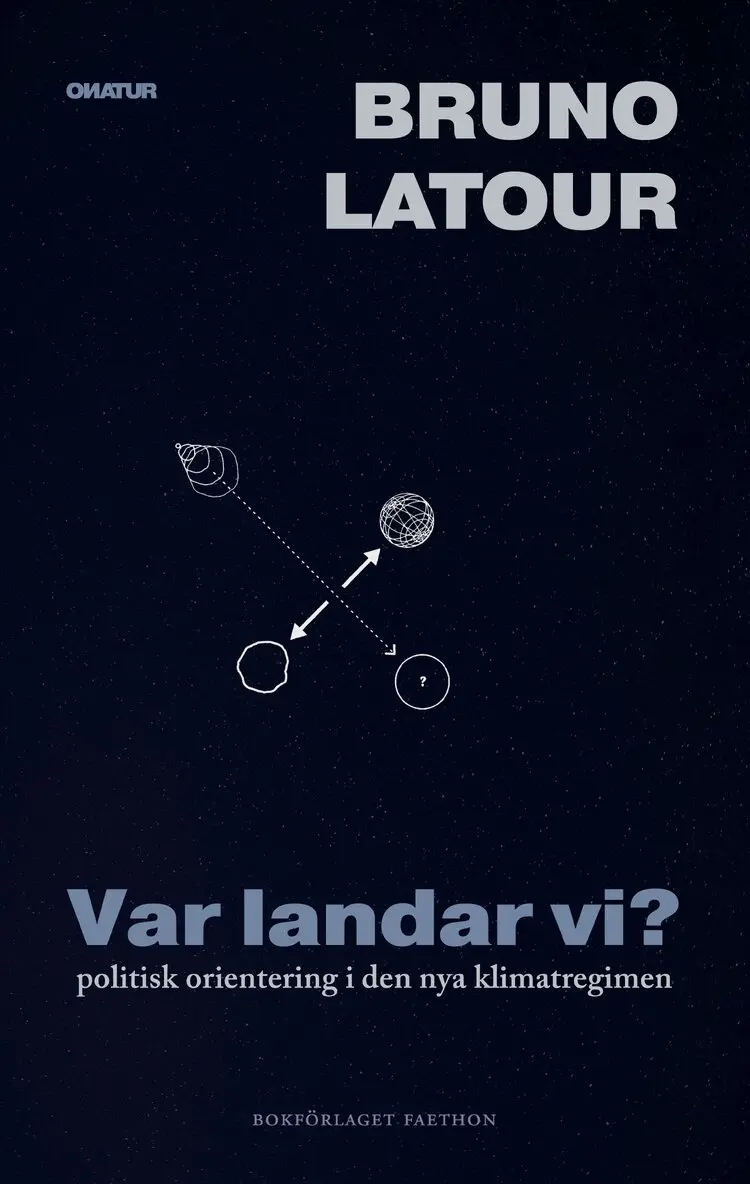
Vi lever idag under en ny klimatregim. Förstår vi inte det förstår vi ingenting av de senaste decenniernas politik. Migrationen, avregleringarna, den skenande ojämlikheten - allt detta är symptom på en och samma stora omvälvning. Själva marken under oss har ändrat karaktär.
Våra gamla orienteringsverktyg fungerar inte längre. Tidigare gick det att förstå politik som en rörelse från ett lokalt förflutet mot en global framtid. Men där denna framtid fanns väntar nu en helt orealistisk glob. Och när vi försöker vända tillbaka till våra svunna hemtrakter visar de sig vara lika overkliga. Vi blir hängande i luften. Kraschen är förestående.
Det gäller att illa kvickt ta ut en ny bäring och hitta någonstans att landa. Men höger som vänster, konservativa som progressiva, extremister som centrister - alla förblir vi desorienterade.
I den här boken konstaterar Bruno Latour att vi inte har något val. All politik måste hädanefter orientera sig efter de ekologiska förutsättningarna för vår existens. Det kan antingen ske genom aktivt förnekande, i vilket fall politiken är dömd att förlora all substans. Eller så accepterar vi att allt måste kartläggas från scratch, att helt nya allianser måste ingås och att den hårda landningen äger rum någonstans mitt i geohistorien. I så fall kan en gemensam och beboelig värld kanske börja ta form på nytt.
Bruno Latour (1947-2022) tillhör samtidens mest inflytelserika tänkare. Han verkade över många fält, från laboratoriestudier till teologi, och gav nya banbrytande beskrivningar av den moderna världen. Latours unika filosofi och starka engagemang för fortsatt mänsklig blomstring gör honom till en omistlig röst i den ekologiska omvälvningens tid.
Översättarna har även försett boken med ett introducerande förord.
273 kr
Skickas inom 7-10 vardagar
414 kr
301 kr
Skickas inom 7-10 vardagar
116 kr
Skickas inom 7-10 vardagar
104 kr
Skickas inom 7-10 vardagar
258 kr
Skickas inom 7-10 vardagar
485 kr
Skickas
422 kr
Skickas inom 7-10 vardagar
162 kr
Läs direkt efter köp
Under what conditions could ecology, instead of being one cluster of movements among others, organise politics around an agenda and a set of beliefs? Can ecology aspire to define the political horizon in the way that liberalism, socialism, conservatism and other political ideologies have done at various times and places? What can ecology learn from history about how new political movements emerge, and how they win the struggle for ideas long before they translate their ideas into parties and elections?
In this short text, consisting of seventy-six talking points, Bruno Latour and Nikolaj Schultz argue that if the ecological movement is to gain ideological consistency and autonomy it must offer a political narrative that recognises, embraces and effectively represents its project in terms of social conflict. Political ecology must accept that it brings along division. It must provide a convincing cartography of the conflicts it generates and, based on this, it must try to define a common horizon of collective action. In order to represent and describe these conflicts, Latour and Schultz propose to reuse the old notions of ‘class’ and ‘class struggle’, albeit infused with a new meaning in line with the ecological concerns of our New Climate Regime. Advancing the idea of a new ecological class, assembled by its collective interests in fighting the logic of production and safeguarding our planet’s conditions of habitability, they ask: how can a proud and self-aware ecological class emerge and take effective action to shape our collective future?
387 kr
Skickas inom 5-8 vardagar
116 kr
Skickas inom 7-10 vardagar
231 kr
Skickas inom 7-10 vardagar
993 kr
Skickas inom 7-10 vardagar
113 kr
Läs direkt efter köp
375 kr
Läs direkt efter köp
363 kr
Läs direkt efter köp
2 765 kr
Skickas inom 7-10 vardagar
342 kr
Skickas inom 7-10 vardagar
418 kr
Skickas inom 7-10 vardagar
400 kr
Skickas inom 7-10 vardagar
287 kr
Skickas inom 7-10 vardagar
326 kr
Läs direkt efter köp
643 kr
Skickas inom 7-10 vardagar
261 kr
Läs direkt efter köp
848 kr
Skickas inom 7-10 vardagar
308 kr
Läs direkt efter köp
The emergence of modern sciences in the seventeenth century profoundly renewed our understanding of nature. For the last three centuries new ideas of nature have been continually developed by theology, politics, economics, and science, especially the sciences of the material world. The situation is even more unstable today, now that we have entered an ecological mutation of unprecedented scale. Some call it the Anthropocene, but it is best described as a new climatic regime. And a new regime it certainly is, since the many unexpected connections between human activity and the natural world oblige every one of us to reopen the earlier notions of nature and redistribute what had been packed inside. So the question now arises: what will replace the old ways of looking at nature? This book explores a potential candidate proposed by James Lovelock when he chose the name ''Gaia'' for the fragile, complex system through which living phenomena modify the Earth. The fact that he was immediately misunderstood proves simply that his readers have tried to fit this new notion into an older frame, transforming Gaia into a single organism, a kind of giant thermostat, some sort of New Age goddess, or even divine Providence. In this series of lectures on ''natural religion,'' Bruno Latour argues that the complex and ambiguous figure of Gaia offers, on the contrary, an ideal way to disentangle the ethical, political, theological, and scientific aspects of the now obsolete notion of nature. He lays the groundwork for a future collaboration among scientists, theologians, activists, and artists as they, and we, begin to adjust to the new climatic regime.
257 kr
Skickas
119 kr
Skickas inom 7-10 vardagar