172 kr
Skickas inom 7-10 vardagar
172 kr
Skickas inom 7-10 vardagar
281 kr
Skickas inom 3-6 vardagar
1 159 kr
Läs direkt efter köp
987 kr
Skickas inom 10-15 vardagar
3 047 kr
Skickas inom 10-15 vardagar
745 kr
Skickas inom 10-15 vardagar
2 571 kr
Skickas inom 10-15 vardagar
1 182 kr
Skickas inom 7-10 vardagar
266 kr
Skickas inom 7-10 vardagar
446 kr
Läs direkt efter köp
303 kr
Skickas inom 3-6 vardagar
362 kr
Skickas inom 7-10 vardagar
2 168 kr
Skickas inom 7-10 vardagar
949 kr
Läs direkt efter köp
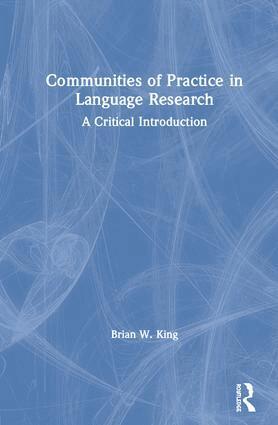
Communities of Practice in Language Research provides an up-to-date and critical introduction to the community of practice framework and how this can be applied to language research. Critiquing and offering alternative suggestions for the ways in which researchers frame research participants as members of communities of practice, with the goal of inspiring use of the Community of Practice (CofP) model in new areas of research, this book:
engages in extended critical analysis of past research as well as questioning recent applications and suggesting limitations incorporates instructive examples from multiple fields, including Sociolinguistics, Linguistic Anthropology, Critical Discourse Studies, Language Teaching & Learning, Literacy Studies, and a trailblazing section on Language & Digital Media brings up-to-date the key questions and concerns around the Communities of Practice model, debunking myths and re-emphasising ongoing challenges.Communities of Practice in Language Research is essential reading for undergraduate and postgraduate students studying research methods or undertaking research projects in those areas.
970 kr
Läs direkt efter köp
Communities of Practice in Language Research provides an up-to-date and critical introduction to the community of practice framework and how this can be applied to language research. Critiquing and offering alternative suggestions for the ways in which researchers frame research participants as members of communities of practice, with the goal of inspiring use of the Community of Practice (CofP) model in new areas of research, this book:
engages in extended critical analysis of past research as well as questioning recent applications and suggesting limitations incorporates instructive examples from multiple fields, including Sociolinguistics, Linguistic Anthropology, Critical Discourse Studies, Language Teaching & Learning, Literacy Studies, and a trailblazing section on Language & Digital Media brings up-to-date the key questions and concerns around the Communities of Practice model, debunking myths and re-emphasising ongoing challenges.Communities of Practice in Language Research is essential reading for undergraduate and postgraduate students studying research methods or undertaking research projects in those areas.
864 kr
Läs direkt efter köp
864 kr
Läs direkt efter köp
1 151 kr
Läs direkt efter köp
1 012 kr
Läs direkt efter köp
Human health exists at the interface of environment and society. Decades of work by researchers, practitioners, and policy-makers has shown that health is shaped by a myriad of factors, including the biophysical environment, climate, political economy, gender, social networks, culture, and infrastructure. Yet while there is emerging interest within the natural and social sciences on the social and ecological dimensions of human disease and health, there have been few studies that address them in an integrated manner.
Ecologies and Politics of Health brings together contributions from the natural and social sciences to examine three key themes: the ecological dimensions of health and vulnerability, the socio-political dimensions of human health, and the intersections between the ecological and social dimensions of health. The thirteen case study chapters collectively present results from Africa, Asia, Latin America, the United States, Australia, and global cities. Section one interrogates the utility of several theoretical frameworks and conventions for understanding health within complex social and ecological systems. Section two concentrates upon empirically grounded and quantitative work that collectively redefines health in a more expansive way that extends beyond the absence of disease. Section three examines the role of the state and management interventions through historically rich approaches centering on both disease- and non-disease-related examples from Latin America, Eastern Africa, and the United States. Finally, Section four highlights how health vulnerabilities are differentially constructed with concomitant impacts for disease management and policy interventions.
This timely volume advances knowledge on health-environment interactions, disease vulnerabilities, global development, and political ecology. It offers theoretical and methodological contributions which will be a valuable resource for researchers and practitioners in geography, public health, biology, anthropology, sociology, and ecology.
1 027 kr
Läs direkt efter köp
Human health exists at the interface of environment and society. Decades of work by researchers, practitioners, and policy-makers has shown that health is shaped by a myriad of factors, including the biophysical environment, climate, political economy, gender, social networks, culture, and infrastructure. Yet while there is emerging interest within the natural and social sciences on the social and ecological dimensions of human disease and health, there have been few studies that address them in an integrated manner.
Ecologies and Politics of Health brings together contributions from the natural and social sciences to examine three key themes: the ecological dimensions of health and vulnerability, the socio-political dimensions of human health, and the intersections between the ecological and social dimensions of health. The thirteen case study chapters collectively present results from Africa, Asia, Latin America, the United States, Australia, and global cities. Section one interrogates the utility of several theoretical frameworks and conventions for understanding health within complex social and ecological systems. Section two concentrates upon empirically grounded and quantitative work that collectively redefines health in a more expansive way that extends beyond the absence of disease. Section three examines the role of the state and management interventions through historically rich approaches centering on both disease- and non-disease-related examples from Latin America, Eastern Africa, and the United States. Finally, Section four highlights how health vulnerabilities are differentially constructed with concomitant impacts for disease management and policy interventions.
This timely volume advances knowledge on health-environment interactions, disease vulnerabilities, global development, and political ecology. It offers theoretical and methodological contributions which will be a valuable resource for researchers and practitioners in geography, public health, biology, anthropology, sociology, and ecology.
844 kr
Skickas inom 10-15 vardagar
2 602 kr
Skickas inom 10-15 vardagar
848 kr
Skickas inom 10-15 vardagar
23 kr
Läs direkt efter köp
181 kr
Skickas
187 kr
Skickas
181 kr
Skickas
176 kr
Läs direkt efter köp
178 kr
Kommande
187 kr
Skickas inom 11-20 vardagar