565 kr
Skickas inom 10-15 vardagar
565 kr
Skickas inom 10-15 vardagar
549 kr
Skickas inom 10-15 vardagar
437 kr
Skickas inom 10-15 vardagar
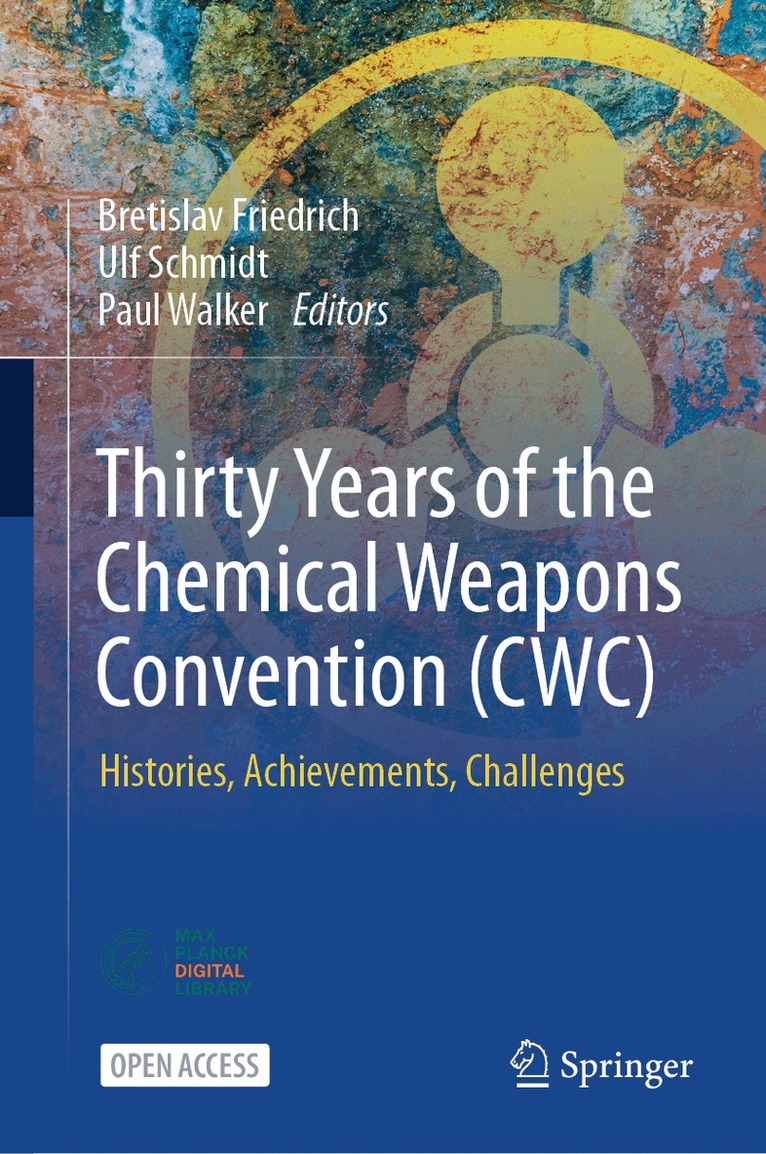
This Open Access book gives a comprehensive account of both the history and current achievements of molecular beam research.
In 1919, Otto Stern launched the revolutionary molecular beam technique. This technique made it possible to send atoms and molecules with well-defined momentum through vacuum and to measure with high accuracy the deflections they underwent when acted upon by transversal forces. These measurements revealed unforeseen quantum properties of nuclei, atoms, and molecules that became the basis for our current understanding of quantum matter. This volume shows that many key areas of modern physics and chemistry owe their beginnings to the seminal molecular beam work of Otto Stern and his school.
Written by internationally recognized experts, the contributions in this volume will help experienced researchers and incoming graduate students alike to keep abreast of current developments in molecular beam research as well as to appreciate the history and evolution of this powerful method and the knowledge it reveals.
567 kr
Skickas inom 10-15 vardagar
1 322 kr
Skickas inom 7-10 vardagar
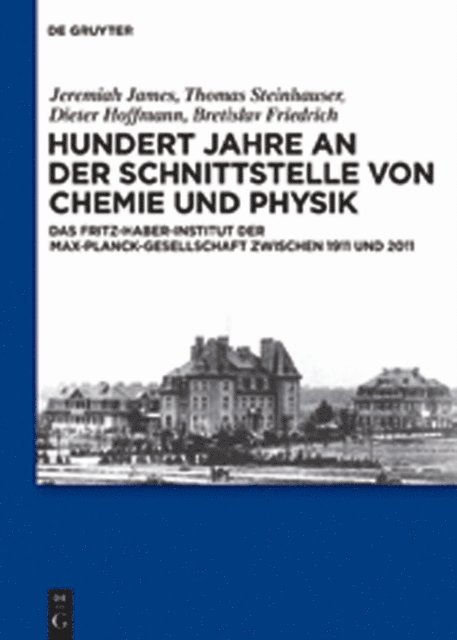
Das Fritz-Haber-Institut, vor hundert Jahren als Kaiser-Wilhelm-Institut für physikalische Chemie und Elektrochemie gegründet, gehört zu den traditionsreichsten und renommiertesten Instituten der Max-Planck-Gesellschaft. Zahlreiche Nobelpreisträger haben an ihm gewirkt und bis heute wird dort wissenschaftliche Spitzenforschung betrieben. Darüber hinaus ist das Institut aber nicht nur ein Ort wissenschaftlicher Exzellenz und Produktivität gewesen, seine hundertjährige Geschichte ist auch auch aufs engste mit der deutschen Geschichte im zwanzigsten Jahrhundert verknüpft. So spielte es eine zentrale Rolle in der deutschen Giftgasforschung und der chemischen Kriegsführung des Ersten Weltkrieges. In den Jahren der nationalsozialistischen Gewaltherrschaft war es besonders von den rassistischen Vertreibungsmaßnahmen betroffen und firmierte als nationalsozialistischer „Musterbetrieb“. Schließlich musste es sich während des Kalten Krieges in der Frontstadt Berlin behaupten. Anlässlich seines hundertjährigen Gründungsjubiläums wird in der vorliegenden Publikation, als Ergebnis eines dreijährigen interdisziplinären Forschungsprojekts, die gleichermaßen glanzvolle wie widersprüchliche Geschichte des Instituts dokumentiert und ein exemplarischer Einblick in die moderne Wissenschaftsgeschichte mit ihren Wechselwirkungen zu Gesellschaft und Politik gegeben.
1 340 kr
Läs direkt efter köp
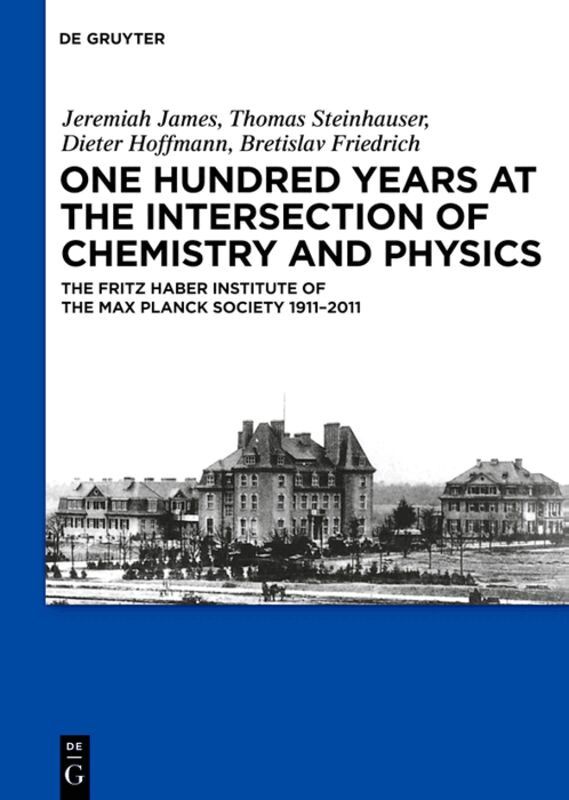
This volume, occasioned by the centenary of the Fritz Haber Institute, formerly the Institute for Physical Chemistry and Electrochemistry, covers the institute''s scientific and institutional history from its founding until the present. The institute was among the earliest established by the Kaiser Wilhelm Society, and its inauguration was one of the first steps in the development of Berlin-Dahlem into a center for scientific research. Its establishment was made possible by an endowment from Leopold Koppel, granted on the condition that Fritz Haber, well-known for his discovery of a method to synthesize ammonia from its elements, be made its director. The history of the institute has largely paralleled that of 20th-century Germany. It undertook controversial weapons research during World War I, followed by a "Golden Era" during the 1920s, in spite of financial hardships. Under the National Socialists it experienced a purge of its scientific staff and a diversion of its research into the service of the new regime, accompanied by a breakdown in its international relations. In the immediate aftermath of World War II it suffered crippling material losses, from which it recovered slowly in the post-war era. In 1953, shortly after taking the name of its founding director, the institute joined the fledgling Max Planck Society. During the 1950s and 60s, the institute supported diverse researches into the structure of matter and electron microscopy in a territorially insular and politically precarious West-Berlin. In subsequent decades, as both Berlin and the Max Planck Society underwent significant changes, the institute reorganized around a board of coequal scientific directors and a renewed focus on the investigation of elementary processes on surfaces and interfaces, topics of research that had been central to the work of Fritz Haber and the first "Golden Era" of the institute.
1 342 kr
Skickas inom 7-10 vardagar
545 kr
Skickas inom 10-15 vardagar