How should you portray a collective? Roland Fischer shows us in his latest large-format photo project. 1,000 students from Tel Aviv University agreed to take part and to be photographed by him. The result is a multi-faceted collective portrait of young students in Israel and at the same time a series of fascinating individual portraits. Roland Fischer’s famous large-format collective portraits of various sections of Chinese society were exhibited at numerous international venues. His latest work led him to Israel to Tel Aviv University. He placed a total of 1,000 individual portraits of students side by side to create an overall composition which reveals both the individual and the collective. This volume reproduces not only the “Israeli collective portrait”, but also documents its creation. Essays by Moshe Zuckermann, Bernhard Waldenfels and Björn Vedder as well as quotations from the interview film produced parallel to the photo project “A Normal Day On Rothschild Boulevard” round out the volume.
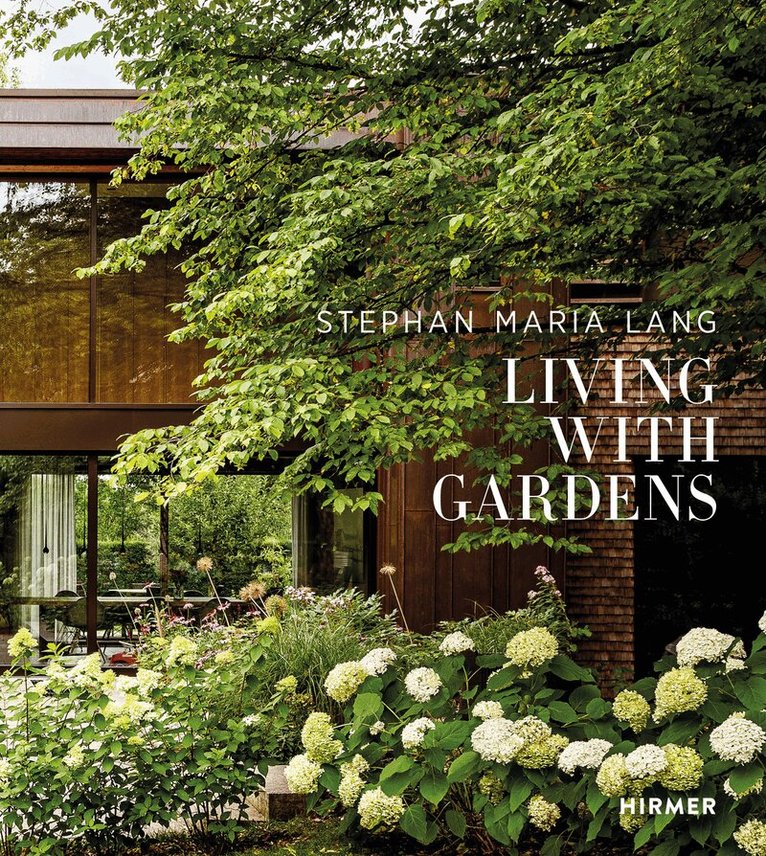
Influenced by “organic architecture”, Stephan Maria Lang creates beautiful ensembles of houses and gardens. Generous living spaces connected with nature, they become even more captivating over the years. Lang’s designs and constructions exhibit a remarkable integration of aesthetic principles with ecological sustainability, resulting in the creation of exquisite residential and garden complexes. This approach, pioneered by architects such as Richard Neutra, Rudolph Schindler, and Frank Lloyd Wright, was adopted by Stephan Maria Lang, integrating his architectural designs into naturally crafted landscapes. Throughout his career, Lang has produced numerous remarkable works, showcasing a perfect blend of architectural elegance and natural beauty.
When asked about the role of the paradise in his work, Erik Schmidt answers his interviewer Adriano Sack: Trying to stage life as a paradise is an important motivator for me. Whenever I go somewhere, I feel this total fascination, even if it s only a palm beach. Erik Schmidt creates works that explore symbolic processes within various social systems. The immersion into foreign contexts plays an important role in his paintings, videos, photographs and drawings. Be it in the crowded cityscape of Tokyo, in the camps of the American Occupy movement, with wine and olive farmers in the West Bank, in aristocratic hunting circles of his North Rhine-Westphalian homeland, or under the umbrella of mighty palm trees Schmidt is an observer and tends to deliberately assume the role of the outsider. This detached attitude provides him with insight into group dynamic processes, but also allows him to unravel a wide variety of cliché s, stereotypes, codes, rituals, norms, patterns, and conventions. And at the end of a long series of works there are now palm trees: They are square and in the middle is the nut.