637 kr
Skickas inom 10-15 vardagar
637 kr
Skickas inom 10-15 vardagar
1 165 kr
Skickas inom 7-10 vardagar
2 618 kr
Skickas inom 10-15 vardagar
838 kr
Läs direkt efter köp
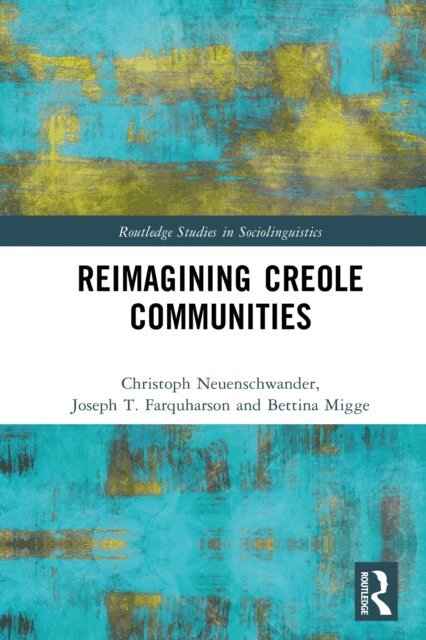
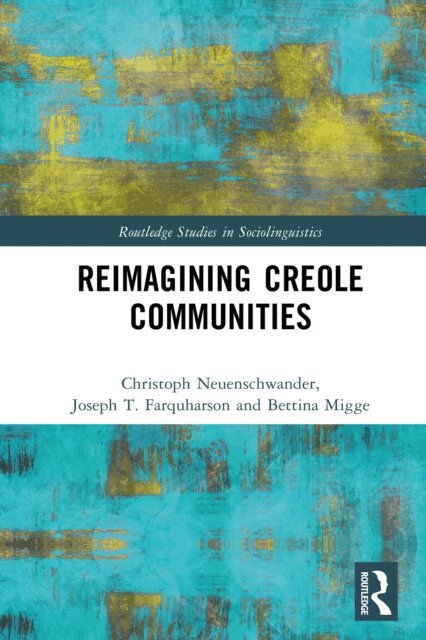
This volume undertakes a reimagination of Creole communities in the Caribbean and beyond by addressing the persistent disconnect between contemporary research on Creole communities and Sociolinguistics. While it acknowledges that early interactions between these fields have been fruitful, especially in understanding variation, Creole grammars and their relationship to their input languages, research on Creole communities subsequently prioritised typological and genealogical research, neglecting social meaning, speaker agency, and stylistic variation.
The book advocates for a ‘social turn’ in research on Creole communities, urging a (re)connection with contemporary sociolinguistic concepts to normalise Creoles and their lexifiers, such as English, as objects of study within broader paradigms. It embraces post-structuralist approaches, focusing on language ideologies, identity work, and indexicality, and capitalise on concepts such as ‘forcefields’ and ‘(semiotic) assemblages’ to analyse the complex interplay of linguistic, social, political, economic, and ideological influences. The exploration challenges binary or linear framings of the linguistic landscape in Creole communities, such as diglossia or (post-)Creole continua, which often fail to capture the fluid, messy realities of language use. Crucially, we critique the ‘myth of orderly multilingualism’, an ideology that misrepresents the diverseness of linguistic practices in Creole contexts by assuming languages can be neatly separated.
Drawing on insights from the English-official Caribbean, Guiana region, and the Pacific, this book will be a valuable resource for students and scholars in Pidgin and Creole Studies, contact linguistics, World Englishes, and sociolinguistics.
672 kr
Skickas inom 7-10 vardagar
3 015 kr
Skickas inom 10-15 vardagar
4 721 kr
Skickas inom 7-10 vardagar
785 kr
Läs direkt efter köp
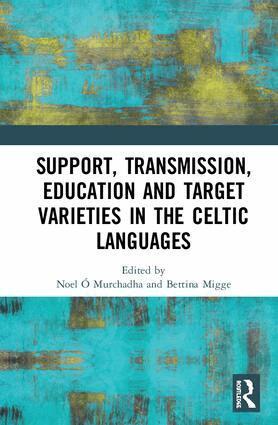
Like many languages across the globe, the Celtic languages today are experiencing varying degrees of minoritisation and revitalisation. The experience of the Celtic languages in the twenty-first century is characterised by language shift to English and French, but they have also been the focus of official and grassroots initiatives aimed at reinvigorating the minoritised languages. This modern reality is evident in the profile of contemporary users of the Celtic languages, in the type of variation that they practise, and in their views on Celtic language and society in the twenty-first century. In turn, this reality provides a challenge to preconceived ideas about what the Celtic languages are like and how they should be regarded and managed at local and global levels.
This book aims to shed light on some of the main issues facing the Celtic languages into the future and to showcase different approaches to studying such contexts. It presents contributions interested in explicating the modern condition of the Celtic languages. It engages with attitudinal support for the Celtic languages, modes of language transmission, choosing educational models in minority settings, pedagogical approaches for language learners and perceptions of linguistic practices. These issues are considered within the context of language shift and revitalisation in the Celtic languages.
The chapters in this book were originally published as a special issue of Language, Culture and Curriculum.
785 kr
Läs direkt efter köp
Like many languages across the globe, the Celtic languages today are experiencing varying degrees of minoritisation and revitalisation. The experience of the Celtic languages in the twenty-first century is characterised by language shift to English and French, but they have also been the focus of official and grassroots initiatives aimed at reinvigorating the minoritised languages. This modern reality is evident in the profile of contemporary users of the Celtic languages, in the type of variation that they practise, and in their views on Celtic language and society in the twenty-first century. In turn, this reality provides a challenge to preconceived ideas about what the Celtic languages are like and how they should be regarded and managed at local and global levels.
This book aims to shed light on some of the main issues facing the Celtic languages into the future and to showcase different approaches to studying such contexts. It presents contributions interested in explicating the modern condition of the Celtic languages. It engages with attitudinal support for the Celtic languages, modes of language transmission, choosing educational models in minority settings, pedagogical approaches for language learners and perceptions of linguistic practices. These issues are considered within the context of language shift and revitalisation in the Celtic languages.
The chapters in this book were originally published as a special issue of Language, Culture and Curriculum.
603 kr
Skickas inom 7-10 vardagar
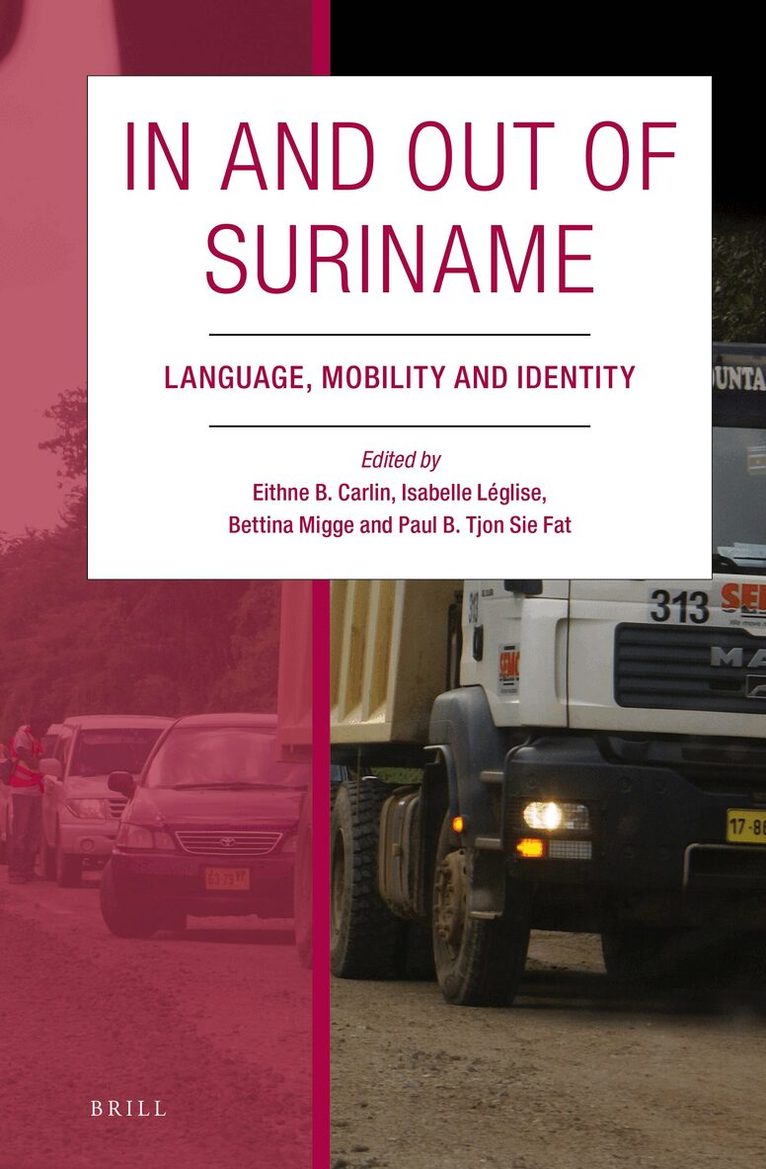
Language, Mobility and Identity
1 788 kr
Skickas inom 7-10 vardagar
Taylor & Francis Ltd
19 419 kr
Tillfälligt slut
1 563 kr
Tillfälligt slut
4 721 kr
Tillfälligt slut
1 563 kr
Tillfälligt slut