474 kr
Skickas inom 7-10 vardagar
474 kr
Skickas inom 7-10 vardagar
622 kr
Skickas inom 7-10 vardagar
1 101 kr
Skickas inom 7-10 vardagar
622 kr
Skickas inom 7-10 vardagar
1 101 kr
Skickas inom 7-10 vardagar
622 kr
Skickas inom 7-10 vardagar
1 101 kr
Skickas inom 7-10 vardagar
554 kr
Skickas inom 7-10 vardagar
1 033 kr
Skickas inom 7-10 vardagar
622 kr
Skickas inom 7-10 vardagar
1 101 kr
Skickas inom 7-10 vardagar
622 kr
Skickas inom 7-10 vardagar
1 101 kr
Skickas inom 7-10 vardagar
443 kr
Läs direkt efter köp
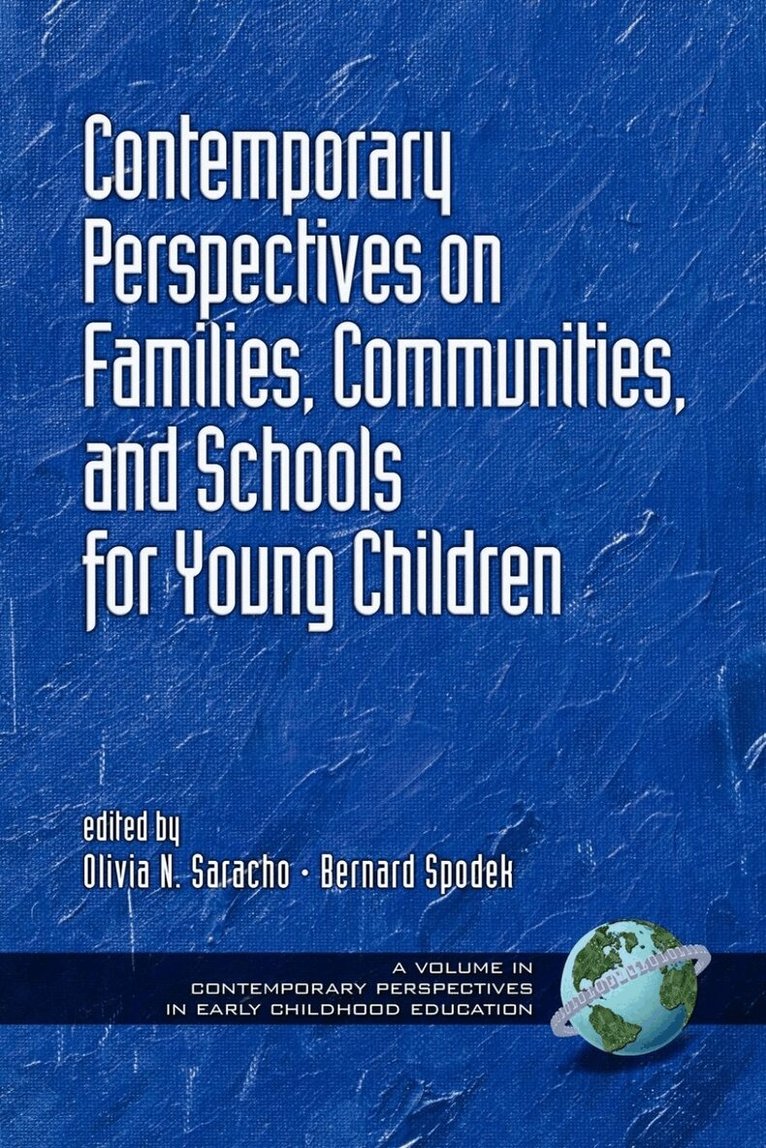
Early childhood education has always been an enterprising one. Innovative models that provide connections among the family, community, and school of early childhood will continue to emerge through the years to acknowledge new educational ideologies, new social demands, and new knowledge. The issues addressed in this volume can provide new directions to prepare early childhood scholars, researchers, and practitioners to work as a team in these different settings.
388 kr
Läs direkt efter köp
This volume identifies and critically analyzes research studies related to the critical skills, environments, and adult interactions that contribute to young children’s literacy development. The volume reminisces on the reformation that has emerged in the language and literacy education of young children. Prior to the 1960''s, few studies were available on pre?first?grade literacy. Then studies began to emerge in the 1960''s focusing on the reading readiness paradigm and on the conventional assumption that literacy development was only introduce and when children experienced formal reading instruction in school (Sulzby & Teale, 1986). Fortunately, Durkin (1966) found that there were children reading before first grade and determined that the reading readiness paradigm was theoretically and pragmatically incongruous. Others followed Durkin’s footsteps. Sulzby and Teale (1986) identify the following concepts about young children’s acquisition of literacy learning:
1. Literacy development originates well before children are introduced to formal instruction.
2. The notion that reading precedes writing or that writing precedes reading is a fallacy.
3. Literacy blooms in "real?life" settings and by performing real?life activities that are used to "get things done."
4. The purposes of literacy for young children are as important in learning about writing and reading as are the dimensions of literacy.
5. Children’s cognitive development is important to their acquisition of literacy during the years from birth to six.
6. Children learn written language when they actively engage in their world.
Competent teachers throughout the United States suggest that prior to attending school, children have acquired a distinctive culture, collection of experiences, and group of abilities (Vacca & Vacca, 2000). Many prekindergarten children have been in a group setting for three and four years such as a child care setting where teachers and caregivers teach them reading and writing.
446 kr
Läs direkt efter köp
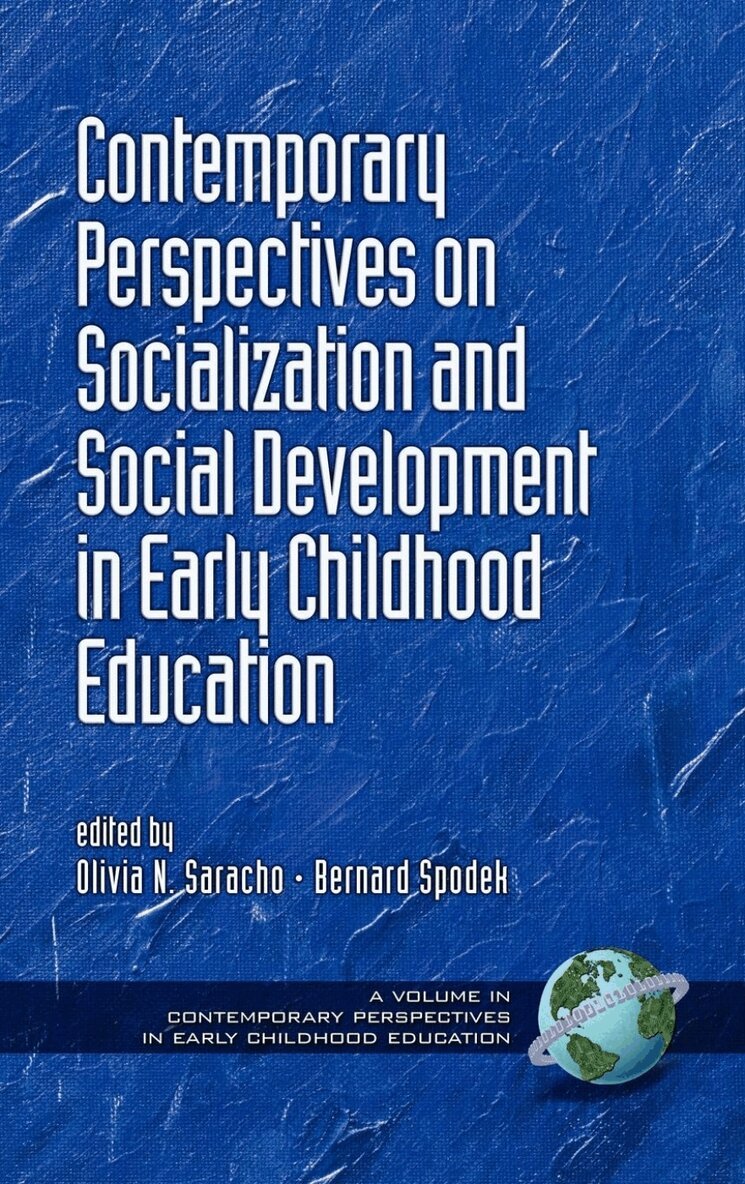
The purpose of this volume is to present a selection of chapters that reflect current issues relating to children’s socialization processes that help them become successful members of their society. From birth children are unique in their rates of growth and development, including the development of their social awareness and their ability to interact socially. They interpret social events based on their developing life style and environmental experiences. The children’s socialization is influenced by several important social forces including the family and its organization, their peer group, and the significant others in their lives. In “Theories of Socialization and Social Development,” Olivia Saracho and Bernard Spodek describe the children’s socialization forces and the different developmental theories that have influenced our understanding of the socialization process. These include maturationist theory (developed by Arnold Gesell), constructivist theories (developed by such theorists as Jean Piaget, Lev S. Vygotsky, and Jerome Bruner), psychodynamic theories (developed by such theorists as Sigmund Freud, Erik Erikson, Harry Stack Sullivan, and Alfred Adler), and ecological theory (developed by Urie Bronfenbrenner). Each theory provides interpretations of the meaning of the children’s social development and describes the different characteristics for each age group in the developmental sequences.
394 kr
Läs direkt efter köp
For decades, politicians, businessmen and other leaders have been concerned with the quality of education, including early childhood education, in the United States. While more than 50% of the children between the ages of three and five are enrolled in preschool and kindergarten programs in the United States, no state, federal, or national standards exist for science or technology education in preschool or kindergarten programs. Knowledge about science and technology is an important requirement for all in contemporary society. An increasing number of professions require the use of scientific concepts and technological skills and society as a whole depends on scientific knowledge.
Scientific and technological knowledge should be a part of every individual’s education. There are many ways to enhance young children’s scientific thinking and problem-solving skills as well as their technological abilities. The purpose of this volume is to present a critical analysis of reviews of research on science and technology education in early childhood education. The first part of the volume includes contributions by leading scholars in science, while the second part includes contributions by leading scholars in technology.
446 kr
Läs direkt efter köp
This volume provides a comprehensive critical analysis of the research in mathematics education for young children. The researchers who conducted the critical analysis focused on the relationship between (1) mathematics learning in the early years and domain specific approaches to cognitive development, (2) the children’s social learning and their developing understanding of math, and (3) the children’s learning in a natural context and their understanding of mathematics concepts. The work of these scholars can help guide those researchers who are interested in pursuing studies in early childhood mathematics in a specific area of study. This volume will facilitate the research conducted by both novice and expert researchers. The volume has accomplished its major goals, which consists of critically analyzing important research in a specific area that would be most useful in advancing the field and provide recommendations for both researchers and educators.
436 kr
Läs direkt efter köp
394 kr
Läs direkt efter köp
443 kr
Läs direkt efter köp
Social epistemology is a broad set of approaches to the study of knowledge and to gain information about the social dimensions. This intellectual movement of wide cross-disciplinary sources reconstructs the problems of epistemology when knowledge is considered to be intrinsically social. In the first chapter, "Social Epistemology and Social Learning," Olivia Saracho and Bernard Spodek discuss the social and historical contexts in which different forms of knowledge are formulated based on the perspective of social epistemology. They also discuss the emergence of social epistemology, which guides researchers to investigate social phenomena in laboratory and field settings. Social factors "external" to the appropriate business of science have a major impact in the social studies researchers’ historical case studies. Thus, social studies researchers may be considered social epistemologists, because (a) they focus on knowledge of social influences and (b) they infer epistemologically significant conclusions from their sociological or anthropological research. In addition, analyses indicate that studies of scientific paradigms are basically a struggle for political power rather than reflecting reliable epistemic merit. Social studies researchers focus on knowledge of social influences on knowledge, which is analogous to the knowledge of the social epistemologists. They also use their sociological or anthropological research to infer epistemologically significant conclusions.
492 kr
Läs direkt efter köp
In the chapters that follow, the history and current status of early childhood education in selected countries, along with a review of current research that is being conducted in these countries will be presented. In essence this will provide a glimpse of the intellectual base of early childhood education in many parts of the world.
418 kr
Läs direkt efter köp
669 kr
Läs direkt efter köp
590 kr
Läs direkt efter köp
664 kr
Läs direkt efter köp
Social epistemology is a broad set of approaches to the study of knowledge and to gain information about the social dimensions. This intellectual movement of wide cross-disciplinary sources reconstructs the problems of epistemology when knowledge is considered to be intrinsically social. In the first chapter, "Social Epistemology and Social Learning," Olivia Saracho and Bernard Spodek discuss the social and historical contexts in which different forms of knowledge are formulated based on the perspective of social epistemology. They also discuss the emergence of social epistemology, which guides researchers to investigate social phenomena in laboratory and field settings. Social factors "external" to the appropriate business of science have a major impact in the social studies researchers’ historical case studies. Thus, social studies researchers may be considered social epistemologists, because (a) they focus on knowledge of social influences and (b) they infer epistemologically significant conclusions from their sociological or anthropological research. In addition, analyses indicate that studies of scientific paradigms are basically a struggle for political power rather than reflecting reliable epistemic merit. Social studies researchers focus on knowledge of social influences on knowledge, which is analogous to the knowledge of the social epistemologists. They also use their sociological or anthropological research to infer epistemologically significant conclusions.
647 kr
Läs direkt efter köp
The purpose of this volume is to present a selection of chapters that reflect current issues relating to children’s socialization processes that help them become successful members of their society. From birth children are unique in their rates of growth and development, including the development of their social awareness and their ability to interact socially. They interpret social events based on their developing life style and environmental experiences. The children’s socialization is influenced by several important social forces including the family and its organization, their peer group, and the significant others in their lives. In “Theories of Socialization and Social Development,” Olivia Saracho and Bernard Spodek describe the children’s socialization forces and the different developmental theories that have influenced our understanding of the socialization process. These include maturationist theory (developed by Arnold Gesell), constructivist theories (developed by such theorists as Jean Piaget, Lev S. Vygotsky, and Jerome Bruner), psychodynamic theories (developed by such theorists as Sigmund Freud, Erik Erikson, Harry Stack Sullivan, and Alfred Adler), and ecological theory (developed by Urie Bronfenbrenner). Each theory provides interpretations of the meaning of the children’s social development and describes the different characteristics for each age group in the developmental sequences.
738 kr
Läs direkt efter köp
669 kr
Läs direkt efter köp
664 kr
Läs direkt efter köp