497 kr
Skickas inom 10-15 vardagar
497 kr
Skickas inom 10-15 vardagar
1 023 kr
Läs direkt efter köp
Instantly diagnose 100 of the most commonly seen symptoms in adults and children!
"This is a book of lists to help inexperienced healthcare providers hone their skill at progressing from symptoms to a differential diagnosis to treatment decisions. This is a necessary step in a student''s development and this book goes a long way in assisting in this process. 3 Stars."--Doody''s Review Service
The Common Symptom Guide is the most trusted and easy-to-use reference for quickly and accurately evaluating and treating patients based on presenting symptoms. The Guide includes lists of pertinent questions, physical findings, and differential diagnosis for more than 100 of the most common adult and pediatric symptoms so you can instantly diagnose and treat the complaint.
Turn to The Common Symptom Guide for important guidelines on:
Patient and family history Physical examination Diagnostic considerations Medications Environmental historyPlus... Outstanding indexing and cross-referencing to help you quickly arrive at a diagnosisIncreased number of evidence-based medicine references Updated medical information throughout More references to key websites Additional information on the author''s website (www.howsyourhealth.org) that provides valuable patienteducation material135 kr
Läs direkt efter köp
1 158 kr
Läs direkt efter köp
821 kr
Skickas inom 7-10 vardagar
127 kr
Skickas inom 5-8 vardagar
109 kr
Läs direkt efter köp
109 kr
Läs direkt efter köp
254 kr
Skickas inom 3-6 vardagar
1 811 kr
Skickas inom 5-8 vardagar
1 680 kr
Läs direkt efter köp
1 150 kr
Läs direkt efter köp
921 kr
Skickas inom 7-10 vardagar
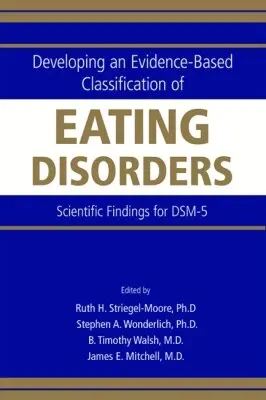
The culmination of several years of collaborative effort among eating disorders investigators from around the world, Developing an Evidence-Based Classification of Eating Disorders: Scientific Findings for DSM-5 provides summaries of the research presentations and discussions of the conceptual and methodological issues involved in diagnosing and classifying eating disorders. The mission of the DSM-5 Eating Disorder Work Group was to improve the clinical utility of eating disorder diagnoses by recommending revisions based on sound empirical evidence. Although the objective was to provide empirical information to the DSM-5 Eating Disorders Work Group, the research presented in this book should be invaluable to the eating disorders research and clinical community at large and, by extension, to their patients.
Eating disorders are serious, difficult to treat, and often lead to multiple medical complications, high rates of psychiatric comorbidity, and mortality. It is critical, then, that clinicians be aware of the most current research, as well as understand the foundation of the soon-to-be-released DSM-5.
Improving the definition of symptoms and syndromes is one of the critical challenges the authors tackle-in particular the validity of the eating disorders not otherwise specified category, into which 60% of patients diagnosed with an eating disorder now fall. In addition, other mental disorders, particularly mood disorders and anxiety disorders, co-occur at a higher rate than would be expected. These findings indicate the need for greater specificity in the nosology, an issue which the investigators address. Other topics addressed include: • Eating disorders in children and adolescents, including diagnostic differences and classification. Also included is a chapter on the validity of applying a classification for feeding disorders in infants and young children, as well as one that covers latent profile analysis to identify eating disorder phenotypes in the adolescent population.• Cultural considerations and cross-cultural variation in the classification of eating disorders, including Native American, Japanese, Canadian, and Pacific Fijian populations.• A discussion of non-fat-phobic anorexia nervosa and its suitability for inclusion in DSM-5.• Current and future directions for the assessment of the cognitive criteria for anorexia nervosa.• A chapter on loss of control eating, including implications for future weight gain, depression, binge drinking, and substance abuse.
Key terms, references, summaries, charts, tables, and other illustrative features are abundant and assist the reader in understanding the research and putting it in context. Developing an Evidence-Based Classification of Eating Disorders: Scientific Findings for DSM-5 is required reading for both investigators and clinicians in the rapidly evolving field of eating disorders.

1 303 kr
Skickas inom 7-10 vardagar
986 kr
Läs direkt efter köp
993 kr
Läs direkt efter köp
876 kr
Skickas inom 7-10 vardagar
799 kr
Skickas inom 7-10 vardagar
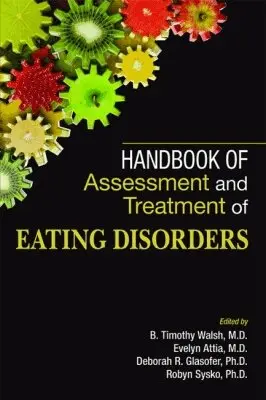
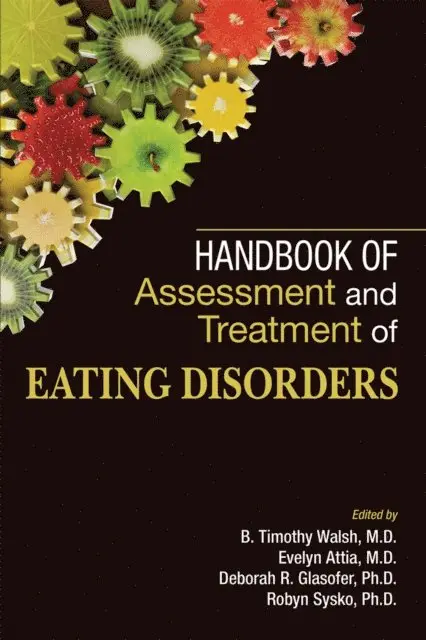
The recent publication of the revised Diagnostic and Statistical Manual of Mental Disorders (DSM-5) has had a profound impact on the classification of eating disorders, introducing changes that were formalized after years of study by the Eating Disorders Work Group. The Handbook of Assessment and Treatment of Eating Disorders is the only book that provides clinicians with everything they need to know to implement these changes in assessment, diagnosis, and treatment. After an overview of feeding and eating disorders that systematically reviews the changes from DSM-IV to DSM-5, some of the foremost scholars in each area address eating disorders in adults, children and adolescents, and special populations. Chapters on assessment and treatment, along with accompanying videos, offer comprehensive, state-of-the-art coverage that will benefit clinicians in practice, such as psychiatrists and psychotherapists, as well as mental health trainees.
Clinicians will find the following features and content especially useful: • Five full chapters on assessment tools cover the evolution of measures and instruments, from the primitive beginnings to the cutting edge of new technological applications. The challenges of diagnosing feeding and eating disorders in children and adolescents are also addressed. • Treatment chapters cover restrictive eating, including anorexia nervosa and avoidant/restrictive food intake disorder, binge eating, including bulimia nervosa and binge-eating disorder, and other eating problems, including pica, rumination disorder, and night eating syndrome.• One chapter focuses on eating problems among men and boys, who have diverse presentations, and the motivations and body image disturbances that may differ from those typically found among females.• Because attunement to culturally and socially patterned characteristics of clinical presentation is essential to an informed and accurate mental health assessment, an entire chapter is devoted to clinical effectiveness in multicultural and cross-cultural settings.• Each chapter ends with key clinical points to help readers focus on the most salient content, test comprehension, and review for examinations.
Clinicians in both training and practice will find the book's up-to-date, DSM-5-compatible content to be utterly essential. The Handbook of Assessment and Treatment of Eating Disorders belongs in the library of every mental health professional practicing today.
867 kr
Läs direkt efter köp
The recent publication of the revised Diagnostic and Statistical Manual of Mental Disorders (DSM-5®) has had a profound impact on the classification of eating disorders, introducing changes that were formalized after years of study by the Eating Disorders Work Group. The Handbook of Assessment and Treatment of Eating Disorders is the only book that provides clinicians with everything they need to know to implement these changes in assessment, diagnosis, and treatment. After an overview of feeding and eating disorders that systematically reviews the changes from DSM-IV to DSM-5®, some of the foremost scholars in each area address eating disorders in adults, children and adolescents, and special populations. Chapters on assessment and treatment, along with accompanying videos, offer comprehensive, state-of-the-art coverage that will benefit clinicians in practice, such as psychiatrists and psychotherapists, as well as mental health trainees.
Clinicians will find the following features and content especially useful: Five full chapters on assessment tools cover the evolution of measures and instruments, from the primitive beginnings to the cutting edge of new technological applications. The challenges of diagnosing feeding and eating disorders in children and adolescents are also addressed. Treatment chapters cover restrictive eating, including anorexia nervosa and avoidant/restrictive food intake disorder, binge eating, including bulimia nervosa and binge-eating disorder, and other eating problems, including pica, rumination disorder, and night eating syndrome. One chapter focuses on eating problems among men and boys, who have diverse presentations, and the motivations and body image disturbances that may differ from those typically found among females. Because attunement to culturally and socially patterned characteristics of clinical presentation is essential to an informed and accurate mental health assessment, an entire chapter is devoted to clinical effectiveness in multicultural and cross-cultural settings. Each chapter ends with key clinical points to help readers focus on the most salient content, test comprehension, and review for examinations.
Clinicians in both training and practice will find the book''s up-to-date, DSM-5®--compatible content to be utterly essential. The Handbook of Assessment and Treatment of Eating Disorders belongs in the library of every mental health professional practicing today.
316 kr
Tillfälligt slut