

Häftad, Engelska, 2021
212 kr
Skickas inom 7-10 vardagar
212 kr
Skickas inom 7-10 vardagar

308 kr
Skickas inom 7-10 vardagar

394 kr
Skickas inom 7-10 vardagar

244 kr
Skickas inom 7-10 vardagar
762 kr
Läs direkt efter köp
''An evenhanded, realistic and thoughtful approach to identifying environmental problems and management goals'' Stephen Zavestoski, Assistant Professor of Sociology and Environmental Studies, University of San Francisco
''...a theoretically advanced yet accessible treatment of environmental governance, drawing on an impressive range of material to investigate the roles of states and industries in addressing environmental problems.'' Harriet Bulkeley, Department of Geography, University of Durham
''Written in the vein of critical optimism, this book is pitched at the right level to inspire people trying to make pragmatic changes to their governmental and industrial systems: trying to make a difference where it counts.'' Timothy Doyle, Associate Professor in Geographical and Environmental Studies, University of Adelaide
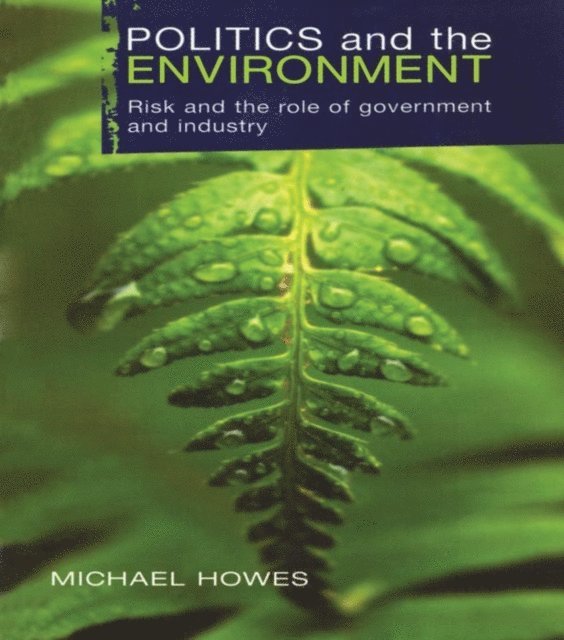
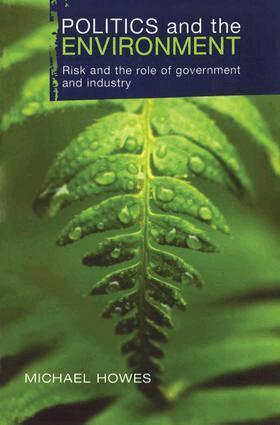
What is the future for our environment? We face serious risks of major industrial accidents and global environmental degradation, yet new technological developments promise a standard of living unimaginable only a few generations ago. Michael Howes outlines the ways in which governments have responded to environmental risk over the past four decades. He examines the key environmental issues and the claims of envirosceptics, offering a new strategy for making major administrative decisions in the face of uncertainty. He explains how governments have developed environmental policy, and the ongoing tensions between science, industry, the state, social movements, and electoral politics. In a clear, straightforward manner, he shows how to use the work of theorists Ulrich Beck, Michel Foucault and John Dryzek to analyse environmental policy. He also develops a new method of measuring the effectiveness of environmental governance in developed countries. Howes draws on a wide array of sources from business, government, environment groups, academic research, and NGOs to illustrate his arguments, with comparisons between the environmental policies of the UK, the USA and Australia.
757 kr
Läs direkt efter köp
''An evenhanded, realistic and thoughtful approach to identifying environmental problems and management goals'' Stephen Zavestoski, Assistant Professor of Sociology and Environmental Studies, University of San Francisco
''...a theoretically advanced yet accessible treatment of environmental governance, drawing on an impressive range of material to investigate the roles of states and industries in addressing environmental problems.'' Harriet Bulkeley, Department of Geography, University of Durham
''Written in the vein of critical optimism, this book is pitched at the right level to inspire people trying to make pragmatic changes to their governmental and industrial systems: trying to make a difference where it counts.'' Timothy Doyle, Associate Professor in Geographical and Environmental Studies, University of Adelaide
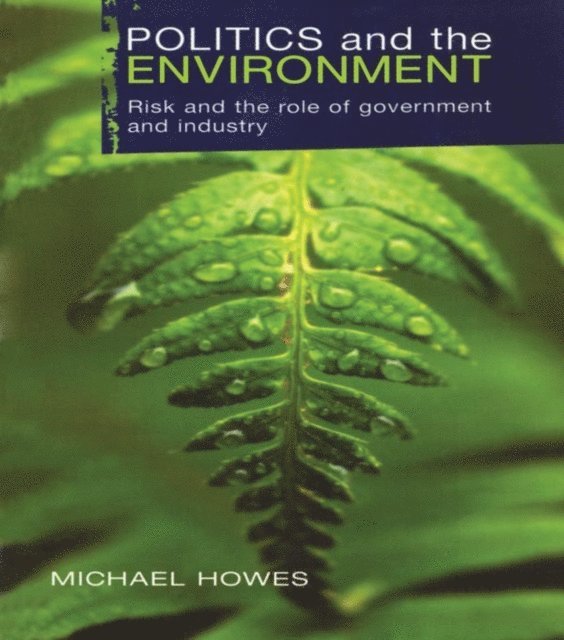
What is the future for our environment? We face serious risks of major industrial accidents and global environmental degradation, yet new technological developments promise a standard of living unimaginable only a few generations ago. Michael Howes outlines the ways in which governments have responded to environmental risk over the past four decades. He examines the key environmental issues and the claims of envirosceptics, offering a new strategy for making major administrative decisions in the face of uncertainty. He explains how governments have developed environmental policy, and the ongoing tensions between science, industry, the state, social movements, and electoral politics. In a clear, straightforward manner, he shows how to use the work of theorists Ulrich Beck, Michel Foucault and John Dryzek to analyse environmental policy. He also develops a new method of measuring the effectiveness of environmental governance in developed countries. Howes draws on a wide array of sources from business, government, environment groups, academic research, and NGOs to illustrate his arguments, with comparisons between the environmental policies of the UK, the USA and Australia.
785 kr
Läs direkt efter köp
''John Macdonald once again turns the traditional approach to health care on its head. Instead of merely diagnosing and managing disease, he urges health services � and indeed society � to foster health ... and articulates a vision of a health promoting � a salutogenic � society''. Dimity Pond, School of Medical Practice and Population Health, University of Newcastle, Australia
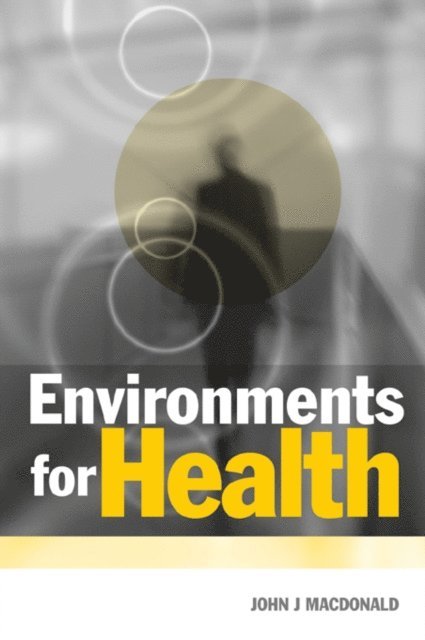
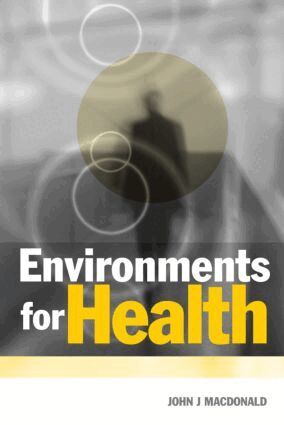
The vast proportion of cash spent on health care by governments and individuals in the world is spent on systems that are based on a more or less Westernized acute care model. The imbalance of these systems, with their overemphasis on cure, as opposed to care and prevention or maintenance of health, is well documented. Salutogenic health care takes a holistic view of the individual as part of a social and environmental continuum rather than as an isolated packet of symptoms, and seeks to reassess the very meaning of health. There are some indications that we, as a global culture, are moving towards this new salutogenic model, but the speed of the movement has to be accelerated. This book sets out to chart the main steps of this movement and to indicate some of the ways of thinking and action which can help form new ways of approaching health care.
785 kr
Läs direkt efter köp
''John Macdonald once again turns the traditional approach to health care on its head. Instead of merely diagnosing and managing disease, he urges health services � and indeed society � to foster health ... and articulates a vision of a health promoting � a salutogenic � society''. Dimity Pond, School of Medical Practice and Population Health, University of Newcastle, Australia
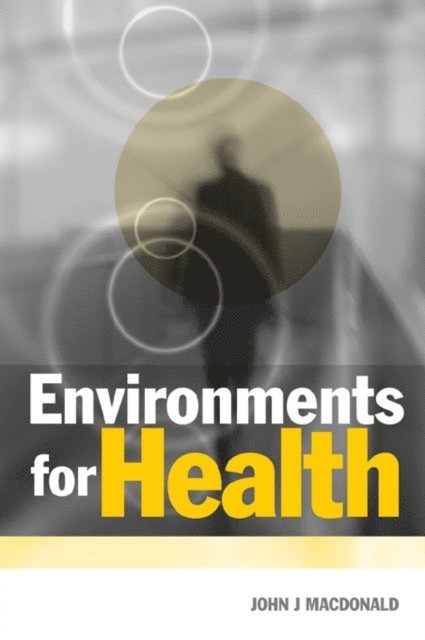
The vast proportion of cash spent on health care by governments and individuals in the world is spent on systems that are based on a more or less Westernized acute care model. The imbalance of these systems, with their overemphasis on cure, as opposed to care and prevention or maintenance of health, is well documented. Salutogenic health care takes a holistic view of the individual as part of a social and environmental continuum rather than as an isolated packet of symptoms, and seeks to reassess the very meaning of health. There are some indications that we, as a global culture, are moving towards this new salutogenic model, but the speed of the movement has to be accelerated. This book sets out to chart the main steps of this movement and to indicate some of the ways of thinking and action which can help form new ways of approaching health care.
2 489 kr
Skickas inom 10-15 vardagar

450 kr
Skickas inom 3-6 vardagar

249 kr
Skickas inom 7-10 vardagar

480 kr
Skickas inom 7-10 vardagar

310 kr
Skickas inom 7-10 vardagar
645 kr
Skickas inom 10-15 vardagar
645 kr
Skickas inom 10-15 vardagar
2 616 kr
Skickas

275 kr
Skickas

644 kr
Skickas inom 7-10 vardagar