
Häftad, Engelska, 1996
347 kr
Skickas inom 3-6 vardagar
347 kr
Skickas inom 3-6 vardagar
414 kr
Läs direkt efter köp
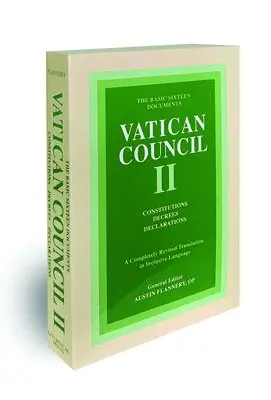
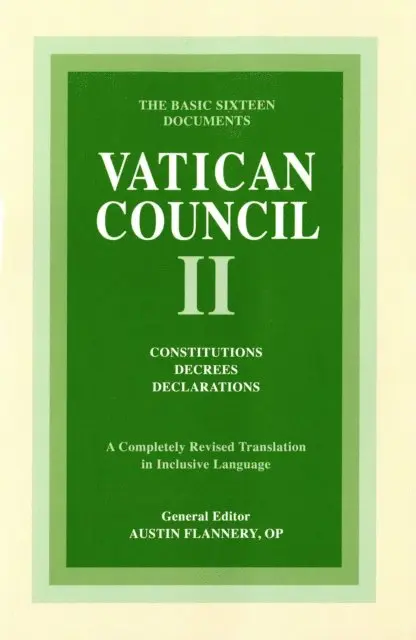
As Pope Francis leads the worldwide church wholly within and from the teachings of the Council (1962-65), there is a great need in college classrooms and parish faith formation groups—as well as for individuals—to again have access to these documents in contemporary English. This volume contains the sixteen official documents—constitutions, decrees, and declarations—of the Second Vatican Council in the most popular and widely used inclusive-language edition translated by Irish Dominican Austin Flannery (+2008). This edition is also presented with a larger, more readable font than previous editions. Table of Contents:
Dogmatic Constitution on the Church, Lumen GentiumDogmatic Constitution on Divine Revelation, Dei VerbumConstitution on the Sacred Liturgy, Sacrosanctum ConcilumPastoral Constitution on the Church in the Modern World, Gaudium et SpesDecree on the Pastoral Office of Bishops in the Church, Christus DominusDecree on the Ministry and Life of Priests, Presbyterorum OrdinisDecree on the Training of Priests, Optatam TotiusDecree on the Up-to-Date Renewal of Religious Life, Perfectae CaritatisDecree on the Apostolate of Lay People, Apostolicam ActuositatemDecree on the Church’s Missionary Activity, Ad Gentes DivinitusDecree on Ecumenism, Unitatis RedintegratioDecree on the Catholic Eastern Churches, Orientalium EcclesiarumDecree on the Mass Media, Inter MirificaDeclaration on Religious Liberty, Dignitatis HumanaeDeclaration on the Relation of the Church to Non-Christian Religions, Nostra AetateDeclaration on Christian Education, Gravissimum EducationisEach of these sixteen documents is also available as separate eBooks (PDF, ePub, and Mobi) priced at $2.99 each. An affordable solution for students and scholars who only need to reference particular decrees or declarations. See more on our digital edition page. https://litpress.org/LP/vatdoc_chapter_ebook
810 kr
Läs direkt efter köp
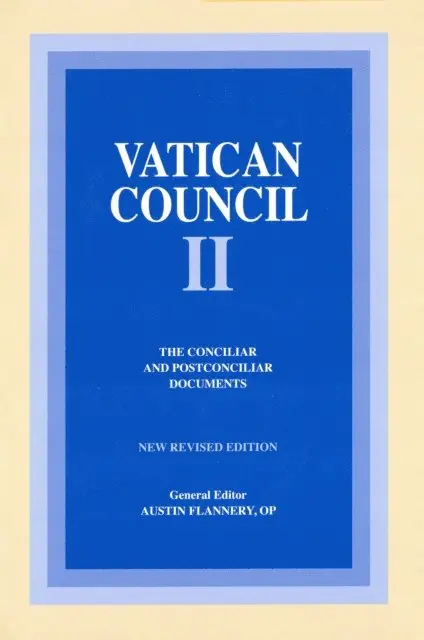
This study edition of Irish Dominican Austin Flannery’s (+2008) earlier translation contains all sixteen documents of the Second Vatican Council, plus the forty-nine later documents from popes and Vatican congregations that implemented the details of the Council's decisions. Flannery attempted to include all documents of general interest that form part of the postconciliar process—documents which might be described as organically linked with the conciliar process. This is the translation used in The Catechism of the Catholic Church and the text that both students of the Council and students of the Catechism will want for the complete reference of the Council and its decisions. Special features of the study edition:
Larger page size, with larger print and more generous marginsFocus questions after each Council document help the reader comprehend the main pointsCreative questions assist the reader in applying the content of the Council documents to personal experience or to future development in the Church
46 kr
Läs direkt efter köp
The sixteen official documents—constitutions, decrees, and declarations—of the Second Vatican Council are now available from Liturgical Press in the most popular and widely used inclusive-language edition translated by Irish Dominican Austin Flannery (+October 21, 2008). As the worldwide Church continues to celebrate the fiftieth anniversary of the Council (1962–65), there is a great need in college classrooms and parish faith formation groups—as well as for individuals—to again have access to these documents in contemporary English. As Flannery wrote in his introduction to the 1996 edition, “The translation of the texts of the Vatican documents in the present volume differs from that in the previous publication in two respects. It has been very considerably revised and, in place, corrected. It is also, to a very large extent, in inclusive language. “I say ‘to a very large extent,’ because we have used inclusive language in passages about men and women but not, however, in passages about God, except where the use of the masculine pronoun was easily avoidable.”
45 kr
Läs direkt efter köp
The sixteen official documents—constitutions, decrees, and declarations—of the Second Vatican Council are now available from Liturgical Press in the most popular and widely used inclusive-language edition translated by Irish Dominican Austin Flannery (+October 21, 2008). As the worldwide Church continues to celebrate the fiftieth anniversary of the Council (1962–65), there is a great need in college classrooms and parish faith formation groups—as well as for individuals—to again have access to these documents in contemporary English. As Flannery wrote in his introduction to the 1996 edition, “The translation of the texts of the Vatican documents in the present volume differs from that in the previous publication in two respects. It has been very considerably revised and, in place, corrected. It is also, to a very large extent, in inclusive language. “I say ‘to a very large extent,’ because we have used inclusive language in passages about men and women but not, however, in passages about God, except where the use of the masculine pronoun was easily avoidable.”
46 kr
Läs direkt efter köp
The sixteen official documents—constitutions, decrees, and declarations—of the Second Vatican Council are now available from Liturgical Press in the most popular and widely used inclusive-language edition translated by Irish Dominican Austin Flannery (+October 21, 2008). As the worldwide Church continues to celebrate the fiftieth anniversary of the Council (1962–65), there is a great need in college classrooms and parish faith formation groups—as well as for individuals—to again have access to these documents in contemporary English. As Flannery wrote in his introduction to the 1996 edition, “The translation of the texts of the Vatican documents in the present volume differs from that in the previous publication in two respects. It has been very considerably revised and, in place, corrected. It is also, to a very large extent, in inclusive language. “I say ‘to a very large extent,’ because we have used inclusive language in passages about men and women but not, however, in passages about God, except where the use of the masculine pronoun was easily avoidable.”
46 kr
Läs direkt efter köp
The sixteen official documents—constitutions, decrees, and declarations—of the Second Vatican Council are now available from Liturgical Press in the most popular and widely used inclusive-language edition translated by Irish Dominican Austin Flannery (+October 21, 2008). As the worldwide Church continues to celebrate the fiftieth anniversary of the Council (1962–65), there is a great need in college classrooms and parish faith formation groups—as well as for individuals—to again have access to these documents in contemporary English. As Flannery wrote in his introduction to the 1996 edition, “The translation of the texts of the Vatican documents in the present volume differs from that in the previous publication in two respects. It has been very considerably revised and, in place, corrected. It is also, to a very large extent, in inclusive language. “I say ‘to a very large extent,’ because we have used inclusive language in passages about men and women but not, however, in passages about God, except where the use of the masculine pronoun was easily avoidable.”
46 kr
Läs direkt efter köp
The sixteen official documents—constitutions, decrees, and declarations—of the Second Vatican Council are now available from Liturgical Press in the most popular and widely used inclusive-language edition translated by Irish Dominican Austin Flannery (+October 21, 2008). As the worldwide Church continues to celebrate the fiftieth anniversary of the Council (1962–65), there is a great need in college classrooms and parish faith formation groups—as well as for individuals—to again have access to these documents in contemporary English. As Flannery wrote in his introduction to the 1996 edition, “The translation of the texts of the Vatican documents in the present volume differs from that in the previous publication in two respects. It has been very considerably revised and, in place, corrected. It is also, to a very large extent, in inclusive language. “I say ‘to a very large extent,’ because we have used inclusive language in passages about men and women but not, however, in passages about God, except where the use of the masculine pronoun was easily avoidable.”
45 kr
Läs direkt efter köp
The sixteen official documents—constitutions, decrees, and declarations—of the Second Vatican Council are now available from Liturgical Press in the most popular and widely used inclusive-language edition translated by Irish Dominican Austin Flannery (+October 21, 2008). As the worldwide Church continues to celebrate the fiftieth anniversary of the Council (1962–65), there is a great need in college classrooms and parish faith formation groups—as well as for individuals—to again have access to these documents in contemporary English. As Flannery wrote in his introduction to the 1996 edition, “The translation of the texts of the Vatican documents in the present volume differs from that in the previous publication in two respects. It has been very considerably revised and, in place, corrected. It is also, to a very large extent, in inclusive language. “I say ‘to a very large extent,’ because we have used inclusive language in passages about men and women but not, however, in passages about God, except where the use of the masculine pronoun was easily avoidable.”
46 kr
Läs direkt efter köp
The sixteen official documents—constitutions, decrees, and declarations—of the Second Vatican Council are now available from Liturgical Press in the most popular and widely used inclusive-language edition translated by Irish Dominican Austin Flannery (+October 21, 2008). As the worldwide Church continues to celebrate the fiftieth anniversary of the Council (1962–65), there is a great need in college classrooms and parish faith formation groups—as well as for individuals—to again have access to these documents in contemporary English. As Flannery wrote in his introduction to the 1996 edition, “The translation of the texts of the Vatican documents in the present volume differs from that in the previous publication in two respects. It has been very considerably revised and, in place, corrected. It is also, to a very large extent, in inclusive language. “I say ‘to a very large extent,’ because we have used inclusive language in passages about men and women but not, however, in passages about God, except where the use of the masculine pronoun was easily avoidable.”
46 kr
Läs direkt efter köp
The sixteen official documents—constitutions, decrees, and declarations—of the Second Vatican Council are now available from Liturgical Press in the most popular and widely used inclusive-language edition translated by Irish Dominican Austin Flannery (+October 21, 2008). As the worldwide Church continues to celebrate the fiftieth anniversary of the Council (1962–65), there is a great need in college classrooms and parish faith formation groups—as well as for individuals—to again have access to these documents in contemporary English. As Flannery wrote in his introduction to the 1996 edition, “The translation of the texts of the Vatican documents in the present volume differs from that in the previous publication in two respects. It has been very considerably revised and, in place, corrected. It is also, to a very large extent, in inclusive language. “I say ‘to a very large extent,’ because we have used inclusive language in passages about men and women but not, however, in passages about God, except where the use of the masculine pronoun was easily avoidable.”
46 kr
Läs direkt efter köp
The sixteen official documents—constitutions, decrees, and declarations—of the Second Vatican Council are now available from Liturgical Press in the most popular and widely used inclusive-language edition translated by Irish Dominican Austin Flannery (+October 21, 2008). As the worldwide Church continues to celebrate the fiftieth anniversary of the Council (1962–65), there is a great need in college classrooms and parish faith formation groups—as well as for individuals—to again have access to these documents in contemporary English. As Flannery wrote in his introduction to the 1996 edition, “The translation of the texts of the Vatican documents in the present volume differs from that in the previous publication in two respects. It has been very considerably revised and, in place, corrected. It is also, to a very large extent, in inclusive language. “I say ‘to a very large extent,’ because we have used inclusive language in passages about men and women but not, however, in passages about God, except where the use of the masculine pronoun was easily avoidable.”
46 kr
Läs direkt efter köp
The sixteen official documents—constitutions, decrees, and declarations—of the Second Vatican Council are now available from Liturgical Press in the most popular and widely used inclusive-language edition translated by Irish Dominican Austin Flannery (+October 21, 2008). As the worldwide Church continues to celebrate the fiftieth anniversary of the Council (1962–65), there is a great need in college classrooms and parish faith formation groups—as well as for individuals—to again have access to these documents in contemporary English. As Flannery wrote in his introduction to the 1996 edition, “The translation of the texts of the Vatican documents in the present volume differs from that in the previous publication in two respects. It has been very considerably revised and, in place, corrected. It is also, to a very large extent, in inclusive language. “I say ‘to a very large extent,’ because we have used inclusive language in passages about men and women but not, however, in passages about God, except where the use of the masculine pronoun was easily avoidable.”
46 kr
Läs direkt efter köp
The sixteen official documents—constitutions, decrees, and declarations—of the Second Vatican Council are now available from Liturgical Press in the most popular and widely used inclusive-language edition translated by Irish Dominican Austin Flannery (+October 21, 2008). As the worldwide Church continues to celebrate the fiftieth anniversary of the Council (1962–65), there is a great need in college classrooms and parish faith formation groups—as well as for individuals—to again have access to these documents in contemporary English. As Flannery wrote in his introduction to the 1996 edition, “The translation of the texts of the Vatican documents in the present volume differs from that in the previous publication in two respects. It has been very considerably revised and, in place, corrected. It is also, to a very large extent, in inclusive language. “I say ‘to a very large extent,’ because we have used inclusive language in passages about men and women but not, however, in passages about God, except where the use of the masculine pronoun was easily avoidable.”
46 kr
Läs direkt efter köp
The sixteen official documents—constitutions, decrees, and declarations—of the Second Vatican Council are now available from Liturgical Press in the most popular and widely used inclusive-language edition translated by Irish Dominican Austin Flannery (+October 21, 2008). As the worldwide Church continues to celebrate the fiftieth anniversary of the Council (1962–65), there is a great need in college classrooms and parish faith formation groups—as well as for individuals—to again have access to these documents in contemporary English. As Flannery wrote in his introduction to the 1996 edition, “The translation of the texts of the Vatican documents in the present volume differs from that in the previous publication in two respects. It has been very considerably revised and, in place, corrected. It is also, to a very large extent, in inclusive language. “I say ‘to a very large extent,’ because we have used inclusive language in passages about men and women but not, however, in passages about God, except where the use of the masculine pronoun was easily avoidable.”
46 kr
Läs direkt efter köp
The sixteen official documents—constitutions, decrees, and declarations—of the Second Vatican Council are now available from Liturgical Press in the most popular and widely used inclusive-language edition translated by Irish Dominican Austin Flannery (+October 21, 2008). As the worldwide Church continues to celebrate the fiftieth anniversary of the Council (1962–65), there is a great need in college classrooms and parish faith formation groups—as well as for individuals—to again have access to these documents in contemporary English. As Flannery wrote in his introduction to the 1996 edition, “The translation of the texts of the Vatican documents in the present volume differs from that in the previous publication in two respects. It has been very considerably revised and, in place, corrected. It is also, to a very large extent, in inclusive language. “I say ‘to a very large extent,’ because we have used inclusive language in passages about men and women but not, however, in passages about God, except where the use of the masculine pronoun was easily avoidable.”
46 kr
Läs direkt efter köp
The sixteen official documents—constitutions, decrees, and declarations—of the Second Vatican Council are now available from Liturgical Press in the most popular and widely used inclusive-language edition translated by Irish Dominican Austin Flannery (+October 21, 2008). As the worldwide Church continues to celebrate the fiftieth anniversary of the Council (1962–65), there is a great need in college classrooms and parish faith formation groups—as well as for individuals—to again have access to these documents in contemporary English. As Flannery wrote in his introduction to the 1996 edition, “The translation of the texts of the Vatican documents in the present volume differs from that in the previous publication in two respects. It has been very considerably revised and, in place, corrected. It is also, to a very large extent, in inclusive language. “I say ‘to a very large extent,’ because we have used inclusive language in passages about men and women but not, however, in passages about God, except where the use of the masculine pronoun was easily avoidable.”
46 kr
Läs direkt efter köp
The sixteen official documents—constitutions, decrees, and declarations—of the Second Vatican Council are now available from Liturgical Press in the most popular and widely used inclusive-language edition translated by Irish Dominican Austin Flannery (+October 21, 2008). As the worldwide Church continues to celebrate the fiftieth anniversary of the Council (1962–65), there is a great need in college classrooms and parish faith formation groups—as well as for individuals—to again have access to these documents in contemporary English. As Flannery wrote in his introduction to the 1996 edition, “The translation of the texts of the Vatican documents in the present volume differs from that in the previous publication in two respects. It has been very considerably revised and, in place, corrected. It is also, to a very large extent, in inclusive language. “I say ‘to a very large extent,’ because we have used inclusive language in passages about men and women but not, however, in passages about God, except where the use of the masculine pronoun was easily avoidable.”
46 kr
Läs direkt efter köp
The sixteen official documents—constitutions, decrees, and declarations—of the Second Vatican Council are now available from Liturgical Press in the most popular and widely used inclusive-language edition translated by Irish Dominican Austin Flannery (+October 21, 2008). As the worldwide Church continues to celebrate the fiftieth anniversary of the Council (1962–65), there is a great need in college classrooms and parish faith formation groups—as well as for individuals—to again have access to these documents in contemporary English. As Flannery wrote in his introduction to the 1996 edition, “The translation of the texts of the Vatican documents in the present volume differs from that in the previous publication in two respects. It has been very considerably revised and, in place, corrected. It is also, to a very large extent, in inclusive language. “I say ‘to a very large extent,’ because we have used inclusive language in passages about men and women but not, however, in passages about God, except where the use of the masculine pronoun was easily avoidable.”