437 kr
Skickas inom 7-10 vardagar
437 kr
Skickas inom 7-10 vardagar
553 kr
Skickas inom 7-10 vardagar
540 kr
Skickas inom 11-20 vardagar
285 kr
Skickas inom 10-15 vardagar
300 kr
Skickas inom 10-15 vardagar
578 kr
Skickas inom 7-10 vardagar
354 kr
Skickas inom 7-10 vardagar
2 497 kr
Skickas inom 10-15 vardagar
745 kr
Skickas inom 10-15 vardagar
520 kr
Skickas inom 7-10 vardagar
422 kr
Skickas inom 7-10 vardagar
3 230 kr
Skickas inom 11-20 vardagar
1 552 kr
Skickas inom 7-10 vardagar
1 064 kr
Skickas inom 7-10 vardagar
3 883 kr
Skickas inom 10-15 vardagar
283 kr
Skickas inom 10-15 vardagar
1 765 kr
Skickas inom 10-15 vardagar
520 kr
Läs direkt efter köp
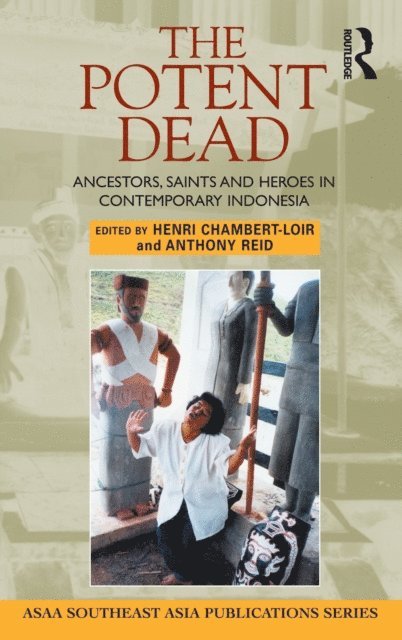
The dead are potent and omnipresent in modern Indonesia. Presidents and peasants alike meditate before sacred graves to exploit the power they confer, and mediums do good business curing the sick by interpreting the wishes of deceased forebears. Among non-Muslims there are ritual burials of the bones of the dead in monuments both magnificent and modest. By promoting dead heroes to a nationalist pantheon, regions and ethnic groups establish their place within the national story.Although much has been written about the local forms of the scriptural religions to which modern Indonesians are required by law to adhere - Islam, Christianity, Hinduism and Buddhism - this is the first book to assess the indigenous systems of belief in the spirits of ancestors. Sometimes these systems are condemned in the name of the formal religions, but more often the potent dead coexist as a private dimension of everyday religious practice.A unique team of anthropologists, historians and literary scholars from Europe, Australia and North America demonstrate the continuing importance of the potent dead for understanding contemporary Indonesia. At the same time, they help us understand historic processes of conversion to Islam and Christianity by examining the continuing interactions of the spirit world with formal religion.
482 kr
Skickas inom 7-10 vardagar
503 kr
Läs direkt efter köp
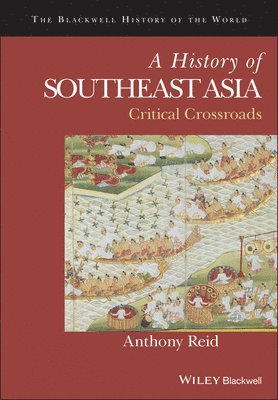
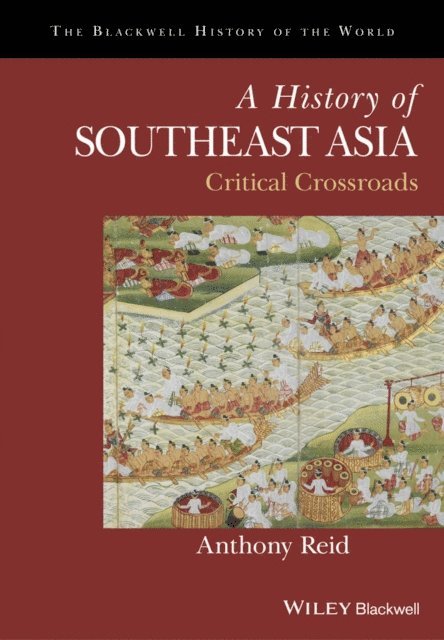
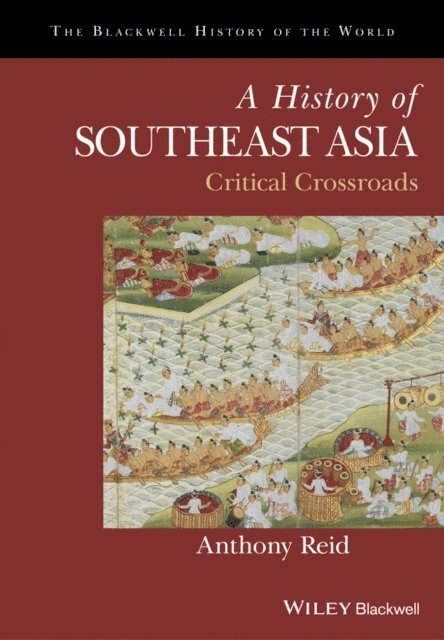
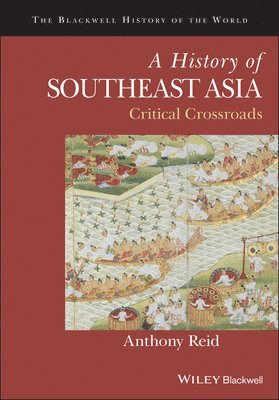
A History of Southeast Asia: Critical Crossroads presents a comprehensive history of Southeast Asia from our earliest knowledge of its civilizations and religious patterns up to the present day.
Incorporates environmental, social, economic, and gender issues to tell a multi-dimensional story of Southeast Asian history from earliest times to the present Argues that while the region remains a highly diverse mix of religions, ethnicities, and political systems, it demands more attention for how it manages such diversity while being receptive to new ideas and technologies Demonstrates how Southeast Asia can offer alternatives to state-centric models of history more broadlyPart of The Blackwell History of the World Series
The goal of this ambitious series is to provide an accessible source of knowledge about the entire human past, for every curious person in every part of the world. It will comprise some two dozen volumes, of which some provide synoptic views of the history of particular regions while others consider the world as a whole during a particular period of time. The volumes are narrative in form, giving balanced attention to social and cultural history (in the broadest sense) as well as to institutional development and political change. Each provides a systematic account of a very large subject, but they are also both imaginative and interpretative. The Series is intended to be accessible to the widest possible readership, and the accessibility of its volumes is matched by the style of presentation and production.
1 215 kr
Läs direkt efter köp
A History of Southeast Asia: Critical Crossroads presents a comprehensive history of Southeast Asia from our earliest knowledge of its civilizations and religious patterns up to the present day.
Incorporates environmental, social, economic, and gender issues to tell a multi-dimensional story of Southeast Asian history from earliest times to the present Argues that while the region remains a highly diverse mix of religions, ethnicities, and political systems, it demands more attention for how it manages such diversity while being receptive to new ideas and technologies Demonstrates how Southeast Asia can offer alternatives to state-centric models of history more broadlyPart of The Blackwell History of the World Series
The goal of this ambitious series is to provide an accessible source of knowledge about the entire human past, for every curious person in every part of the world. It will comprise some two dozen volumes, of which some provide synoptic views of the history of particular regions while others consider the world as a whole during a particular period of time. The volumes are narrative in form, giving balanced attention to social and cultural history (in the broadest sense) as well as to institutional development and political change. Each provides a systematic account of a very large subject, but they are also both imaginative and interpretative. The Series is intended to be accessible to the widest possible readership, and the accessibility of its volumes is matched by the style of presentation and production.
910 kr
Läs direkt efter köp
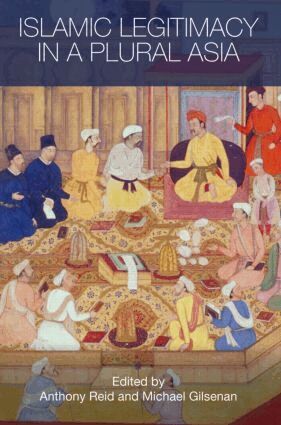
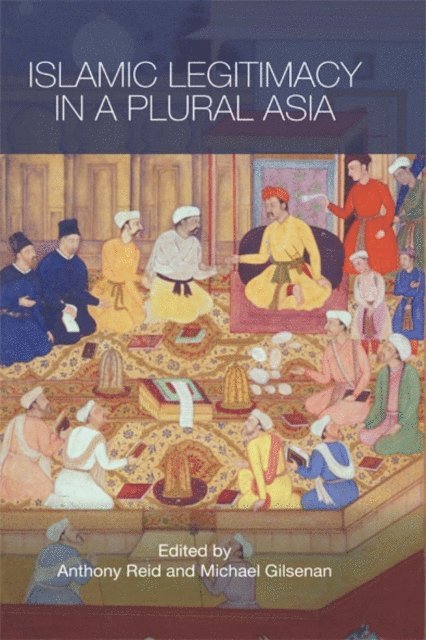
A global debate has emerged within Islam about how to coexist with democracy. Even in Asia, where such ideas have always been marginal, radical groups are taking the view that scriptural authority requires either Islamic rule (Dar-ul-Islam) or a state of war with the essentially illegitimate authority of non-Muslims or secularists. This book places the debate in a specifically Asian context. It draws attention to Asia (east of Afghanistan), as not only the home of the majority of the world’s Muslims but also Islam’s historic laboratory in dealing with religious pluralism. In Asia, pluralism is not simply a contemporary development of secular democracies, but a long-tested pattern based on both principle and pragmatism. For many centuries, Muslims in Asia have argued about the legitimacy of non-Islamic government over Muslims, and the legitimacy of non-Muslim peoples, polities and rights under Islamic governance. This book analyses such debates and the ways they have been reconciled, in South and Southeast Asia, up to the present. The evidence presented here suggests that Muslims have adapted flexibly and creatively to the pluralism with which they have lived, and are likely to continue to do so.
890 kr
Läs direkt efter köp
A global debate has emerged within Islam about how to coexist with democracy. Even in Asia, where such ideas have always been marginal, radical groups are taking the view that scriptural authority requires either Islamic rule (Dar-ul-Islam) or a state of war with the essentially illegitimate authority of non-Muslims or secularists. This book places the debate in a specifically Asian context. It draws attention to Asia (east of Afghanistan), as not only the home of the majority of the world’s Muslims but also Islam’s historic laboratory in dealing with religious pluralism. In Asia, pluralism is not simply a contemporary development of secular democracies, but a long-tested pattern based on both principle and pragmatism. For many centuries, Muslims in Asia have argued about the legitimacy of non-Islamic government over Muslims, and the legitimacy of non-Muslim peoples, polities and rights under Islamic governance. This book analyses such debates and the ways they have been reconciled, in South and Southeast Asia, up to the present. The evidence presented here suggests that Muslims have adapted flexibly and creatively to the pluralism with which they have lived, and are likely to continue to do so.
537 kr
Läs direkt efter köp
534 kr
Läs direkt efter köp
321 kr
Läs direkt efter köp
4 547 kr
Läs direkt efter köp
4 547 kr
Läs direkt efter köp
257 kr
Skickas inom 7-10 vardagar