700 kr
Kommande
700 kr
Kommande
2 892 kr
Skickas inom 10-15 vardagar
740 kr
Läs direkt efter köp
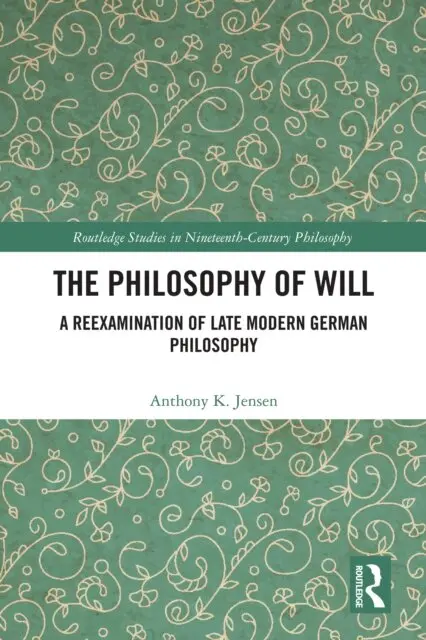
This book argues that the history of 19th-century German philosophy has neglected an important narrative: the philosophy of ‘Will’. It aims to reconsider the history of late modern philosophy in terms of the interconnected philosophies of ‘Will’ of several notable thinkers: Goethe, Schelling, Schopenhauer, Eduard von Hartmann, Philipp Mainländer, Julius Bahnsen, and Nietzsche.
The book has four goals. First, it shows that philosophy of Will really was a tradition, whose members were each working to put forward their notion of Will in self-consciously critical dialogue with the other members. Second, it shows that the 19th-century conception of Will is fundamentally diff erent from the commonplace use of Will as a synonym for what propels intentional or motivated human agency. Each figure considers their specific formulation of Will to be in some sense the essence of reality. Will is dynamic growth in the natural world, expresses itself in artistic creativity, impresses on us our existential condition, is the lever of history, and is the wellspring from which moral values are drawn. Third, by focusing on these philosophers of Will, this book reveals a clearer interrelation between philosophy and the wider history of German intellectual culture than has typically been done. Will theory bears immediate connection to the day’s reigning issues in politics, art, psychology, historiography, and the natural sciences. Finally, it aims to reexamine these thinkers’ position in the history of philosophy. Some, like Goethe, have long been on the periphery of mainstream philosophy. Some, like Hartmann, Mainländer, and Bahnsen, have long been forgotten. And some, like Nietzsche, have been characterized as more a radical innovator and less a critical respondent to the tradition of Will philosophy.
A complex yet lively contribution to the history of philosophical ideas, The Philosophy of Will is essential reading for scholars and graduate students interested in German systematic metaphysics and more broadly anyone interested in the intellectual history of late modern philosophy, science, epistemology, aesthetics, politics, and ethics.
745 kr
Läs direkt efter köp
This book argues that the history of 19th-century German philosophy has neglected an important narrative: the philosophy of ‘Will’. It aims to reconsider the history of late modern philosophy in terms of the interconnected philosophies of ‘Will’ of several notable thinkers: Goethe, Schelling, Schopenhauer, Eduard von Hartmann, Philipp Mainländer, Julius Bahnsen, and Nietzsche.
The book has four goals. First, it shows that philosophy of Will really was a tradition, whose members were each working to put forward their notion of Will in self-consciously critical dialogue with the other members. Second, it shows that the 19th-century conception of Will is fundamentally diff erent from the commonplace use of Will as a synonym for what propels intentional or motivated human agency. Each figure considers their specific formulation of Will to be in some sense the essence of reality. Will is dynamic growth in the natural world, expresses itself in artistic creativity, impresses on us our existential condition, is the lever of history, and is the wellspring from which moral values are drawn. Third, by focusing on these philosophers of Will, this book reveals a clearer interrelation between philosophy and the wider history of German intellectual culture than has typically been done. Will theory bears immediate connection to the day’s reigning issues in politics, art, psychology, historiography, and the natural sciences. Finally, it aims to reexamine these thinkers’ position in the history of philosophy. Some, like Goethe, have long been on the periphery of mainstream philosophy. Some, like Hartmann, Mainländer, and Bahnsen, have long been forgotten. And some, like Nietzsche, have been characterized as more a radical innovator and less a critical respondent to the tradition of Will philosophy.
A complex yet lively contribution to the history of philosophical ideas, The Philosophy of Will is essential reading for scholars and graduate students interested in German systematic metaphysics and more broadly anyone interested in the intellectual history of late modern philosophy, science, epistemology, aesthetics, politics, and ethics.
1 617 kr
Skickas inom 7-10 vardagar
557 kr
Skickas inom 7-10 vardagar
812 kr
Skickas inom 10-15 vardagar
2 489 kr
Skickas inom 10-15 vardagar
946 kr
Läs direkt efter köp
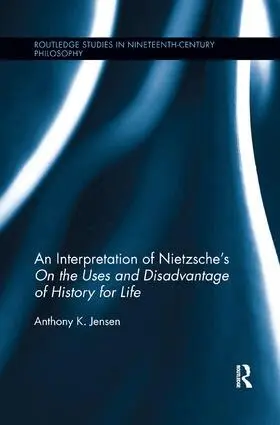
With his An Interpretation of Nietzsche’s "On the Uses and Disadvantage of History for Life", Anthony K. Jensen shows how ''timely'' Nietzsche’s second "Untimely Meditation" really is. This comprehensive and insightful study contextualizes and analyzes a wide range of Nietzsche’s earlier thoughts about history: teleology, typology, psychology, memory, classical philology, Hegelianism, and the role historiography plays in modern culture. On the Uses and Disadvantage of History for Life is shown to be a ‘timely’ work, too, insofar as it weaves together a number of Nietzsche''s most important influences and thematic directions at that time: ancient culture, science, epistemology, and the thought of Schopenhauer and Burckhardt. Rather than dismiss it as a mere ‘early’ work, Jensen shows how the text resonates in Nietzsche’s later perspectivism, his theory of subjectivity, and Eternal Recurrence. And by using careful philological analysis of the text’s composition history, Jensen is in position to fully elucidate and evaluate Nietzsche’s arguments in their proper contexts. As such Jensen’s Interpretation should restore Nietzsche’s second "Untimely Meditation" to a prominent place among 19th Century philosophies of history.
953 kr
Läs direkt efter köp
With his An Interpretation of Nietzsche’s "On the Uses and Disadvantage of History for Life", Anthony K. Jensen shows how ''timely'' Nietzsche’s second "Untimely Meditation" really is. This comprehensive and insightful study contextualizes and analyzes a wide range of Nietzsche’s earlier thoughts about history: teleology, typology, psychology, memory, classical philology, Hegelianism, and the role historiography plays in modern culture. On the Uses and Disadvantage of History for Life is shown to be a ‘timely’ work, too, insofar as it weaves together a number of Nietzsche''s most important influences and thematic directions at that time: ancient culture, science, epistemology, and the thought of Schopenhauer and Burckhardt. Rather than dismiss it as a mere ‘early’ work, Jensen shows how the text resonates in Nietzsche’s later perspectivism, his theory of subjectivity, and Eternal Recurrence. And by using careful philological analysis of the text’s composition history, Jensen is in position to fully elucidate and evaluate Nietzsche’s arguments in their proper contexts. As such Jensen’s Interpretation should restore Nietzsche’s second "Untimely Meditation" to a prominent place among 19th Century philosophies of history.
1 977 kr
Skickas inom 10-15 vardagar
604 kr
Läs direkt efter köp
590 kr
Läs direkt efter köp
556 kr
Skickas inom 10-15 vardagar
1 992 kr
Skickas inom 7-10 vardagar
2 046 kr
Läs direkt efter köp
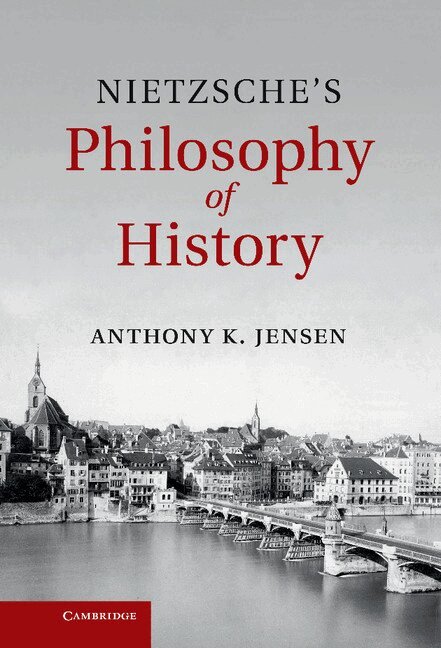
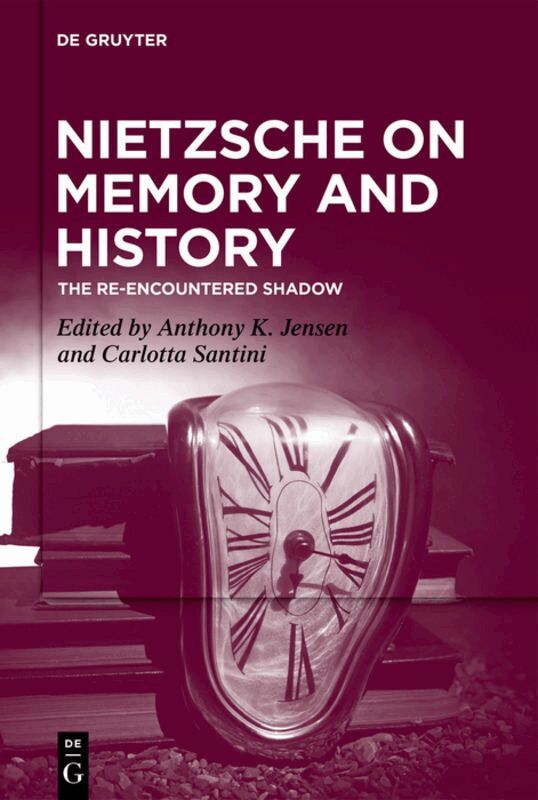
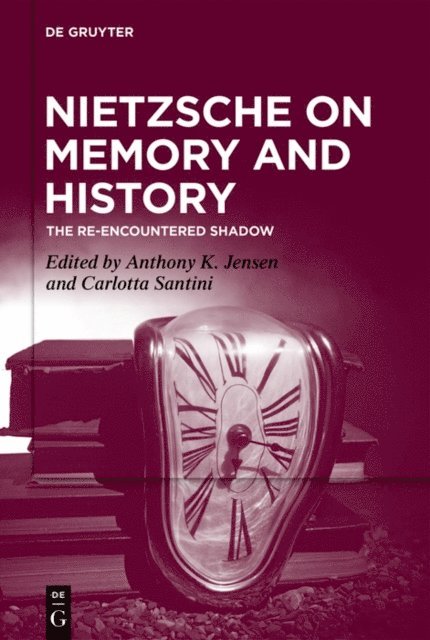
History and memory rank as central themes in the philosophy of Friedrich Nietzsche. As one of the last philosophers of the 19th century, Nietzsche naturally belongs to the so-called ‘historical century’. The contentious exchange with the past and with antiquity – as much as the mechanisms, the dangers, and the lessons of memory and tradition – are continually examined and stand in close relationship with Nietzsche’s vision of life and his project of human development. As Jacob Burckhardt once wrote of the cultural critique to his Basel colleague: "Fundamentally, you are always teaching history" (9/13/1882). Following Burckhardt’s judgment, the contributors focus on the analysis of core questions in the philosophies of history and memory, and their respective convergence in the thought of Nietzsche. The epistemological relevance of these central concepts will be thematized alongside those concerning tradition, and education. The discussion of these rich themes unifies a broad spectrum of questions, ranging from cultural memory to contemporary philosophy of mind. The contributions are revised versions of selected papers presented at the 2018 conference of the annual meeting of the Nietzsche Society in Naumburg.