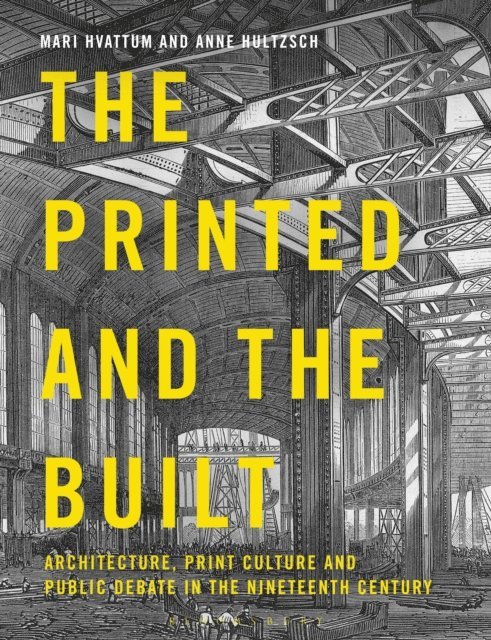
The Printed and the Built explores the intricate relationship between architecture and printed media in the fast-changing nineteenth century. Publication history is a rapidly expanding scholarly field which has profoundly influenced architectural history in recent years. Yet, while groundbreaking work has been done on architecture and printing in the Renaissance, the Enlightenment, and the twentieth century, the nineteenth century has received little attention. This is the omission that The Printed and the Built seeks to address, thus filling a significant gap in the understanding of architecture''s cultural history. Lavishly illustrated with colourful and eclectic visual material, from panoramas to printed ephemera, adverts, penny magazines, early photography, and even crime reportage, The Printed and the Built consists of five in-depth thematic essays accompanied by 25 short pieces, each examining a particular printed form. Altogether, they illustrate how new genres communicated architecture to a mass audience, setting the stage for the modern architectural era.
The Printed and the Built explores the intricate relationship between architecture and printed media in the fast-changing nineteenth century.Publication history is a rapidly expanding scholarly field which has profoundly influenced architectural history in recent years. Yet, while groundbreaking work has been done on architecture and printing in the Renaissance, the Enlightenment, and the twentieth century, the nineteenth century has received little attention. This is the omission that The Printed and the Built seeks to address, thus filling a significant gap in the understanding of architecture’s cultural history. Lavishly illustrated with colourful and eclectic visual material, from panoramas to printed ephemera, adverts, penny magazines, early photography, and even crime reportage, The Printed and the Built consists of five in-depth thematic essays accompanied by 25 short pieces, each examining a particular printed form. Altogether, they illustrate how new genres communicated architecture to a mass audience, setting the stage for the modern architectural era.
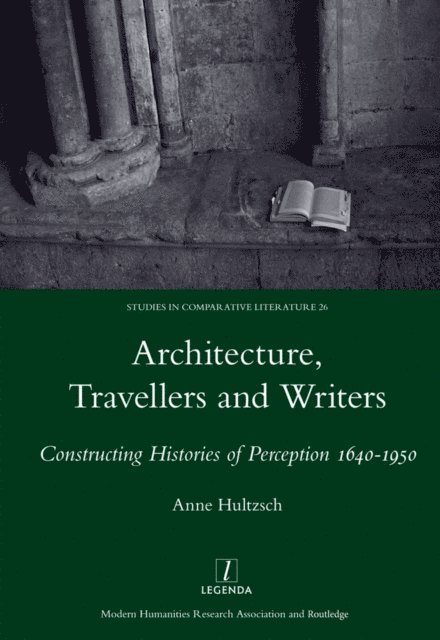
Does the way in which buildings are looked at, and made sense of, change over the course of time? How can we find out about this? By looking at a selection of travel writings spanning four centuries, Anne Hultzsch suggests that it is language, the description of architecture, which offers answers to such questions. The words authors use to transcribe what they see for the reader to re-imagine offer glimpses at modes of perception specific to one moment, place and person. Hultzsch constructs an intriguing patchwork of local and often fragmentary narratives discussing texts as diverse as the 17th-century diary of John Evelyn, Daniel Defoe''s Robinson Crusoe (1719) and an 1855 art guide by Swiss art historian Jacob Burckhardt. Further authors considered include 17th-century collector John Bargrave, 18th-century novelist Tobias Smollett, poet Johann Wolfgang von Goethe, critic John Ruskin as well as the 20th-century architectural historian Nikolaus Pevsner. Anne Hultzsch teaches at the Bartlett School of Architecture, University College London.
This book explores the mechanics of architectural writing, its relation to perception. It examines the effects of travel, as movement towards unfamiliar places, on perception. The book evolves from five key perceptual-representational processes: rendering, ordering, reading, thinking, and looking.