767 kr
Skickas inom 10-15 vardagar
767 kr
Skickas inom 10-15 vardagar
2 311 kr
Skickas inom 10-15 vardagar
1 094 kr
Skickas inom 7-10 vardagar
1 158 kr
Skickas inom 10-15 vardagar
1 593 kr
Skickas inom 3-6 vardagar
321 kr
Skickas
503 kr
Läs direkt efter köp
823 kr
Skickas inom 10-15 vardagar
357 kr
Skickas inom 10-15 vardagar
280 kr
Skickas inom 7-10 vardagar
823 kr
Skickas inom 10-15 vardagar
892 kr
Läs direkt efter köp
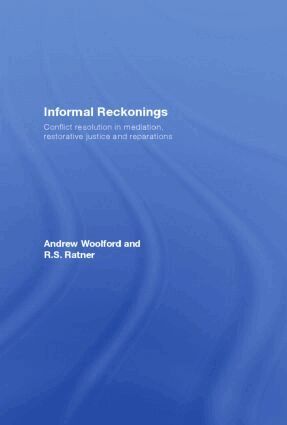
The ''reparational turn'' in the field of law has resulted in the increased use of so-called ''informal'' approaches to conflict resolution, including primarily the three mechanisms considered in this book: mediation, restorative justice and reparations. While proponents of these mechanisms have acclaimed their communicative and democratic promise, critics have charged that mediation, restorative justice and reparations all potentially serve as means for encouraging citizens to internalize and mimic the rationalities of governance. Indeed, the critics suggest that informal justice''s supposed oppositional relationship to formal justice is, at base, a mutually reinforcing one, in which each system relies on the other for its effective operation, rather than the two being locked in a struggle for dominance.
This book contributes to the discussion of the confluence of informal and formal justice by providing a clearer picture of the justice ''field'' through the notion of the ''informal/formal justice complex.'' This term, adapted from Garland and Sparks (2000), describes a cultural formation in which adversarial/punitive and conciliatory/restorative justice forms coexist in relative harmony despite their apparent contradictions. Situating this complex within the context of neoliberalism, this book identifies the points of rupture in the informal/formal justice complex to pinpoint how and where a truly alternative and ''transformative'' justice (i.e. a justice that challenges and counters the hegemony of formal legal practices, opening the field of law to a broader array of actors and ideas) might be established through the tools of mediation, restorative justice and reparations.
886 kr
Läs direkt efter köp
The ''reparational turn'' in the field of law has resulted in the increased use of so-called ''informal'' approaches to conflict resolution, including primarily the three mechanisms considered in this book: mediation, restorative justice and reparations. While proponents of these mechanisms have acclaimed their communicative and democratic promise, critics have charged that mediation, restorative justice and reparations all potentially serve as means for encouraging citizens to internalize and mimic the rationalities of governance. Indeed, the critics suggest that informal justice''s supposed oppositional relationship to formal justice is, at base, a mutually reinforcing one, in which each system relies on the other for its effective operation, rather than the two being locked in a struggle for dominance.
This book contributes to the discussion of the confluence of informal and formal justice by providing a clearer picture of the justice ''field'' through the notion of the ''informal/formal justice complex.'' This term, adapted from Garland and Sparks (2000), describes a cultural formation in which adversarial/punitive and conciliatory/restorative justice forms coexist in relative harmony despite their apparent contradictions. Situating this complex within the context of neoliberalism, this book identifies the points of rupture in the informal/formal justice complex to pinpoint how and where a truly alternative and ''transformative'' justice (i.e. a justice that challenges and counters the hegemony of formal legal practices, opening the field of law to a broader array of actors and ideas) might be established through the tools of mediation, restorative justice and reparations.
2 801 kr
Skickas inom 10-15 vardagar
910 kr
Läs direkt efter köp
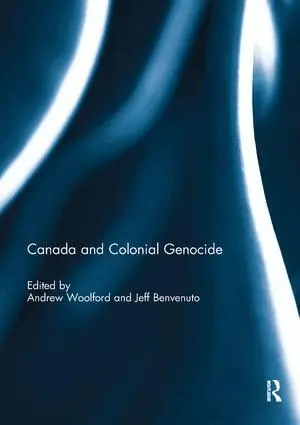
Settler colonialism in Canada has traditionally been portrayed as a gentler, if not benevolent, colonialism—especially in contrast to the Indian Wars in the United States. This national mythology has penetrated into comparative genocide studies, where Canadian case studies are rarely discussed in edited volumes, genocide journals, or multi-national studies. Indeed, much of the extant literature on genocide in Canada rests at the level of self-justification, whereby authors draw on the U.N Genocide Convention or some other rubric to demonstrate that Canadian genocides are a legitimate topic of scholarly concern.In recent years, however, discussion of genocide in Canada has become more pronounced, particularly in the wake of the findings of the Truth and Reconciliation Commission of Canada. This volume contributes to this ongoing discourse, providing scholarly analyses of the multiple dimensions or processes of colonial destruction and their aftermaths in Canada. Various acts of genocidal violence are covered, including residential schools, repressive legal or governmental controls, ecological destruction, and disease spread. Additionally, contributors draw comparisons to patterns of colonial destruction in other contexts, examine the ways in which Canada has sought to redress and commemorate colonial harms, and present novel theoretical and conceptual insights on colonial/settler genocides in Canada. This book was previously published as a special issue of the Journal of Genocide Research.
890 kr
Läs direkt efter köp
Settler colonialism in Canada has traditionally been portrayed as a gentler, if not benevolent, colonialism—especially in contrast to the Indian Wars in the United States. This national mythology has penetrated into comparative genocide studies, where Canadian case studies are rarely discussed in edited volumes, genocide journals, or multi-national studies. Indeed, much of the extant literature on genocide in Canada rests at the level of self-justification, whereby authors draw on the U.N Genocide Convention or some other rubric to demonstrate that Canadian genocides are a legitimate topic of scholarly concern.In recent years, however, discussion of genocide in Canada has become more pronounced, particularly in the wake of the findings of the Truth and Reconciliation Commission of Canada. This volume contributes to this ongoing discourse, providing scholarly analyses of the multiple dimensions or processes of colonial destruction and their aftermaths in Canada. Various acts of genocidal violence are covered, including residential schools, repressive legal or governmental controls, ecological destruction, and disease spread. Additionally, contributors draw comparisons to patterns of colonial destruction in other contexts, examine the ways in which Canada has sought to redress and commemorate colonial harms, and present novel theoretical and conceptual insights on colonial/settler genocides in Canada. This book was previously published as a special issue of the Journal of Genocide Research.
461 kr
Skickas inom 10-15 vardagar
321 kr
Skickas
233 kr
Kommande
761 kr
Skickas inom 10-15 vardagar
382 kr
Tillfälligt slut