Hur ska kyrkan i dag förverkliga sitt uppdrag att räcka evangeliet till vår tids människor? Varför svalnar missionsintresset på många håll? Hur ser ett djupt möte mellan evangeliet och vår kultur ut? Det är frågor som missionsteologen Andrew Kirk ger sig i kast med i den här boken. Djärvt. Ärligt. Förankrad i Bibeln. Kirk befriar "mission" från kolonialisationsfärger, från kampanjflaggor, från korstågsmanér och envägskommunikation. Utgångspunkten är Guds mission, inte ett mänskligt företag.

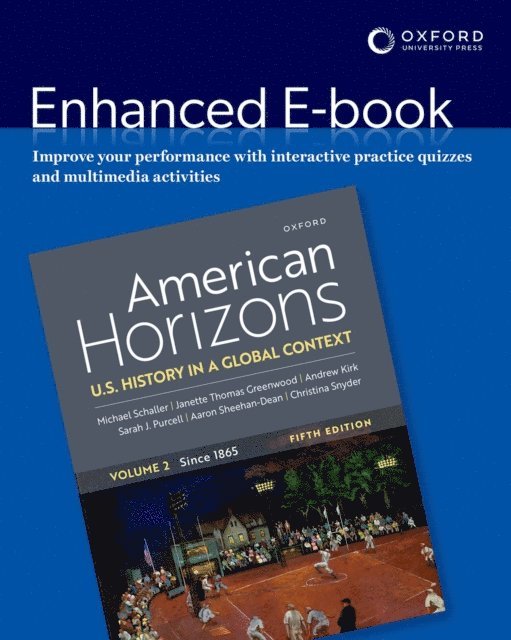
American Horizons presents an opportunity to view the nation's history as more than a mere sequence of events for students to memorize. Although adhering to a familiar chronological organization, its narrative style and structure provide the flexibility of shifting emphasis from time to time to the global aspects of American history. Although the story of the United States is always at the center, that story is told through the movement of people, goods, and ideas into, within, or out of the United States. This unique approach provides a fully integrated global perspective that seamlessly contextualizes American events within the wider world.
American Horizons presents an opportunity to view the nation''s history as more than a mere sequence of events for students to memorize. Although adhering to a familiar chronological organization, its narrative style and structure provide the flexibility of shifting emphasis from time to time to the global aspects of American history. Although the story of the United States is always at the center, that story is told through the movement of people, goods, and ideas into, within, or out of the United States. This unique approach provides a fully integrated global perspective that seamlessly contextualizes American events within the wider world.
The Biographies series presents an entirely new way of looking at the lives of the world's greatest thinkers and creatives. It takes the 50 defining facts, dates, thoughts, habits, and achievements of each subject, and uses infographics to convey each of them in vivid snapshots. The result is a quickfire journey through truths and trivia that is the most entertaining way to follow in the footsteps of the men and women whose lives have most influenced our own. Many people know that Leonardo da Vinci was an Italian polymath, one of the great creative minds of the Italian Renaissance. What, perhaps, they don't know is that as an ambidextrous, paranoid dyslexic, Leonardo could draw forwards with one hand while writing backwards with the other; and that he invented an armoured car, a flying ship and contact lenses. Biographic: Leonardo presents an array of irresistible facts and figures converted into infographics to reveal the master behind the masterpieces.
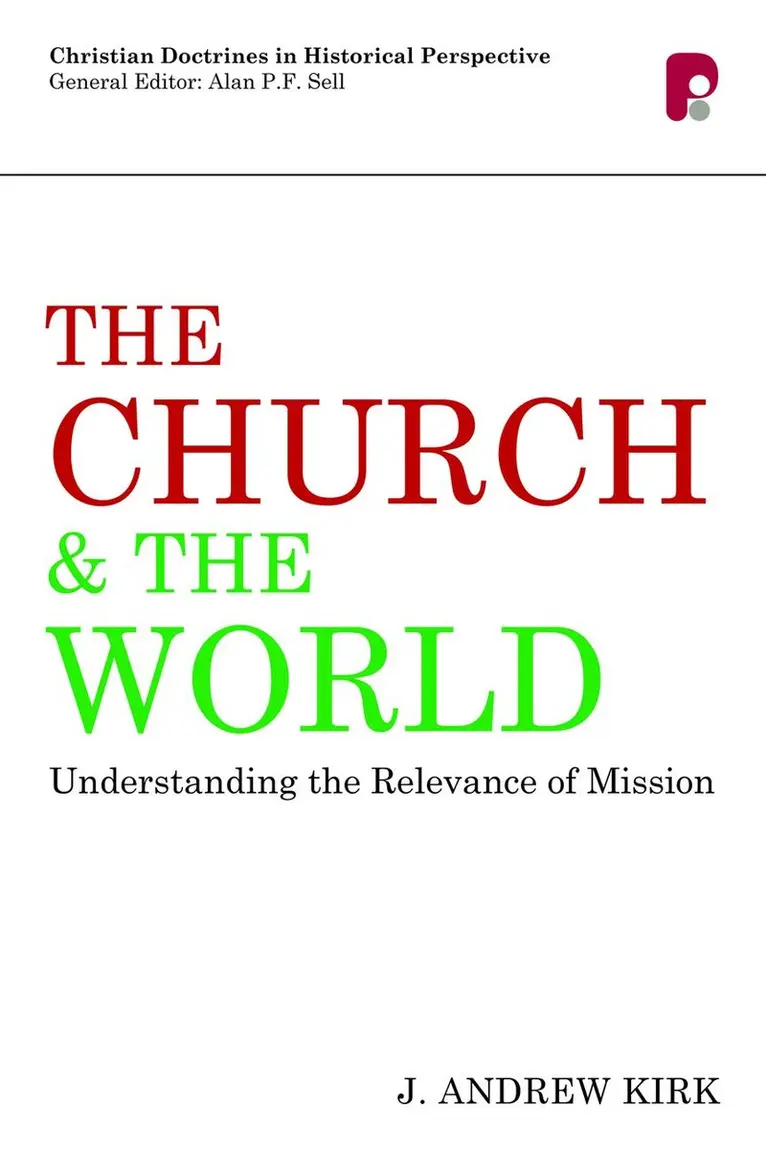
This remarkable book begins by examining the biblical material on mission, focusing specially on the ethical witness of the Christian community. The author then turns his attention to patterns of mission from history, seeking to learn, from three distinct past examples (the Spanish conquistadores, Anabaptists, and the missionary congress in Edinburgh, 1912), how the Church has interpreted its mission in the world. A final section discusses changing views on the church's missionary undertaking in the world after the 2nd World War. It assesses the debates over the concept of missio Dei and 'the church for others'. It then considers the question of the church's preferential option for the liberation of the poor, its commitment to peace in the shadow of the threat of nuclear war and its missionary obligations in multi-religious and secular worlds. COMMENDATIONS"I cordially welcome Andrew Kirk's fine study. Drawing upon the Bible, history and theology, he has expertly reflected upon the Church and the world, in relation to both mission and the socio-ethical order. He has thus brilliantly met the requirements of the series in which his book appears, and has made a substantial contribution to debates which lose nothing of their importance with the passage of the years."- Alan Sell, General Editor, Christian Doctrines in Historical Perspective "From time to time a book appears that forces us to re-examine what we have taken for granted about Church and world. Andrew Kirk's bracing and bold book does this. Based on wide reading, readiness to challenge commonplace assumptions, and by highlighting topics generally neglected in mission theology, this work refreshes and inspires."- Wilbert R. Shenk, Senior Professor of Mission History, Fuller Graduate School of Intercultural Studies, Pasadena, California