
716 kr
Skickas inom 10-15 vardagar
716 kr
Skickas inom 10-15 vardagar
642 kr
Skickas inom 10-15 vardagar
2 515 kr
Skickas inom 10-15 vardagar
676 kr
Läs direkt efter köp
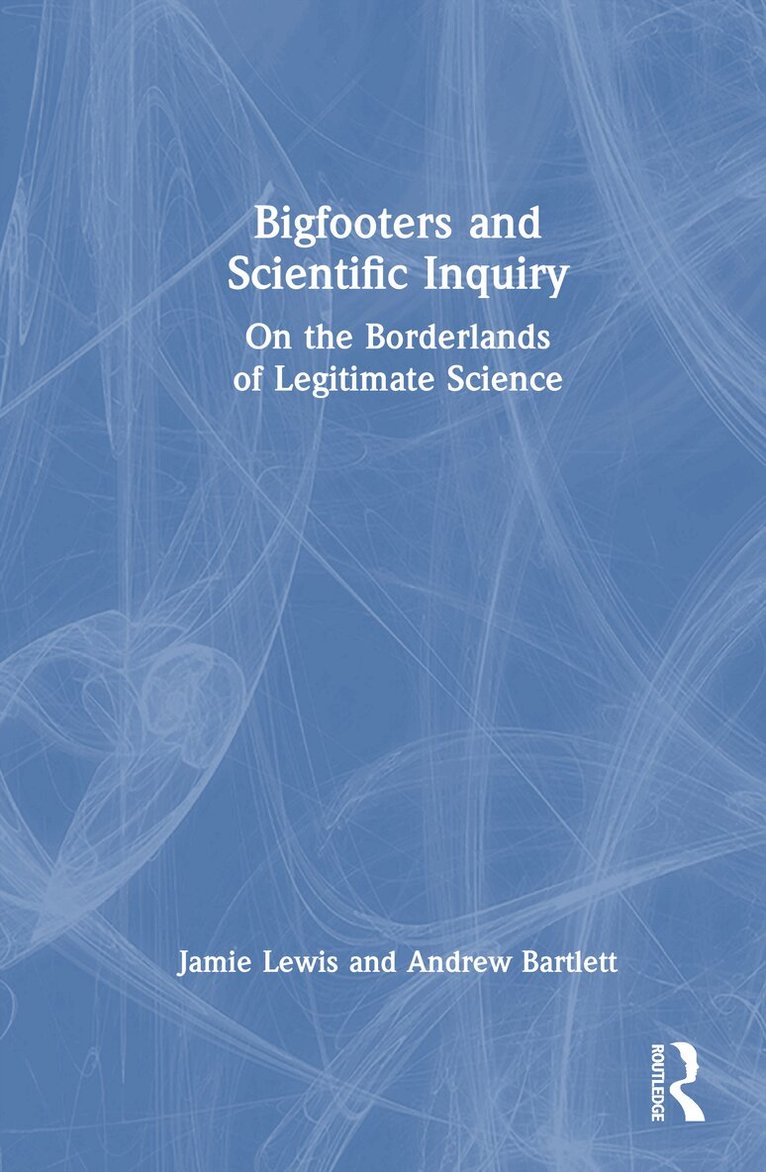
Bigfoot exists. Not necessarily as a biological creature, but certainly as an object around which thousands of Americans organise their lives, analysing evidence, and making knowledge. This book examines the Bigfooting community sociologically. Using concepts from Science and Technology Studies (STS) as well as cultural sociology, Lewis and Bartlett shed new light on what it is to do ‘science’, what it is to behave ‘scientifically’, and where the borders of legitimate scientific practice lie.
Through detailed interviews with Bigfooters themselves, this book explores the ways in which the Bigfooting community makes sense of traces and absences to make knowledge claims that are acceptable to those within that community. It also shows how Bigfooters, in the face of scepticism, attempt to render Bigfoot a proper object of scientific inquiry outside of their own circle.
This fascinating, accessible, and entertaining reading will appeal to scholars and students of science and technology studies, cultural sociology, and the sociology of mystery, as well as to those interested in the public trust in and understanding of science.
2 590 kr
Skickas inom 10-15 vardagar
814 kr
Läs direkt efter köp
Psychiatric genetics has become ‘Big Biology’. This may come as a surprising development to those familiar with its controversial history. From eugenic origins and contentious twin studies to a global network of laboratories employing high-throughput genetic and genomic technologies, biological research on psychiatric disorders has become an international, multidisciplinary assemblage of massive data resources. How did psychiatric genetics achieve this scale? How is it socially and epistemically organized? And how do scientists experience this politics of scale?
Psychiatric Genetics: From Hereditary Madness to Big Biology develops a sociological approach of exploring the origins of psychiatric genetics by tracing several distinct styles of scientific reasoning that coalesced at the beginning of the twentieth century. These styles of reasoning reveal, among other things, a range of practices that maintain an extraordinary stability in the face of radical criticism, internal tensions and scientific disappointments.
The book draws on a variety of methods and materials to explore these claims. Combining genealogical analysis of historical literature, rhetorical analysis of scientific review articles, interviews with scientists, ethnographic observations of laboratory practices and international conferences, this book offers a comprehensive and detailed exploration of both local and global changes in the field of psychiatric genetics.

832 kr
Läs direkt efter köp
Psychiatric genetics has become ‘Big Biology’. This may come as a surprising development to those familiar with its controversial history. From eugenic origins and contentious twin studies to a global network of laboratories employing high-throughput genetic and genomic technologies, biological research on psychiatric disorders has become an international, multidisciplinary assemblage of massive data resources. How did psychiatric genetics achieve this scale? How is it socially and epistemically organized? And how do scientists experience this politics of scale?
Psychiatric Genetics: From Hereditary Madness to Big Biology develops a sociological approach of exploring the origins of psychiatric genetics by tracing several distinct styles of scientific reasoning that coalesced at the beginning of the twentieth century. These styles of reasoning reveal, among other things, a range of practices that maintain an extraordinary stability in the face of radical criticism, internal tensions and scientific disappointments.
The book draws on a variety of methods and materials to explore these claims. Combining genealogical analysis of historical literature, rhetorical analysis of scientific review articles, interviews with scientists, ethnographic observations of laboratory practices and international conferences, this book offers a comprehensive and detailed exploration of both local and global changes in the field of psychiatric genetics.
187 kr
Skickas
182 kr
Läs direkt efter köp
187 kr
Skickas
182 kr
Läs direkt efter köp
187 kr
Kommande
187 kr
Kommande
304 kr
Skickas inom 3-6 vardagar
186 kr
Läs direkt efter köp
186 kr
Läs direkt efter köp