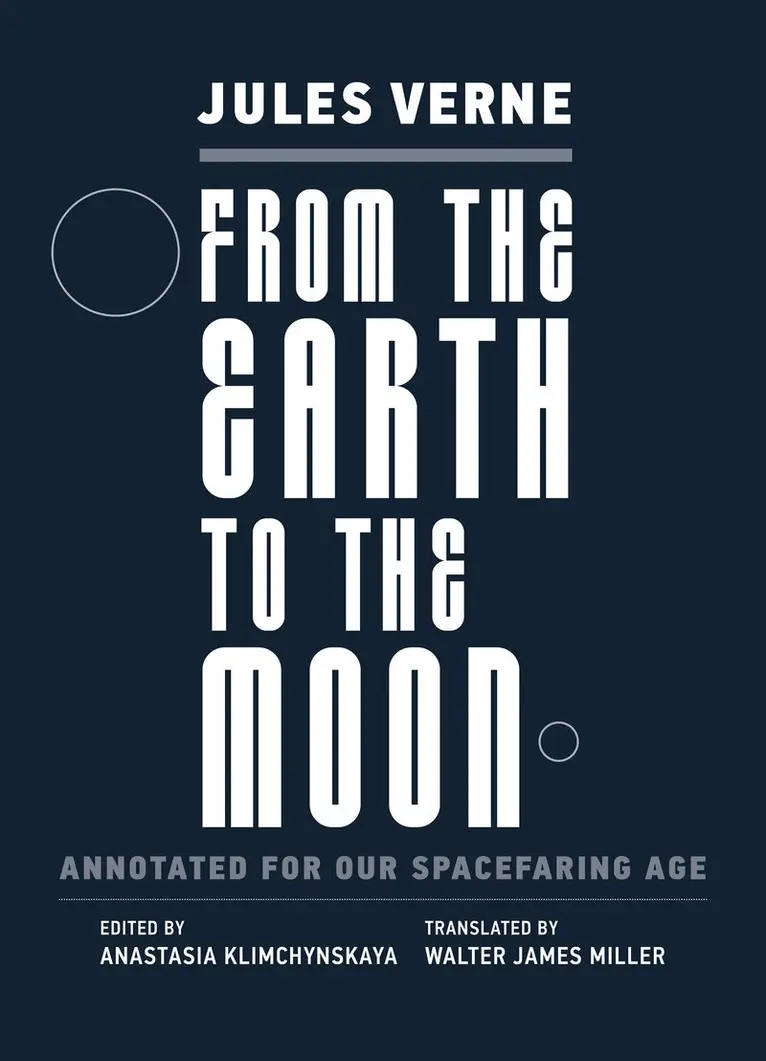
A new, annotated edition of Jules Verne’s classic, which considers the past, present, and future of spaceflight from scientific as well as humanistic angles.In an age when the idea of a “planet B” seems tempting, this edition of Jules Verne’s classic From the Earth to the Moon (1865) offers a complete and unabridged translation into English alongside extensive annotations and essays from contributors that span disciplines. It uses the prescient novel as a launching pad to consider the past, present, and future of spaceflight from scientific, humanistic, social, legal, and ethical angles.Jules Verne is often considered a founder of the science fiction genre and a technological prophet who anticipated many modern-day technologies—including a moonshot launching from Florida with a trio of astronauts almost exactly a century before it happened. Verne didn’t just dream up cool gadgets: He innovatively combined the scientific and the literary to write his scientific romances. He also thought deeply about the relationship between the technoscientific and the human at a time when the former was transforming human life on an unprecedented scale. Following in his footsteps, this annotated new edition bridges STEM and the humanities and sheds new light on this underappreciated classic by an iconic author.Essays by Samit Basu, Jordan Bimm, Erika Nesvold, Adam Oyebanji, Malka Older, Adam Roberts, and Asif Siddiqi.
Del 88 - Liverpool Science Fiction Texts and Studies
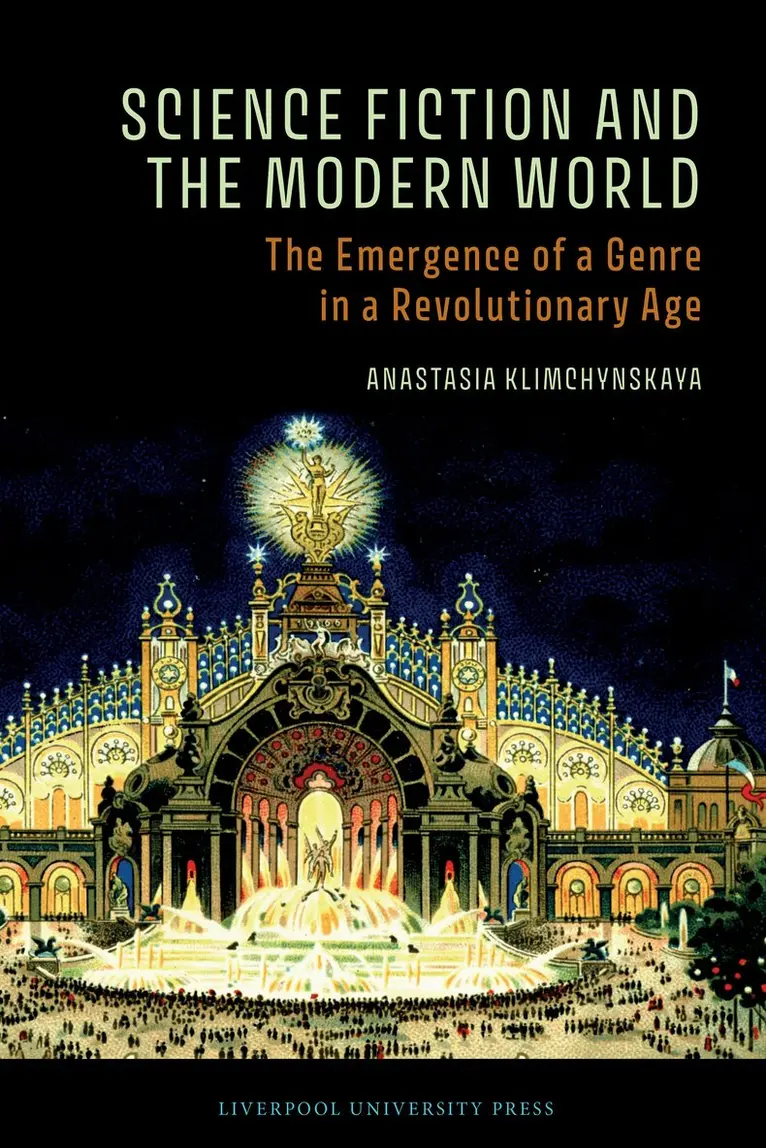
The long nineteenth century was marked by a combination of political upheaval, technological transformation, and revolutionary scientific discovery that birthed a contradictory set of ideas about humanity’s place in the world and the scope of its power. Science Fiction and the Modern World reads the emergence of science fiction during this turbulent period as an expression of the ensuing recalibration of humanity’s relationship to the natural world. Attending to a variety of authors across linguistic and national boundaries, including Mary Shelley, Edgar Allan Poe, Jules Verne, Albert Robida, Arthur Conan Doyle, and H.G. Wells, as well as other primary sources, this book demonstrates how the nascent genre of science fiction captured a far-reaching but contradictory conceptual shift: a newfound sense of seemingly unprecedented human mastery over the natural world coupled with a set of discomfiting discoveries that decentred the human within the natural order. Marked by a persistent tension between power and insignificance, such fictions propagated assumptions about progress, knowledge, order, and empire that define our thinking to this day.
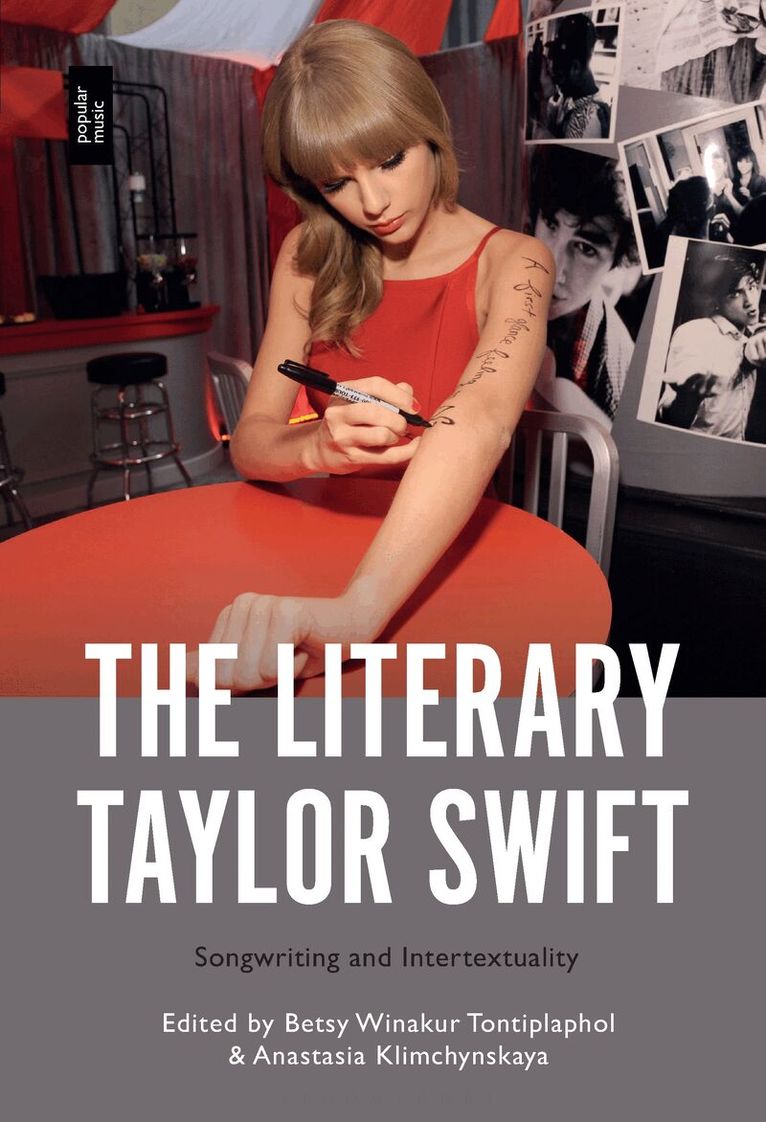
Taylor Swift, arguably the most prolific and acclaimed singer-songwriter of the 21st century, has shaped her listeners’ collective consciousness and challenged her industry’s often limiting attitudes toward genre, revision, and collaboration. Although Swift is a perennial subject in the media, cast in both a positive and a negative light, few professional scholars have considered her ever-growing body of work. The Literary Taylor Swift examines Swift’s significance and timeliness through literary analysis and theory. Taylor Swift has been celebrated for her ability to craft immersive narratives and to articulate, with lyrical acuity, a broad range of emotional experiences, and her lyrics underscore her profound relationship with text. The Literary Taylor Swift explores Swift’s engagements, intertextual and otherwise, with literature and treats her songs as literature—as, that is, stories, poems, and other textual forms to which literary-critical theories and methodologies can and should be productively applied. This collection offers carefully curated arguments constellated around four key relationships: Swift and the literary-historical canon; Swift and the language of gender and sexuality; Swift and the relationship between writing and memory; and Swift and the nature of literary craft.
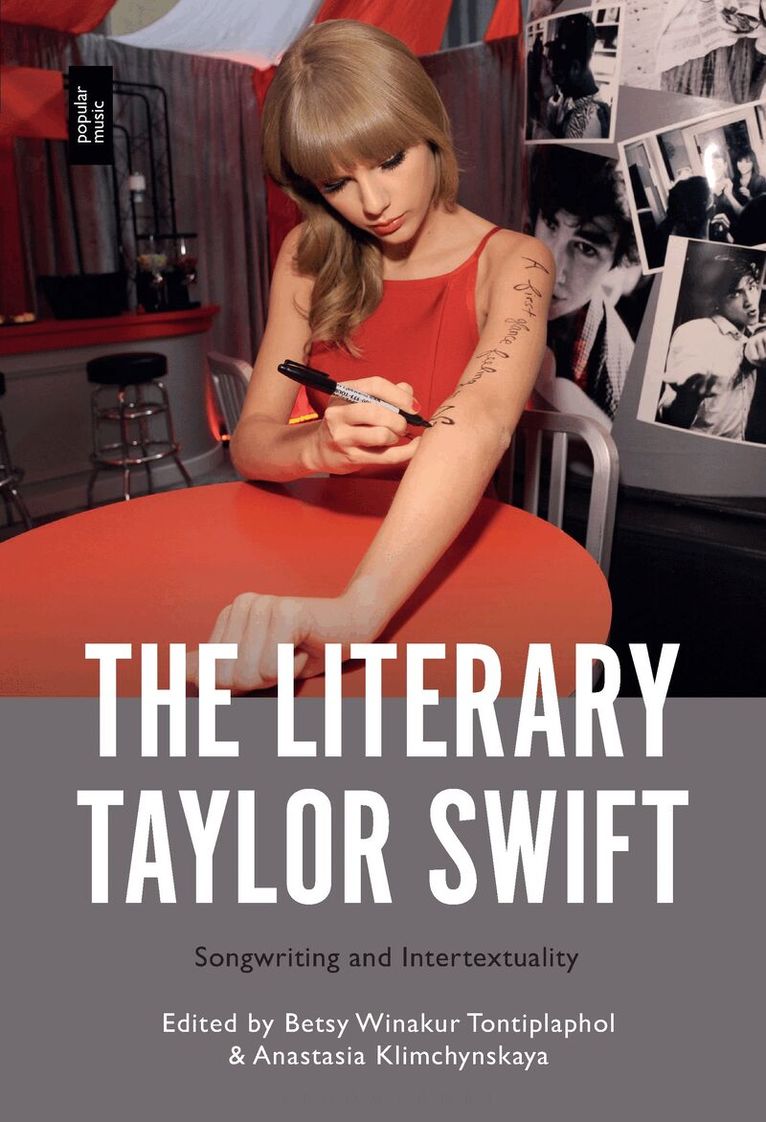
Taylor Swift, arguably the most prolific and acclaimed singer-songwriter of the 21st century, has shaped her listeners'' collective consciousness and challenged her industry''s often limiting attitudes toward genre, revision, and collaboration. Although Swift is a perennial subject in the media, cast in both a positive and a negative light, few professional scholars have considered her ever-growing body of work. The Literary Taylor Swift examines Swift''s significance and timeliness through literary analysis and theory. Taylor Swift has been celebrated for her ability to craft immersive narratives and to articulate, with lyrical acuity, a broad range of emotional experiences, and her lyrics underscore her profound relationship with text. The Literary Taylor Swift explores Swift''s engagements, intertextual and otherwise, with literature and treats her songs as literature-as, that is, stories, poems, and other textual forms to which literary-critical theories and methodologies can and should be productively applied. This collection offers carefully curated arguments constellated around four key relationships: Swift and the literary-historical canon; Swift and the language of gender and sexuality; Swift and the relationship between writing and memory; and Swift and the nature of literary craft.
Taylor Swift, arguably the most prolific and acclaimed singer-songwriter of the 21st century, has shaped her listeners’ collective consciousness and challenged her industry’s often limiting attitudes toward genre, revision, and collaboration. Although Swift is a perennial subject in the media, cast in both a positive and a negative light, few professional scholars have considered her ever-growing body of work. The Literary Taylor Swift examines Swift’s significance and timeliness through literary analysis and theory. Taylor Swift has been celebrated for her ability to craft immersive narratives and to articulate, with lyrical acuity, a broad range of emotional experiences, and her lyrics underscore her profound relationship with text. The Literary Taylor Swift explores Swift’s engagements, intertextual and otherwise, with literature and treats her songs as literature—as, that is, stories, poems, and other textual forms to which literary-critical theories and methodologies can and should be productively applied. This collection offers carefully curated arguments constellated around four key relationships: Swift and the literary-historical canon; Swift and the language of gender and sexuality; Swift and the relationship between writing and memory; and Swift and the nature of literary craft.