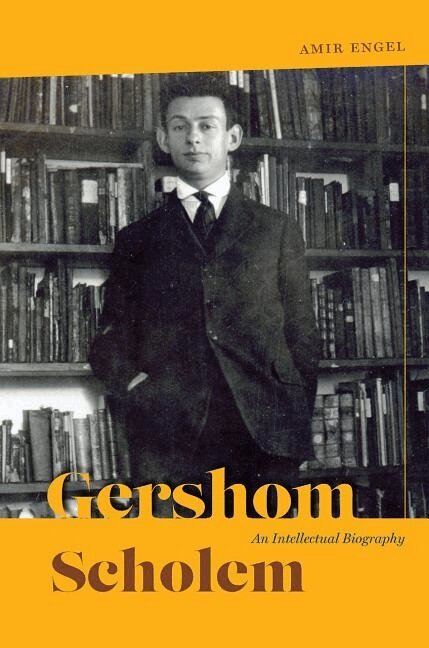
Gershom Scholem (1897 1982) was ostensibly a scholar of Jewish mysticism, yet he occupies a powerful role in today's intellectual imagination, having an influential contact with an extraordinary cast of thinkers, including Hans Jonas, Martin Buber, Walter Benjamin, Hannah Arendt, and Theodor Adorno. In this first biography of Scholem, Amir Engel shows how Scholem grew from a scholar of an esoteric discipline to a thinker wrestling with problems that reach to the very foundations of the modern human experience. As Engel shows, in his search for the truth of Jewish mysticism Scholem molded the vast literature of Jewish mystical lore into a rich assortment of stories that unveiled new truths about the modern condition. Positioning Scholem's work and life within early twentieth-century Germany, Palestine, and later the state of Israel, Engel intertwines Scholem's biography with his historiographical work, which stretches back to the Spanish expulsion of Jews in 1492, through the lives of Rabbi Isaac Luria and Sabbatai Zevi, and up to Hasidism and the dawn of the Zionist movement.Through parallel narratives, Engel touches on a wide array of important topics including immigration, exile, Zionism, World War One, and the creation of the state of Israel, ultimately telling the story of the realizations and failures of a dream for a modern Jewish existence.
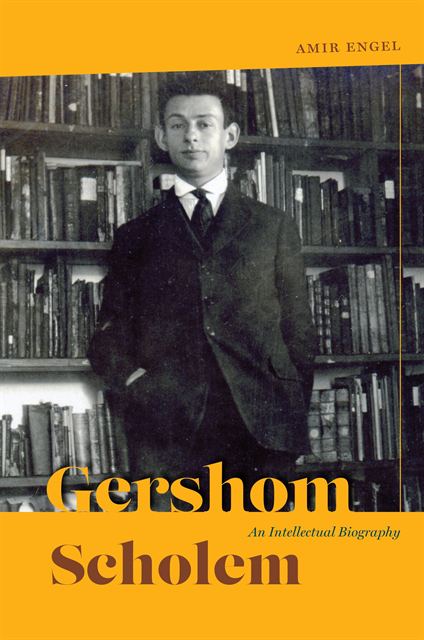
Gershom Scholem (1897–1982) was ostensibly a scholar of Jewish mysticism, yet he occupies a powerful role in today’s intellectual imagination, having influential contact with an extraordinary cast of thinkers, including Hans Jonas, Martin Buber, Walter Benjamin, Hannah Arendt, and Theodor Adorno. In this first biography of Scholem, Amir Engel shows how Scholem grew from a scholar of an esoteric discipline to a thinker wrestling with problems that reach to the very foundations of the modern human experience. As Engel shows, in his search for the truth of Jewish mysticism Scholem molded the vast literature of Jewish mystical lore into a rich assortment of stories that unveiled new truths about the modern condition. Positioning Scholem’s work and life within early twentieth-century Germany, Palestine, and later the state of Israel, Engel intertwines Scholem’s biography with his historiographical work, which stretches back to the Spanish expulsion of Jews in 1492, through the lives of Rabbi Isaac Luria and Sabbatai Zevi, and up to Hasidism and the dawn of the Zionist movement. Through parallel narratives, Engel touches on a wide array of important topics including immigration, exile, Zionism, World War One, and the creation of the state of Israel, ultimately telling the story of the realizations—and failures—of a dream for a modern Jewish existence.
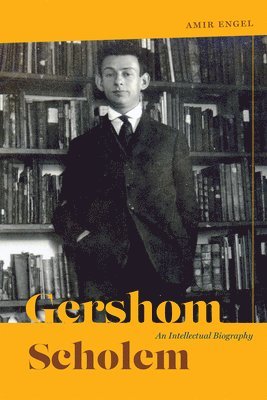
Gershom Scholem (1897-1982) was ostensibly a scholar of Jewish mysticism, yet he occupies a powerful role in today's intellectual imagination, having an influential contact with an extraordinary cast of thinkers, including Hans Jonas, Martin Buber, Walter Benjamin, Hannah Arendt, and Theodor Adorno. In this first biography of Scholem, Amir Engel shows how Scholem grew from a scholar of an esoteric discipline to a thinker wrestling with problems that reach to the very foundations of the modern human experience. As Engel shows, in his search for the truth of Jewish mysticism Scholem molded the vast literature of Jewish mystical lore into a rich assortment of stories that unveiled new truths about the modern condition. Positioning Scholem's work and life within early twentieth-century Germany, Palestine, and later the state of Israel, Engel intertwines Scholem's biography with his historiographical work, which stretches back to the Spanish expulsion of Jews in 1492, through the lives of Rabbi Isaac Luria and Sabbatai Zevi, and up to Hasidism and the dawn of the Zionist movement. Through parallel narratives, Engel touches on a wide array of important topics including immigration, exile, Zionism, World War One, and the creation of the state of Israel, ultimately telling the story of the realizations--and failures--of a dream for a modern Jewish existence.

A study of the twentieth-century construction of a Jewish mystical tradition by German-Jewish intellectuals.For most of European history, the notion of Jewish spirituality was unthinkable—buried beneath a pervasive desire to understand Judaism as uniquely material and Christianity as uniquely spiritual. In Spirit and Folk, Amir Engel tells the story of how a group of Jewish intellectuals, seeking greater involvement in political life, worked to invent a mystical tradition for Judaism amid the existential crises of twentieth-century Germany.Beginning with Martin Buber in 1900 and ending with Gershom Scholem in 1942, Engel traces the rich debate among thinkers, both well known and forgotten, regarding the need to imagine and construct a uniquely Jewish mystical tradition from historical religious sources. This quest and the tradition that emerged developed in response to one of the most volatile questions of the last century: Can Jews be Germans? The invention of Jewish spirituality, Engel shows, was not only a religious innovation but also a political gambit—a demand to be accepted as equal contributors to the German national project.
After launching his career with the 1947 publication of his dissertation, Occidental Eschatology, Jacob Taubes spent the early years of his career as a fellow and then professor at various American institutions, including Harvard, Princeton, and Columbia. During his American years, he also gathered together a number of prominent thinkers at his weekly seminars on Jewish intellectual history. In the mid-60s, Taubes joined the faculty of the Free University in West Berlin, initially as the city's first Jewish Studies professor of the postwar period. But his work and interest expanded beyond the boundaries of the field of Jewish Studies to broader philosophical questions, particularly in the philosophy of religion. A charismatic speaker and a great polemicist, Taubes had a phenomenal ability to create interdisciplinary conversations in the humanities, engaging scholars from philosophy, literature, theology, and intellectual history. The essays presented here represent the fruit of conversations, conferences, and workshops that he organized over the course of his career.