Table of contents:
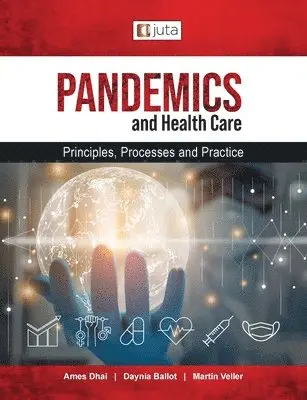
1. Introduction to Pandemics and Healthcare. Principles, Processes and Practice
2. Pandemics: Global Health Security
3. An overview of ethical issues in the context of pandemics and healthcare
4. Selected medico-legal issues relating to South Africa's response to the COVID-19 pandemic
5. Health research, ethics and pandemics: Challenges and Recommendations.
6. The role of the news media during pandemics
7. Corruption, leadership and the corrosion of public health system capabilities in South Africa
8. An understanding of the supply, distribution and use of personal protective equipment during pandemics
9. Pandemics, health equity and the social determinants of health
10. Pandemics: Managing Psychosocial Dimensions for the Public Good
11. Why health economics input and other economic consideration are necessary when managing pandemics
12. Curriculum change and teaching innovations in health sciences: An essential requirement in the era of pandemics
13. eHealth in the era of pandemics
14. Data Science and Artificial Intelligence in the Management of COVID-19.
The Gauteng Department of Health, a showcase
15. The development of vaccines and immunological therapies in pandemics
16. Epidemiology, diagnostics and surveillance: Applications during pandemics
17. COVID-19 in South Africa: Lessons from implementing a new national hospital surveillance platform
18. Mental health, psychiatric disease, and COVID-19 in urban South Africa
19. Pandemics and primary health care
20. Pandemics and critical care
21. Pandemics and management of infectious diseases
22. Pandemics and paediatrics
23. Provision of maternal and reproductive healthcare services during pandemics
24. Pandemics and the surgical disciplines
About the editors:
Ames Dhai, a member of the Academy of Science South Africa is Founder and Past Director of the Steve Biko Centre for Bioethics at the Wits Faculty of Health Sciences, Visiting Professor of Bioethics and Health Law at the Wits School of Clinical Medicine and Specialist Ethicist at the Office of the President of the South African Medical Research Council. She is a leading authority in Bioethics both internationally and locally.
Daynia Ballot, currently head of School of Clinical Medicine at Wits University is a neonatologist with a special interest in neonatal research in South Africa, particularly in neonatal sepsis, determinants of survival in very low birth weight infants and the
neurodevelopmental outcome of high-risk newborns. She is an NRF-rated researcher.
Martin Veller, a vascular surgeon, is past dean of the Faculty of Health Sciences of the University of the Witwatersrand. His leadership roles include that of previous Professor and Head of the Department of Surgery, head of the Division of Vascular Surgery and President of the World Federation of Vascular Societies.