Häftad, Engelska, 2017
687 kr
Skickas inom 5-8 vardagar
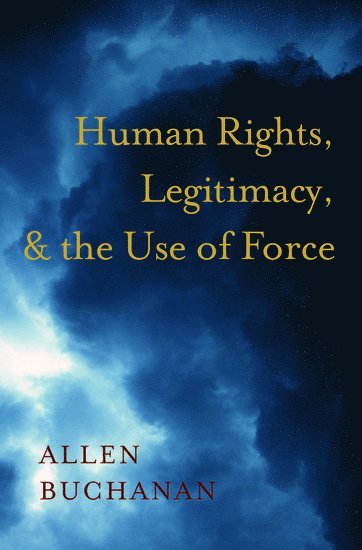
This is the first attempt to provide an in-depth moral assessment of the heart of the modern human rights enterprise: the system of international legal human rights. It is international human rights law--not any philosophical theory of moral human rights or any "folk" conception of moral human rights--that serves as the lingua franca of modern human rights practice. Yet contemporary philosophers have had little to say about international legal human rights. They have tended to assume, rather than to argue, that international legal human rights, if morally justified, must mirror or at least help realize moral human rights. But this assumption is mistaken. International legal human rights, like many other legal rights, can be justified by several different types of moral considerations, of which the need to realize a corresponding moral right is only one. Further, this volume shows that some of the most important international legal human rights cannot be adequately justified by appeal to corresponding moral human rights. The problem is that the content of these international legal human rights--the full set of correlative duties--is much broader than can be justified by appealing to the morally important interests of any individual. In addition, it is necessary to examine the legitimacy of the institutions that create, interpret, and implement international human rights law and to defend the claim that international human rights law should "trump" the domestic law of even the most admirable constitutional democracies.