1 302 kr
Läs direkt efter köp
1 302 kr
Läs direkt efter köp
1 744 kr
Skickas inom 7-10 vardagar
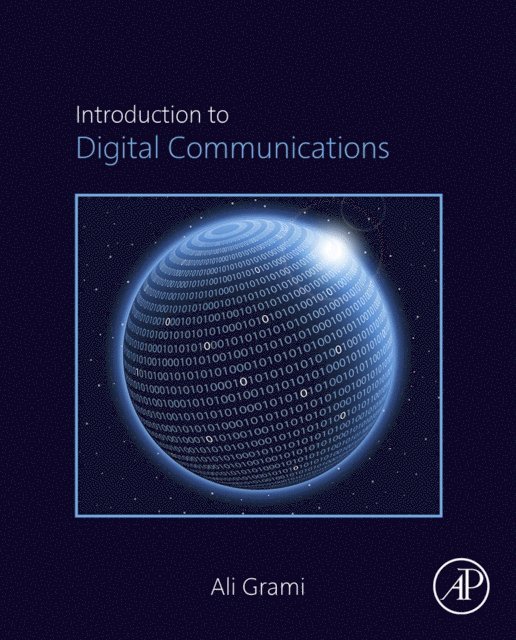
Introduction to Digital Communications explores the basic principles in the analysis and design of digital communication systems, including design objectives, constraints and trade-offs. After portraying the big picture and laying the background material, this book lucidly progresses to a comprehensive and detailed discussion of all critical elements and key functions in digital communications.
The first undergraduate-level textbook exclusively on digital communications, with a complete coverage of source and channel coding, modulation, and synchronization. Discusses major aspects of communication networks and multiuser communications Provides insightful descriptions and intuitive explanations of all complex concepts Focuses on practical applications and illustrative examples. A companion Web site includes solutions to end-of-chapter problems and computer exercises, lecture slides, and figures and tables from the text835 kr
Skickas inom 10-15 vardagar
1 448 kr
Läs direkt efter köp
1 540 kr
Läs direkt efter köp
1 401 kr
Skickas inom 10-15 vardagar
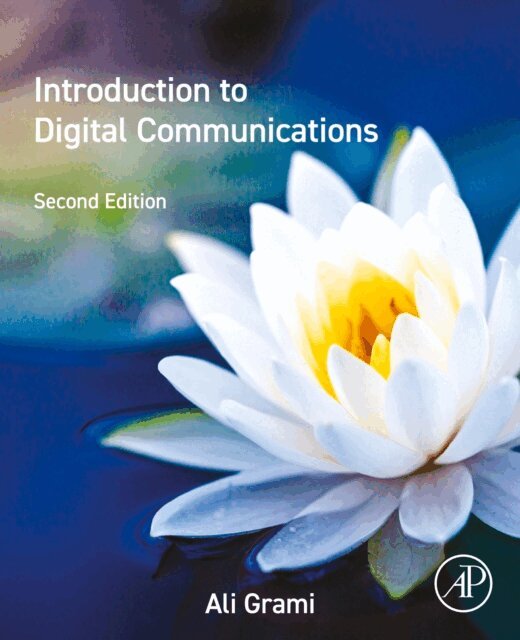
Introduction to Digital Communications, written especially for upper-level undergraduate courses, explores the basic principles in the analysis and design of digital communication systems, including design objectives, constraints and trade-offs. After portraying the big picture and laying the background material, this book lucidly progresses to a comprehensive and detailed discussion of all critical elements and key functions in digital communications.
The second edition has been fully revised, with timely new chapters on wireless enabling systems and encryption, more practical examples, more application-focused real-world end of chapter exercises, and a more crisp and concise approach to the content.
.�Focuses exclusively on digital communications, with complete coverage of source and channel coding, modulation, and synchronization .�Discusses major aspects of communication networks and multiuser communications.�Provides insightful descriptions and intuitive explanations of all complex concepts.�A companion website includes solutions to end-of-chapter problems and computer exercises, lecture slides, and figures and tables from the textNew features in the second edition.�Important new chapter on "Wireless Enabling Technologies and Evolving Mobile Systems,� covering 5G, WiFi, GPS, and Bluetooth standards as well as the MIMO, OFDM/OFDMA, and spread spectrum technologies.�Timely new chapter on network security and cryptography.�More practical examples added throughout.�Enhanced coverage of signal space constellations, phase-locked loop, and link analysis1 352 kr
Skickas inom 7-10 vardagar
1 537 kr
Läs direkt efter köp
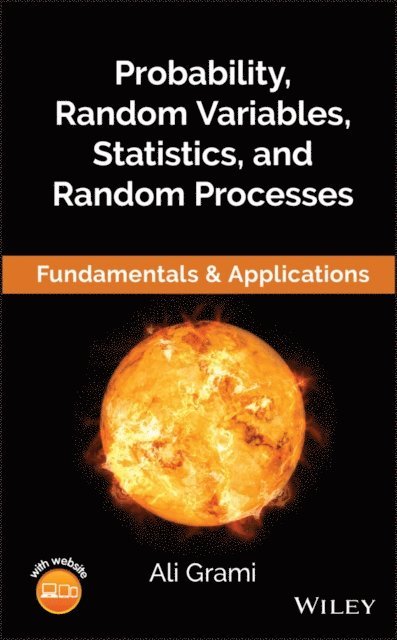
Probability, Random Variables, Statistics, and Random Processes: Fundamentals & Applications is a comprehensive undergraduate-level textbook. With its excellent topical coverage, the focus of this book is on the basic principles and practical applications of the fundamental concepts that are extensively used in various Engineering disciplines as well as in a variety of programs in Life and Social Sciences. The text provides students with the requisite building blocks of knowledge they require to understand and progress in their areas of interest. With a simple, clear-cut style of writing, the intuitive explanations, insightful examples, and practical applications are the hallmarks of this book.
The text consists of twelve chapters divided into four parts. Part-I, Probability (Chapters 1 – 3), lays a solid groundwork for probability theory, and introduces applications in counting, gambling, reliability, and security. Part-II, Random Variables (Chapters 4 – 7), discusses in detail multiple random variables, along with a multitude of frequently-encountered probability distributions. Part-III, Statistics (Chapters 8 – 10), highlights estimation and hypothesis testing. Part-IV, Random Processes (Chapters 11 – 12), delves into the characterization and processing of random processes. Other notable features include:
Most of the text assumes no knowledge of subject matter past first year calculus and linear algebra With its independent chapter structure and rich choice of topics, a variety of syllabi for different courses at the junior, senior, and graduate levels can be supported A supplemental website includes solutions to about 250 practice problems, lecture slides, and figures and tables from the textGiven its engaging tone, grounded approach, methodically-paced flow, thorough coverage, and flexible structure, Probability, Random Variables, Statistics, and Random Processes: Fundamentals & Applications clearly serves as a must textbook for courses not only in Electrical Engineering, but also in Computer Engineering, Software Engineering, and Computer Science.

1 537 kr
Läs direkt efter köp
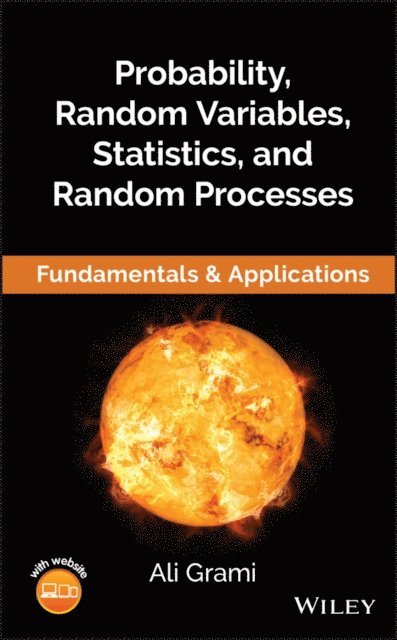
Probability, Random Variables, Statistics, and Random Processes: Fundamentals & Applications is a comprehensive undergraduate-level textbook. With its excellent topical coverage, the focus of this book is on the basic principles and practical applications of the fundamental concepts that are extensively used in various Engineering disciplines as well as in a variety of programs in Life and Social Sciences. The text provides students with the requisite building blocks of knowledge they require to understand and progress in their areas of interest. With a simple, clear-cut style of writing, the intuitive explanations, insightful examples, and practical applications are the hallmarks of this book.
The text consists of twelve chapters divided into four parts. Part-I, Probability (Chapters 1 – 3), lays a solid groundwork for probability theory, and introduces applications in counting, gambling, reliability, and security. Part-II, Random Variables (Chapters 4 – 7), discusses in detail multiple random variables, along with a multitude of frequently-encountered probability distributions. Part-III, Statistics (Chapters 8 – 10), highlights estimation and hypothesis testing. Part-IV, Random Processes (Chapters 11 – 12), delves into the characterization and processing of random processes. Other notable features include:
Most of the text assumes no knowledge of subject matter past first year calculus and linear algebra With its independent chapter structure and rich choice of topics, a variety of syllabi for different courses at the junior, senior, and graduate levels can be supported A supplemental website includes solutions to about 250 practice problems, lecture slides, and figures and tables from the textGiven its engaging tone, grounded approach, methodically-paced flow, thorough coverage, and flexible structure, Probability, Random Variables, Statistics, and Random Processes: Fundamentals & Applications clearly serves as a must textbook for courses not only in Electrical Engineering, but also in Computer Engineering, Software Engineering, and Computer Science.