Ecological crises threaten all forms of life on earth. Democracy too is endangered, as popular discontent, elite malfeasance, and unresponsive institutions imperil its survival. Present political concepts have proven inadequate to meeting these challenges, and their inadequacies are themselves symptoms of the failures of prevailing political, cultural, and ecological stories and practices.This book offers a new vision of ecological and participatory democratic life for a time of crisis. Identifying myth and ritual as key resources for contemporary politics, Earthborn Democracy excavates practices and narratives that illustrate the interdependence necessary to inspire ecological renewal. It tells stories of multispecies agency and egalitarian political organization across history, from ancient Mesopotamia and the precolonial Americas to contemporary social movements, emphasizing Indigenous traditions and resistance. Resonating across these practices and stories past and present is a belief that we are all—human as well as nonhuman—earthborn, and this can serve as the basis for reimagining democracy. Allying visionary political theory with environmental activism, Earthborn Democracy provides a foundation and a guide for collective action in pursuit of earthly flourishing.
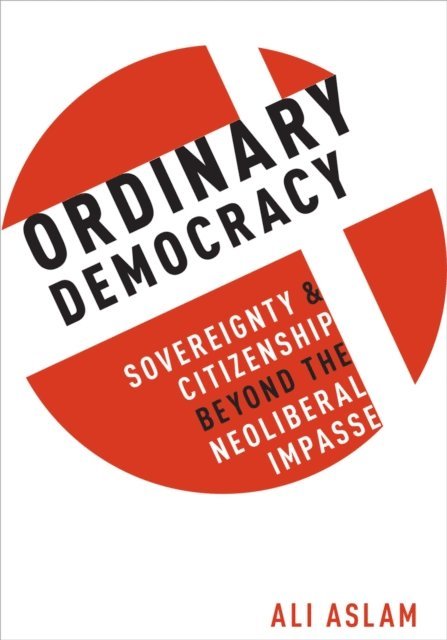
While various democratic theorists have looked at particular instances of recent social movements (Occupy or the Arab Spring, for example), none have yet attempted a more general theoretical take on what it is that relates all of these movements and what that running thread can tell us about democratic theory. Ordinary Democracy argues that there is a commonality to these movements as well as a striking lesson about the nature of democracy, sovereignty, agency and solidarity today: in that these movements all highlight the ordinariness of neoliberal regimes and the ways in which citizens find solidarity and a sense of freedom in the marketplace. Aslam contends that neoliberalism is more than a set of policies, ideological principles, or a distinct phase of capitalism -- rather it constitutes the ways in which citizens think about their everyday lives. Conceived as common sense, it also governs what is permitted or forbidden in public discourse (for example, rendering issues of private debt a personal responsibility). Mass movements call attention to the effects of neoliberalism, providing a way to contest its acceptability; in doing so they help to contextualize the impasse that marks a language of civil empowerment and inclusion on one hand, and feelings of powerlessness, diminished agency and impassivity on the other. In Aslam's view, democratic theorists who view participatory agency as offering the most authentic opportunity to satisfy the need for solidarity and freedom minimize the degree to which capitalism satisfies most citizens, as well as the depth of most people's affective attachment to neoliberalism. Looking in particular at Idle No More, Occupy Wall Street, Occupy Sandy, the Egyptian Revolution, and Strike Debt, Aslam takes what may be a more sobering, but still hopeful, view toward the potential of mass movements: to resist the normalization of conceptions of solidarity and citizenship under neoliberalism.
While various democratic theorists have looked at particular instances of recent social movements (Occupy or the Arab Spring, for example), none have yet attempted a more general theoretical take on what it is that relates all of these movements and what that running thread can tell us about democratic theory. Ordinary Democracy argues that there is a commonality to these movements as well as a striking lesson about the nature of democracy, sovereignty, agency and solidarity today: in that these movements all highlight the ordinariness of neoliberal regimes and the ways in which citizens find solidarity and a sense of freedom in the marketplace. Ali Aslam contends that neoliberalism is more than a set of policies, ideological principles, or a distinct phase of capitalism-rather it constitutes the ways in which citizens think about their everyday lives. Conceived as common sense, it also governs what is permitted or forbidden in public discourse (for example, rendering issues of private debt a personal responsibility). Mass movements call attention to the effects of neoliberalism, providing a way to contest its acceptability; in doing so they help to contextualize the impasse that marks a language of civil empowerment and inclusion on one hand, and feelings of powerlessness, diminished agency and impassivity on the other. In Aslam''s view, democratic theorists who view participatory agency as offering the most authentic opportunity to satisfy the need for solidarity and freedom minimize the degree to which capitalism satisfies most citizens, as well as the depth of most people''s affective attachment to neoliberalism. Looking in particular at Idle No More, Occupy Wall Street, Occupy Sandy, the Egyptian Revolution, and Strike Debt, Aslam takes what may be a more sobering, but still hopeful, view toward the potential of mass movements: to resist the normalization of conceptions of solidarity and citizenship under neoliberalism.
Ecological crises threaten all forms of life on earth. Democracy too is endangered, as popular discontent, elite malfeasance, and unresponsive institutions imperil its survival. Present political concepts have proven inadequate to meeting these challenges, and their inadequacies are themselves symptoms of the failures of prevailing political, cultural, and ecological stories and practices.This book offers a new vision of ecological and participatory democratic life for a time of crisis. Identifying myth and ritual as key resources for contemporary politics, Earthborn Democracy excavates practices and narratives that illustrate the interdependence necessary to inspire ecological renewal. It tells stories of multispecies agency and egalitarian political organization across history, from ancient Mesopotamia and the precolonial Americas to contemporary social movements, emphasizing Indigenous traditions and resistance. Resonating across these practices and stories past and present is a belief that we are all—human as well as nonhuman—earthborn, and this can serve as the basis for reimagining democracy. Allying visionary political theory with environmental activism, Earthborn Democracy provides a foundation and a guide for collective action in pursuit of earthly flourishing.
A stirring exploration of abolitionist thought and Black feminism to articulate a transformative theory of repairAmid the relentless news of ICE raids, Supreme Court rulings that dismantle our civil rights, and egregious violations of democratic norms, people in the United States are struggling to visualize an actionable path forward. In To Turn the World Around, Ali Aslam proposes a transformative approach that pairs inner healing work with collective external engagement challenging oppressive forces. To actualize W. E. B. DuBois's concept of abolition democracy, drawing from Black sociality grounded in the refusal of white institutions, Aslam advocates for not working within a broken system nor fleeing it, or merely enduring injustice, and instead offers combined personal healing and embodied action.Aslam's vision of transformative selfhood centers healing justice, self and mutual aid, and a somatic approach informed by Black women's history of navigating bodily dispossession and violations of autonomy and personhood. Simultaneously a tool of personal survival, political refusal, and collective care, inner work incubates new forms of resistance and prepares participants to engage with the outer work of abolition. The movements that rise from the foundation of this inner work are collaborative and experimental, a collective "figuring out" that creates holistic approaches to abolition that transcend conventional politics.Reimagining inner work as resistance that is ongoing, expansive, and relational, To Turn the World Around offers a stirring framework for the creation of transformational movements. Aslam's unique theory of repair carefully bridges constituencies, acknowledging the politics of refusal while embracing the hopefulness of sociality.Retail e-book files for this title are screen-reader friendly.