
- Nyhet
Häftad, Engelska, 2026
175 kr
Skickas inom 7-10 vardagar
175 kr
Skickas inom 7-10 vardagar

260 kr
Skickas inom 3-6 vardagar

230 kr
Skickas inom 3-6 vardagar

235 kr
Skickas inom 3-6 vardagar
78 kr
Läs direkt efter köp
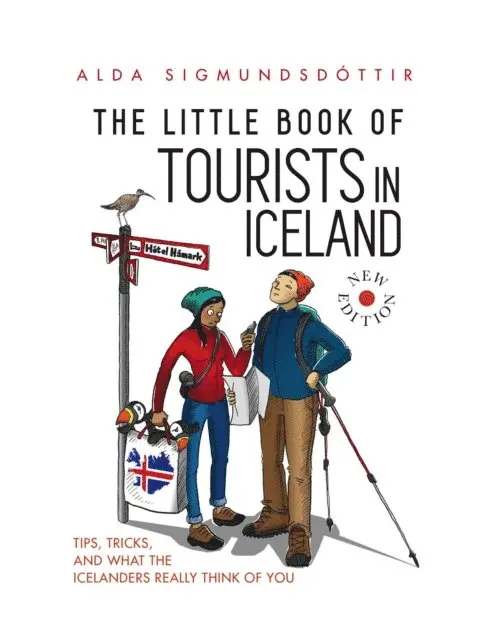
Iceland is in the midst of an unprecedented tourist boom that has brought wealth to the country, but also myriad issues and challenges. Through a series of short essays, this book provides a unique insight into the social and environmental impact that tourism is having on Iceland, and with wit and intelligence offers invaluable tips for touring safely, responsibly, and in harmony with the locals. A fascinating resource for anyone interested in contemporary Iceland, and an essential companion for all visitors to the country.Among the topics addressed in this book:• Why now?—Reasons for the tourism boom in Iceland• The impact of tourism on Iceland’s housing market, health care system, law enforcement, search and rescue operations, and more• Touring Iceland, staying safe—the things to keep in mind while traveling in Iceland’s treacherous terrain• Out driving. The most dangerous parts of Iceland? Its roads! Read our tips for staying safe• What they think of us—he things our visitors complain about• What we think of them: tourist behaviors that really, seriously irk the Icelanders• Crazy stories of tourists in Iceland (hahaha oh lord!)• The environmental footprint: depletion of natural resources, pollution, and the physical impact of tourism• Taxing tourists? The endless debate and what it entails• Can''t we just all get along? Tips for touring in harmony with the locals• The truth about those Iceland myths: jailed bankers, believing in elves, the incest app, sleeping around … don’t believe everything you hear!• The hilarious questions we get (“What time do the northern lights come on?”)… and so much more!Excerpt
"Yes, Iceland’s landscape is treacherous, and there are dangers in both expected and unexpected places. Yet the most dangerous aspect of touring Iceland is not those hot springs, glaciers, or rogue waves, but something far more commonplace: driving.
Iceland has a very low population density—only about three people per square kilometer, or eight per square mile. Building and maintaining an efficient road system obviously costs a few crowns, and hitherto the Icelanders have been, if not entirely satisfied, then at least reasonably content with their single-lane highways, gravel roads, and the mountainous F-roads that are generally only open in summer.
So here we are, merrily driving on our sub-standard roads and suddenly there is a tourist boom, resulting in far more cars on the road than ever before, including whole convoys of tour buses. This means increased wear and tear on roads that were already unsuitable for so much traffic and that require more frequent maintenance if they are to be kept safe. Also, many Icelandic roads are not built for the volume of traffic that they are now experiencing. For instance, shoulders have been known to collapse when a tour bus has moved too far over to one side of a narrow road, in order to make way for an oncoming vehicle. Thankfully there have been no serious injuries to people under such circumstances, but there have been enough scares to make people stand up and pay attention.
A related problem that has been growing ever more serious is the limited experience of many folks when it comes to the driving conditions endemic to Iceland. I am speaking of driving in strong winds, winter driving, two-lane highways, gravel roads, and so on. [...]
So the road system definitely needs a major overhaul. However, that is not an undertaking that can be completed overnight, and besides, it is entirely open to debate whether we want all those roads improved. More on that later.
For now, at least, we must accept the sort of road system we have, and try our best to make our visitors aware of the main dangers and risks of motoring in Iceland, so that we can all stay safe."
80 kr
Läs direkt efter köp
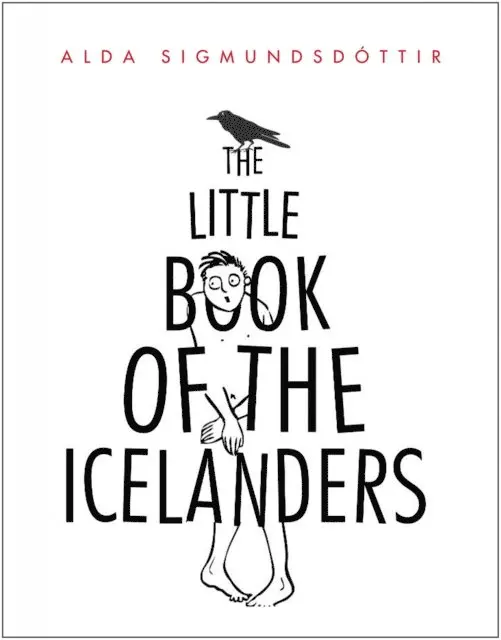
After more than 20 years away, Alda Sigmundsdottir returned to her native Iceland as a foreigner. With a native person''s insight yet an outsider''s perspective, Alda quickly set about dissecting the national psyche of the Icelanders.This second edition, from 2018, contains new and updated chapters from the original edition, reflecting the changes in Icelandic society and among the Icelandic people since the book was first published in 2012.Among the fascinating subjects broached in The Little Book of the Icelanders:• The appalling driving habits of the Icelanders• Naming conventions and customs• The Icelanders’ profound fear of commitment• The Icelanders’ irreverence• Why Icelandic women are really men• How the Icelanders manage to make social interactions really complicated• The importance of the family in Icelandic society• Where to go to meet the real Icelanders (and possibly score some free financial advice)• Rituals associated with the most important life events (weddings, confirmations, graduations, and deaths)… and many more.One chapter leads to the next, creating a continuous chain of storytelling. It feels as if you’re sitting in the author’s kitchen, enjoying a cup of coffee and conversing with her about the quirks of her countrymen, every now and then bursting out laughing. [...] I’m going to heartily recommend The Little Book of the Icelanders, both to fans of Sigmundsdóttir’s blog and those unfamiliar with her work. - Iceland Review OnlineThere aren’t many books I’d recommend reading over morning coffee but The Little Book of the Icelanders is one of them. [...] I laughed at the essays in this book, not because I was laughing at Icelanders but because I recognize much of the behavior in myself and members of my family. It felt good. It’s not just the sanest, most impressive characteristics that we pass on and share but also some of the zaniest. As I read this book, I frequently thought, yup, I’m definitely part Icelandic. - Lögberg-Heimskringla, CanadaExcerpt"Even though they live on the edge of the inhabitable world with engulfing darkness for several months of the year, the Icelanders continue to score among the most optimistic people in the world.
Is it the fish? The fresh air? The cod liver oil? Natural selection? The copious amounts of anti-depressants they consume?Nobody really knows.
However, one thing is sure: this character trait serves Icelanders well and has helped the nation cope with innumerable shocks, from volcanic eruptions to famines, to a massive economic crisis. Whatever happens, you can be sure that the Icelanders will seek the silver lining and soldier on, firmly believing that things will soon get better.
Indeed it is fascinating to observe how the Icelanders deal with trauma at a national level. Their initial reaction always seems to be to bond together. People who on regular days will bicker and quarrel amongst themselves, suddenly become enormously supportive of each other. I’ve seen this happen in the aftermath of disasters such as snow avalanches and volcanic eruptions, or tragedies that capture the nation’s attention.
Take, for example, the economic meltdown of 2008, which for the Icelanders was one of the most catastrophic events in recent history. Many people feared an onslaught of suicides in the wake of all the bankruptcies that ensued. Yet it turned out that the number of suicides actually declined. According to the Directorate of Health, it was because the nation had bonded together, and people were closer and more supportive of each other than they had been in a very long time.
In other words, the optimism is probably a long-term survival strategy. After all, through the centuries of hardship and geographical isolation that the Icelandic nation has endured, defeat was not an option – it was stand together, fight together, or die."
80 kr
Läs direkt efter köp
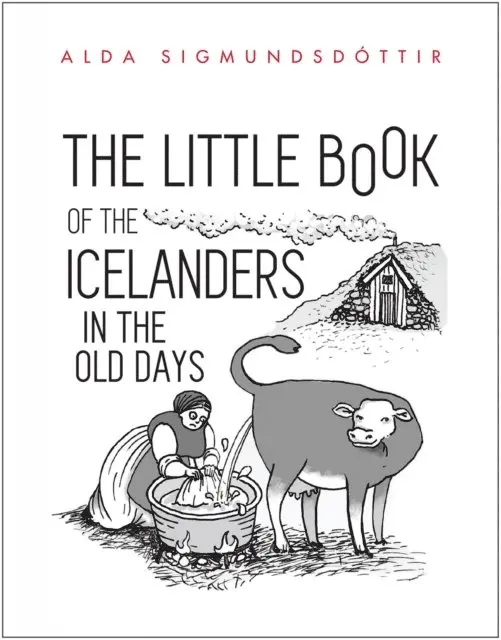
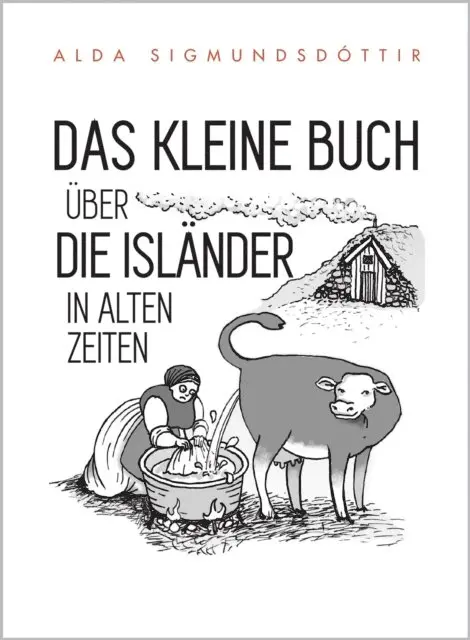
Iceland in centuries past was a formidable place to live. Situated in the North Atlantic Ocean, on the edge of the inhabitable world, the nation was both isolated and abjectly poor. Centuries of colonization translated into oppression and subjugation from the colonial overlords, and a hostile climate and repeated natural disasters meant that mere survival was a challenge to even the hardiest of souls.In these 50 miniature essays, Alda Sigmundsdottir writes about the Icelanders in centuries past in a light and humorous way, yet never without admiration and respect for the resilience and strength they showed in coping with conditions of adversity that are barely imaginable today. Their ways of interacting with the natural world are described, as are their sometimes tragic, sometimes ingenious, means of dealing with maltreatment and injustice from the church and other rulers. These forms of oppression include a trade monopoly imposed by Denmark that lasted nearly two centuries, a ban on dancing that lasted for a similar length of time, the forced dissolution of households when the breadwinner of the family died, the tyranny of merchants granted exclusive right to trade with the Icelanders, and the dreaded decrees of the Grand Judgement—a court of law that was set up to punish various offenses, real or imagined.Yet it is not only the “big picture” that is described in this book, but also the various smaller aspects that shed light on the daily life of the Icelanders of old. These include their ingenious ways of coping with lack, of preserving food, of finding shelter, of creating or admitting light into their homes, as well as the innumerable and sometimes wacky superstitions attached to various life events, big and small. The hilarious customs of hospitality and visiting are also described, as are some of the sexual activates of Icelanders in the past, their belief in elves and hidden people, sexual interactions with hidden people (!), ways of dealing with grief, interactions with foreigners, and much, much more.Today’s Iceland is a modern, cosmopolitan place, with one of the highest standards of living in the world. Yet less than a century ago, this paragon of equality and peace was the poorest society in Europe. The conditions of life described in this book are therefore not very distant from the Icelanders today, and many of the aspects described are still very much reflected in Iceland’s unique culture.In short, The Little Book of the Icelanders in the Old Days is not only a funny, witty, and wise exposé on the Icelanders’ daily life in the past, it is also essential to understanding the Icelandic national character today.Among the fascinating subjects broached in The Little Book of the Icelanders in the Old Days:• How Icelanders'' housing developed from stately longhouses to tiny turf farms• The kvöldvaka: how Icelanders managed to live through the long, dark winters• Social structure among the common folk (farmers to vagabonds)• All the superstitions: how folks attempted to gain control over their lives• The elf belief deconstructed: why did those tales of hidden people develop?• No time to be a kid (being a child was tough in the Iceland of old)• Sex and the church (yep, Icelandic ecclesiastical authorities also meddled in people''s sex lives)• Precious, precious food. How do you live on the edge of the inhabitable world, where hardly anything grows?• Welcoming guests: smooching and other etiquettes• Foreigners in Iceland. Think Iceland had no visitors back then? Think again!… and so much more!
264 kr
Skickas inom 7-10 vardagar
Island war in früheren Zeiten ein einigermaßen extremer Ort zum Leben. Die Insel im Nordatlantik lag am Rande der der bewohnten Welt, und die Nation war nicht nur isoliert, sondern auch bitterarm. Jahrhundertelange Kolonialherrschaft bedeutete Unfreiheit und Unterdrückung. Das harsche Klima und immer wieder auftretende Naturkatastrophen waren sogar für robuste Seelen eine Herausforderung.Fünfzig Mini-Essays von Alda Sigmundsdóttir über das Leben und Streben von Isländern in alten Zeiten geben auf lockere und amüsante Weise einen Einblick auf das, was ihre Vorfahren in vergangenen Jahrhunderten bewegt und am Leben gehalten hat.; nie ohne Bewunderung und Respekt vor der menschlichen Widerstandskraft und Stärke, und zwar unter Bedingungen, die man sich heutzutage kaum noch vorstellen kann. Das „Kleine Buch“ gibt Auskunft darüber, wie die Menschen früher mit den Herausforderungen der Natur um sie herum umgingen. Aber es geht auch auf die Konflikte zwischen ihnen und den staatlichen und kirchlichen Autoritäten ein, die ihnen ungerechte Behandlung und drakonische Strafen zuteil werden ließen. Oft endeten solche Konflikte tragisch, mitunter aber lösten die Isländer sie auch ziemlich genial auf ihre Weise. Zu den Formen der dänischen Unterdrückung gehörten ein fast zweihundert Jahre währendes Handelsmonopol und ein totales Tanzverbot für etwa den gleichen Zeitraum; aber auch die aufgezwungene Auflösung eines Haushalts, wenn der Familienversorger starb, sowie die tyrannische Auslegung des Handelsmonopols, durch das die Isländer gezwungen waren, ausschließlich mit dem dänischen Kaufherrn zu handeln, der das Monopolrecht für ihren Bezirk hatte. Hinzu kam das Große Edikt, eine Gerichtsbarkeit mit gefürchteten Urteilen wegen zahlreicher Verstöße gegen die Moral, realen oder eingebildeten.Es geht aber nicht nur um einen „groben Überblick“, sondern auch ganz viele kleine Aspekte, die Licht auf das alltägliche Leben im alten Island werfen. Dazu gehören die erfinderischen Methoden der Isländer, mit denen sie Mängel aller Art kompensierten; Nahrung konservierten, und immer irgendwo Unterschlupf fanden; oder Licht in ihre Behausungen brachten. Und nicht zuletzt um mit den unzähligen schrulligen abergläubischen Vorstellungen klarzukommen, die man bei vielen großen und kleinen Ereignissen im Leben beachten musste. Das für uns heutige Menschen drollige Reglement für Gäste und Besucher wird beschrieben, und es wird auf den Glauben an Verborgene Wesen eingegangen, ebenso wie auf sexuelle Aktivitäten in früheren Zeiten wird – beispielsweise auf menschlichen Geschlechtsverkehr mit verborgenen Wesen. Aber auch darauf, wie Isländer mit Trauer umgingen, oder mit Ausländern – und noch viel, viel mehr. Heutzutage ist Island ein modernes kosmopolitisches Land, dessen Lebensstandard zu den höchsten in der Welt zählt. Noch vor weniger als hundert Jahren war diese Nation wahrlich kein Ausbund an Gleichheit, Gerechtigkeit und Frieden, sondern eine der ärmsten Nationen in Europa. Die damaligen Lebensbedingungen, von denen man in diesem Buch erfährt, sind auch gar nicht so weit von modernen Isländern entfernt. Viele von diesen Aspekten, lassen sich auch heute noch in der Kultur und in sozialen Strukturen wiederfinden.Kurz gesagt, „Das kleine Buch von Isländern in alten Zeiten“, ist ein amüsantes, witziges und nichtzuletzt informatives Buch über isländisches Alltagsleben in früheren Zeiten – und in ihm ist auch ein erhellender Blick auf seelische Befindlichkeiten heutiger Isländer enthalten.
80 kr
Läs direkt efter köp
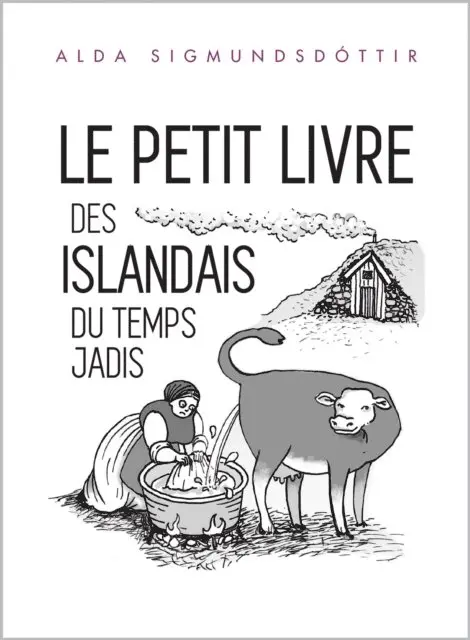
L''Islande, dans les siècles passés, était un terrible endroit où vivre. Situé dans l''océan Atlantique Nord, aux limites du monde habitable, le pays était à la fois isolé et d''une pauvreté extrême. Des siècles de colonisation, qui se sont traduits par l''oppression et l''asservissement aux seigneurs coloniaux, un climat hostile et des catastrophes naturelles à répétition eurent pour conséquence de faire de la simple survie un défi, même pour les âmes les mieux trempées. Dans ces 50 courts essais, Alda Sigmundsdottir écrit sur les Islandais des siècles passés de manière légère et humoristique, mais sans jamais se départir d''admiration et de respect pour la résistance et l''énergie dont ils ont fait preuve face à des difficultés qui sont à peine imaginables aujourd''hui. La manière dont ils ont su tirer parti de leur environnement naturel est décrite, de même que les moyens, parfois tragiques, parfois ingénieux, qu''ils ont mis en œuvre pour résister aux mauvais traitements et aux injustices de l''église et des autres dirigeants. C’est non seulement le tableau d''ensemble qui est brossé dans ce livre, mais aussi les divers petits aspects qui éclairent la vie quotidienne des anciens Islandais. Cela comprend leurs trésors d''ingéniosité pour conserver les aliments, trouver un abri, créer ou laisser passer la lumière dans leurs maisons, ainsi que les superstitions innombrables et parfois loufoques attachées aux différents événements de la vie, petits et grands. Les drôles de coutumes liées à l''hospitalité et aux échanges sont également décrites, comme le sont certaines des activités sexuelles des Islandais dans le passé, leur croyance dans les elfes et le peuple caché, les relations sexuelles avec ces créatures (!), leurs façons de faire face à la douleur, leur comportement à l''égard des étrangers, et bien plus encore. L’Islande d''aujourd''hui est un lieu moderne et cosmopolite, avec l''un des plus hauts niveaux de vie dans le monde. Pourtant, il y a moins d''un siècle, ce parangon de l''égalité et de la paix a été le pays le plus pauvre d''Europe. Les conditions de vie décrites dans ce livre ne sont donc pas très éloignées de celles des Islandais d’aujourd''hui et la plupart des aspects décrits se retrouvent encore dans la culture singulière de l''Islande. En bref, Le Petit Livre des Islandais du temps jadis n’est pas seulement un exposé drôle, plein d''esprit et de sagesse sur la vie quotidienne des Islandais dans le passé, il est également essentiel à la compréhension du caractère national islandais aujourd''hui.
80 kr
Läs direkt efter köp
Icelandic folklore is rife with tales of elves and hidden people that inhabited hills and rocks in the landscape. But what do those elf stories really tell us about the Iceland of old and the people who lived there? In this book, author Alda Sigmundsdóttir presents twenty translated elf stories from Icelandic folklore, along with fascinating notes on the context from which they sprung.The international media has had a particular infatuation with the Icelanders’ elf belief, generally using it to propagate some kind of “kooky Icelanders” myth. Yet Iceland’s elf folklore, at its core, reflects the plight of a nation living in abject poverty on the edge of the inhabitable world, and its people’s heroic efforts to survive, physically, emotionally, and spiritually. That is what the stories of the elves, or hidden people, are really about.In a country that was, at times, virtually uninhabitable, where poverty was endemic and death and grief a part of daily life, the Icelanders nurtured a belief in a world that existed parallel to their own. This was the world of the hidden people, which more often than not was a projection of the most fervent dreams and desires of the human population. The hidden people lived inside hillocks, cliffs, or boulders, very close to the abodes of the humans. Their homes were furnished with fine, sumptuous objects. Their clothes were luxurious, their adornments beautiful. Their livestock was better and fatter, their sheep yielded more wool than regular sheep, their crops were more bounteous. They even had supernatural powers: they could make themselves visible or invisible at will, and they could see the future.To the Icelanders, stories of elves and hidden people are an integral part of the cultural and psychological fabric of their nation. They are a part of their identity, a reflection of the struggles, hopes, resilience, and endurance of their people.What you will read about in The Little Book of the Hidden People:• The fascination in the international media: why are they so obsessed with elves?• The meaning of elf: what do hidden people stories tell us about the psyche of the Icelanders of old?• The elves'' badassery—they could make or break your fortune so you’d better be nice!• The ljúflingar … hidden men who became the lovers of mortal women• Glamorous and regal: why were the elves so damn good-looking?• The grim realities: what do scholars believe about all those children abducted by elves?… and so much more!
80 kr
Läs direkt efter köp
The Icelandic nation has a long and rich history of storytelling. Throughout centuries characterized by hardship, poverty, and dark winters, the Icelanders kept their spirits high and moral values intact by telling each other stories. In this collection of 15 Icelandic folk legends, we get a glimpse of the worldview of the Icelanders in centuries past as they endeavored to understand and cope with the natural phenomena around them. There are stories of malicious ghosts, outlaws living in carved-out boulders, hidden people residing in grassy knolls, trolls that are tripped up by their own stupidity, and much more. In addition, there is one story exemplifying a fairy tale motif that scholars have discovered to be unique to Iceland: that of the good stepmother (The Story of Himinbjörg). Throughout we get a powerful sense of the Icelanders’ beliefs, values, and fears, as well as their strong need to cling to all that was pure and good.
80 kr
Läs direkt efter köp
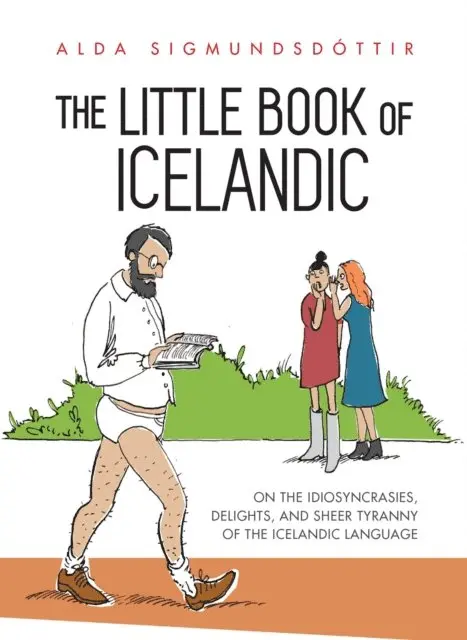
Icelandic is one of the oldest and most complex languages in the world. In this book, Alda Sigmundsdóttir looks at the Icelandic language with wit and humor, and how it reflects the heart and soul of the Icelandic people and their culture. Many of the Icelanders'' idioms and proverbs, their meaning, and origins are discussed, as is the Icelanders'' love for their language and their attempts to keep it pure through the ongoing construction of new words and terminology. There is a section on Icelandic curse words as well as Icelandic slang, which is mostly derived from English. Throughout, this book deconstructs Icelandic vocabulary, and the often-hilarious, almost naive, ways in which words are made.Among the fascinating topics broached in The Little Book of Icelandic:• The Language Committee: how Icelanders struggle to keep their language “pure”• Let''s make a word!—How names for new things are constructed• Old letters, strange sounds: wrapping your tongue around the Icelanders’ tongue• $#*!%&!“#$%*, or how Icelanders curse• The missing dialects—why Icelandic has none• Which is the prettiest of all: contests to find the most lovely word in Icelandic (and the ugliest!)• Quintessential Icelandic words and phrases (the ones that describe the Icelanders like no others)• Useful phrases to impress your new Icelandic friends!• Klósett—the unexpected origin of the Icelandic word for toilet… and so much more!This is a must-read book for anyone interested in the Icelandic people, their culture—and of course their language.Excerpt"Idioms and proverbs provide a unique insight into the soul of a nation. They say so much about a people’s history—the heartfelt, the tragic, the monumental, the proud. Icelandic has a vast number of idioms and proverbs that are a direct throwback to our nation’s past, especially idioms relating to the ocean, which is such a massive force in our nation''s history. Many of them we use all the time without ever giving a thought to their origins. What follows is a random sampling—I hope you enjoy reading about them as much as I did.
—
Idiom: Eins og skrattinn úr sauðaleggnum
Translation: Like Satan out of the sheep’s leg bone
Meaning: Unexpectedly, out of the blue
If someone suddenly appeared, especially someone I didn’t really want to see, I might say hann kom eins og skrattinn úr sauðaleggnum, literally “he appeared like Satan out of the sheep’s leg bone”.
Where the affiliation between a sheep’s leg bone and the prince of darkness comes in I could not tell you. However, I can tell you that, in the old days, Icelandic children (being impoverished and everything) had no proper toys. Instead, they played with sheeps’ bones, each of which was assigned a role. The jawbones were the cows, the joints of the legs were the sheep, and the leg bones were the horses. So maybe folks were worried that Satan—being the crafty bugger that he was—would install himself in a sheeps’ leg bone when the kids were playing and then suddenly BOO! pop out and scare the bejeezus out of them.
It’s just a theory.
Incidentally, the use of this idiom is not confined to people—it is also successfully used to comment on unwanted happenings, as in: “Damn, this huge phone bill comes like Satan out of a sheep’s leg bone!”
78 kr
Läs direkt efter köp
Die isländische Überlieferung ist reich an Geschichten über Elfen und das verborgene Volk, das einst Hügel und Felsen in dieser magischen Landschaft bewohnte. Doch was berichten uns diese Elfengeschichten wirklich über das Island von früher und über die Menschen, die dort früher lebten? In diesem Buch stellt uns die Autorin Alda Sigmundsdóttir zwanzig Elfengeschichten aus isländischen Volksweisen vor, zusammen mit faszinierenden Erläuterungen über deren Kontext. Die internationalen Medien sind oft geradezu besessen vom Elfenglauben der Isländer und haben so den Mythos eines skurrilen Inselvolkes geprägt. Und doch steckt mehr hinter diesen Volkserzählungen, die die unbeschreibliche Not eines Volkes, das am Rande der bewohnbaren Welt sein Dasein in bitterster Armut fristete sowie die heroischen Anstrengungen dieser Menschen zu überleben – physisch, emotional und spirituell. Das ist es, worum es in diesen Geschichten über Elfen wirklich geht. In einem Land, das mitunter kaum bewohnbar war, pflegten die Isländer den Glauben an eine Welt parallel zu ihrer eigenen, die Welt des verborgenen Volkes, meist eine Projektion ihrer kühnsten Träume. Die verborgenen Wesen lebten in Hügeln, Klippen oder Felsen in unmittelbarer Nähe menschlicher Wohnstätten. Im Gegensatz zu deren traurigen Behausungen war so ein Elfenheim jedoch eine ganz andere Angelegenheit. Ihre Kleider waren vornehm, ihr Schmuck von erlesener Schönheit. Ihr Vieh war besser und fetter, ihre Schafe gaben mehr Wolle als normale Schafe, ihre Ernten waren üppiger als die der Menschen. Sie waren sogar mit übernatürlichen Kräften ausgestattet und konnten sich ganz nach Wunsch sichtbar oder unsichtbar machen und in die Zukunft blicken. Für uns Isländer sind die Geschichte von Elfen und vom verborgenen Volk ein unzertrennlicher Teil des kulturellen und psychologischen Stoffes, aus dem unsere Nation besteht. Sie sind Teil unserer Identität, eine Reflexion der Mühen, Hoffnungen, der Unverwüstlichkeit und des Durchhaltevermögens unseres Volkes. Um all das, aber auch noch so viel mehr, geht es in diesem Buch.
78 kr
Läs direkt efter köp
Les contes du folklore islandais fourmillent d’elfes et d’êtres cachés qui vivent dans les collines et les rochers de l’île. Ils ont beaucoup à nous apprendre sur l’Islande et les Islandais du temps jadis. Dans ce livre, Alda Sigmundsdóttir offre une sélection de vingt histoires qu’elle a puisées dans ce folklore, chacune d’elle est accompagnée de commentaires passionnants sur le contexte dans lequel il s’enracine.Les media internationaux ont manifesté un tel engouement pour la croyance des Islandais en l’existence des elfes qu’ils ont largement alimenté le mythe de l’Islandais « givré ». Pourtant ce que le lecteur va trouver au cœur du folklore elfique, c’est bien le calvaire d’une nation qui vivait dans la plus extrême pauvreté au seuil du monde habitable et luttait héroïquement pour survivre physiquement, émotionnellement et spirituellement. C’est de cela dont il est vraiment question dans les histoires du peuple caché.Dans un pays quasiment inhabitable où la pauvreté était endémique, où la mort et le deuil faisaient partie de la vie quotidienne, les Islandais caressaient l’espoir qu’il existait un monde parallèle au leur. C’était le monde du peuple caché qui, par bien des aspects, était une projection des rêves et des désirs les plus fervents de la population. Les êtres cachés vivaient dans des collines, des falaises ou des rochers, tout près de chez les humains. Leurs demeures étaient somptueusement meublées et décorées. Leurs vêtements étaient luxueux, leurs bijoux magnifiques. Leur bétail était plus beau et plus gros, leurs moutons donnaient plus de laine que les moutons ordinaires, leurs récoltes étaient plus abondantes. Ils étaient même dotés de pouvoirs surnaturels. Ils pouvaient se rendre visibles ou invisibles à volonté et ils prévoyaient l’avenir.Pour les Islandais les histoires d’elfes et de peuple caché font partie intégrante de la construction culturelle et psychologique de leur nation. Elles sont constitutives de leur identité, elles reflètent les luttes, les espoirs, les résistances et l’endurance de leur peuple.Tel est le véritable objet de ce qui est développé dans ce livre.
78 kr
Läs direkt efter köp
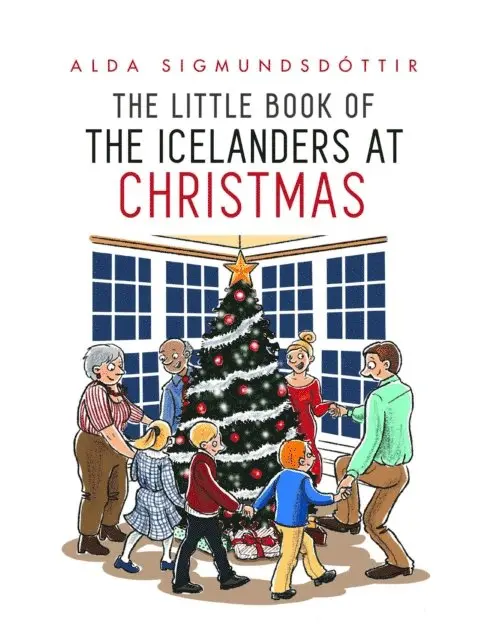
Ask any Icelander and they will tell you. It is a time of year when everything pulsates with vibrant activity, and the nation delights in those festive traditions that make them a tribe. Music is all around, friends gather, restaurants are filled with people partaking of festive Yuletide offerings, authors are out and about reading from their new works. Everything pulsates with vibrant, happy energy. There is even a word for the gleeful excitement one feels when waiting for Christmas—jólaskap, literally “Christmas mood”.In this book, Alda Sigmundsdóttir invites you on a journey of Iceland’s magical Yuletide season, all the way to New Year’s Eve, and beyond. You will learn about the special foods, traditions, and customs that make Christmas in Iceland so special and meet a colorful cast of characters that are such an integral part of the Yule. In her inimitable style, and using examples from her own life, Alda gives you not only the modern version of Christmas but also the historical and cultural background to many of the traditions that are still observed today.Among the fascinating subjects broached in The Little Book of the Icelanders at Christmas:• All the food: smoked lamb, ptarmigan, Sarah Bernhardt cookies, leaf bread, yum!• Sacred customs: ringing in the Yule, candlelit cemeteries, festive dinners, family traditions• Christmas lights and their importance (because of winter darkness)• Essential Yuletide recipes: Sarah Bernhardt cookies, gingerbread, laufabrauð (leaf bread)• Crazy traditions (eating putrid skate: say no more!)• Books books books (because everyone must get at least one book for Christmas)• The New Year''s blowout (pyrotechnic madness like you’ve never known)• The characters of Yule: Grýla, Leppalúði, Yule Cat, Yule Lads and murdering elves, hello!… and so much more!Excerpt"Quick question: did you receive this book as a Christmas gift?If you answered yes, you will have been party to one of the best-loved Icelandic Yule traditions: giving or receiving a book for Christmas. This tradition is so entrenched in Icelandic society that it feels like it must have been around forever. Not so. It began during World War II, when there were strict limitations on imports, though for some reason the restrictions on imported paper were less severe. The Icelanders were flush with affluence at this time—WWII was referred to as the “blessed war” since the British and later American occupation had brought jobs, and therefore money—but they had few things on which to spend their unprecedented wealth.Except, well, paper. Only, there was not a whole lot you could do with paper, except … print books? Perfect, since the Icelanders were already intensely proud of their literary heritage, associating it with the glory days of the Sagas and Eddas, before the nation was colonized and driven into poverty and humiliation. In no time at all books became extremely popular gifts, and indeed were THE gift to give at Christmas.This custom has remained, and today Iceland publishes more books per capita than any other country in the world, almost all of them in the six-or-so weeks leading up to Christmas. This deluge of books that hits the market at that time is known as jólabókaflóðið, or the Christmas book flood."

251 kr
Skickas inom 3-6 vardagar

249 kr
Skickas inom 3-6 vardagar