The nineteenth-century Métis politician and mystic Louis Riel has emerged as one of the most popular - and elusive - figures in Canadian culture. Since his hanging for treason in 1885, the self-declared David of the New World has been depicted variously as a traitor to Confederation; a French-Canadian and Catholic martyr; a bloodthirsty rebel; a pan-American liberator; a pawn of shadowy white forces; a Prairie political maverick; a First Nations hero; an alienated intellectual; a victim of Western industrial progress; and even a Father of Confederation.Albert Braz synthesizes the available material by and about Riel, including film, sculpture, and cartoons, as well as literature in French and English, and analyzes how an historical figure could be portrayed in such contradictory ways. In light of the fact that most aesthetic representations of Riel bear little resemblance not only to one another but also to their purported model, Braz suggests that they reveal less about Riel than they do about their authors and the society to which they belong. The most comprehensive treatment of the representations of Louis Riel in Canadian literature, The False Traitor will be a seminal work in the study of this popular Canadian figure.
If literature has often informed the creation of a national imaginary—a sense of common history and destiny—it has also complicated, even challenged, the unifying vision assumed in the formation of a national literature and sense of nation. National Literature in Multinational States questions the persistent association of literature and nation-states, contrasting this with the reality of multinational and ethnocultural diversity. The contributors to this collection interrogate concepts and manifestations of nationalism in the context of literary production while evaluating the place of national literatures in multinational states at a time when social unity and political agreement have never been more elusive. The volume strives for synoptic analysis via the complementary, multifaceted treatment of literary creation in several geo-cultural contexts: Canada, the Caribbean, Europe, India, and Nigeria.Contributors: Sabujkoli Bandopadhyay, Albert Braz, Matthew Cormier, Doris Hambuch, Clara A.B. Joseph, Paul D. Morris, Asma Sayed, Matthew Tétreault, Uchechukwu Peter Umezurike, Jerry White
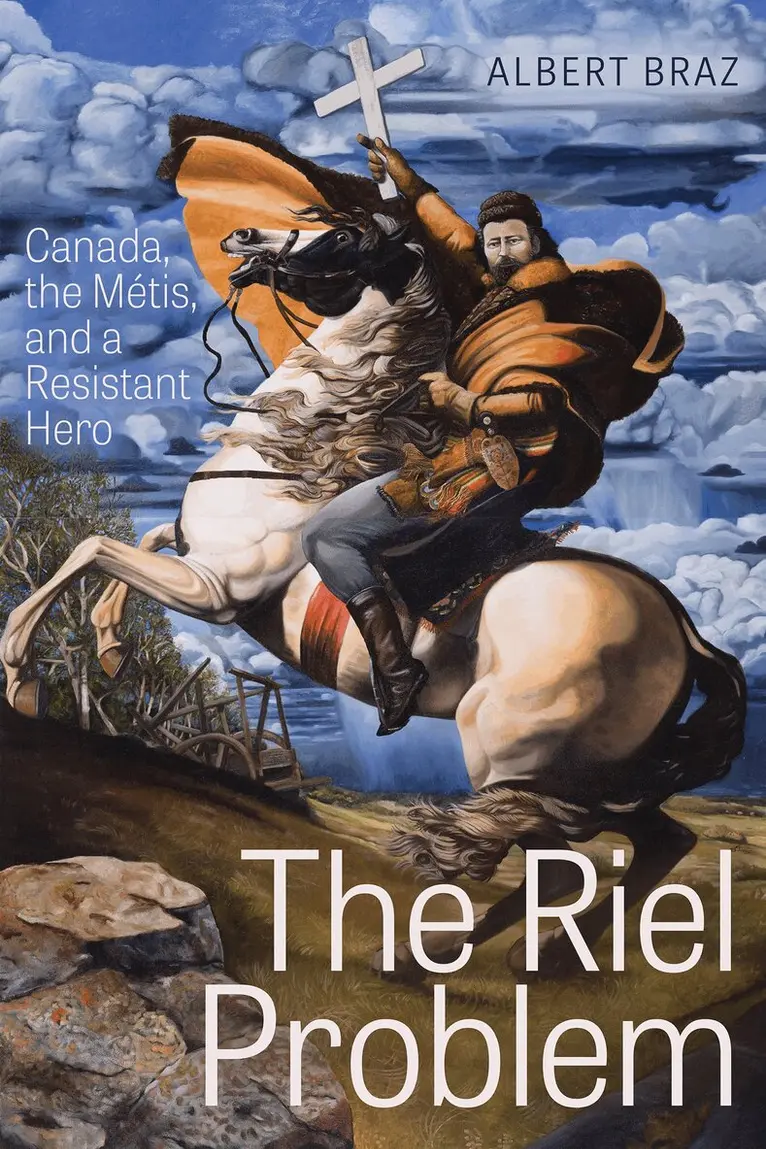
Tracing Louis Riel’s metamorphosis from traitor to hero, Braz argues that, through his writing, Riel resists his portrayal as both a Canadian patriot and a pan-Indigenous leader. After being hanged for high treason in 1885, the Métis politician, poet, and mystic has emerged as a quintessential Canadian champion. The Riel Problem maps this representational shift by examining a series of cultural and scholarly commemorations of Riel since 1967, from a large-scale opera about his life, through the publication of his extant writings, to statues erected in his honour. Braz also probes how aspects of Riel’s life and writing can be problematic for many contemporary Métis artists, scholars, and civic leaders. Analyzing representations of Riel in light of his own writings, the author exposes both the constructedness of the Canadian nation-state and the magnitude of the current historical revisionism when dealing with Riel.
The nineteenth-century Métis politician and mystic Louis Riel has emerged as one of the most popular - and elusive - figures in Canadian culture. Since his hanging for treason in 1885, the self-declared David of the New World has been depicted variously as a traitor to Confederation; a French-Canadian and Catholic martyr; a bloodthirsty rebel; a pan-American liberator; a pawn of shadowy white forces; a Prairie political maverick; a First Nations hero; an alienated intellectual; a victim of Western industrial progress; and even a Father of Confederation.Albert Braz synthesizes the available material by and about Riel, including film, sculpture, and cartoons, as well as literature in French and English, and analyzes how an historical figure could be portrayed in such contradictory ways. In light of the fact that most aesthetic representations of Riel bear little resemblance not only to one another but also to their purported model, Braz suggests that they reveal less about Riel than they do about their authors and the society to which they belong. The most comprehensive treatment of the representations of Louis Riel in Canadian literature, The False Traitor will be a seminal work in the study of this popular Canadian figure.