954 kr
Läs direkt efter köp
954 kr
Läs direkt efter köp
1 500 kr
Skickas inom 7-10 vardagar
1 179 kr
Skickas inom 10-15 vardagar
1 530 kr
Skickas inom 10-15 vardagar
1 015 kr
Läs direkt efter köp
918 kr
Läs direkt efter köp
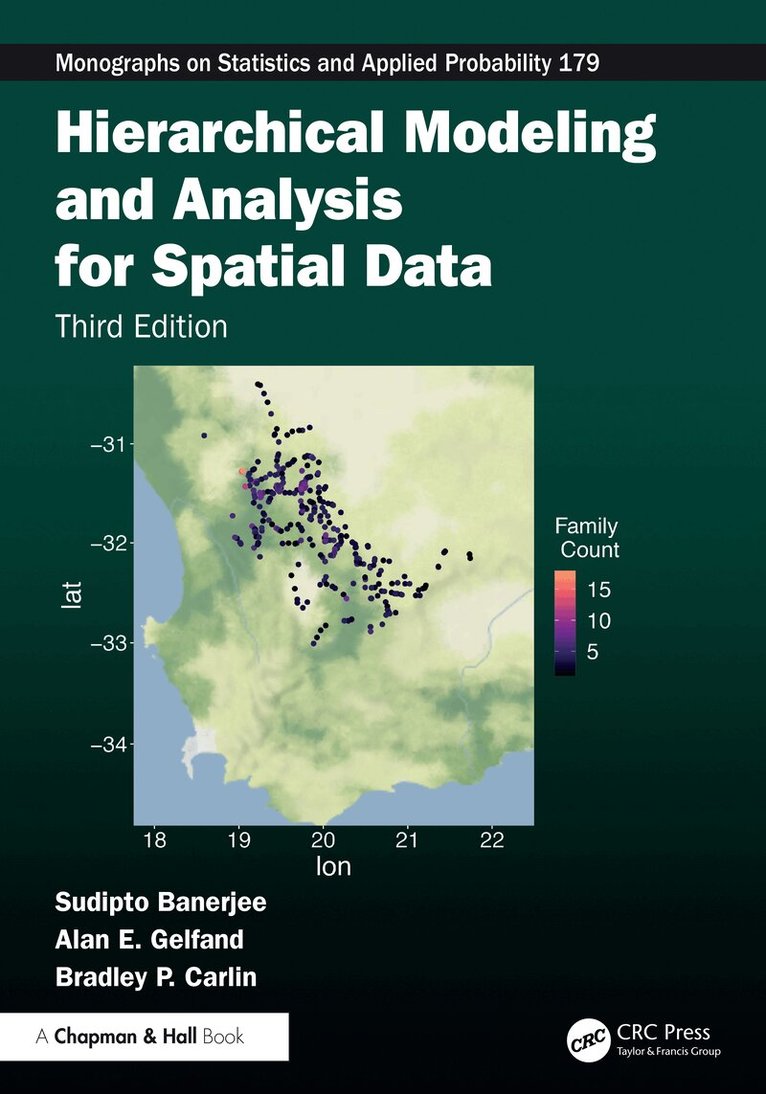
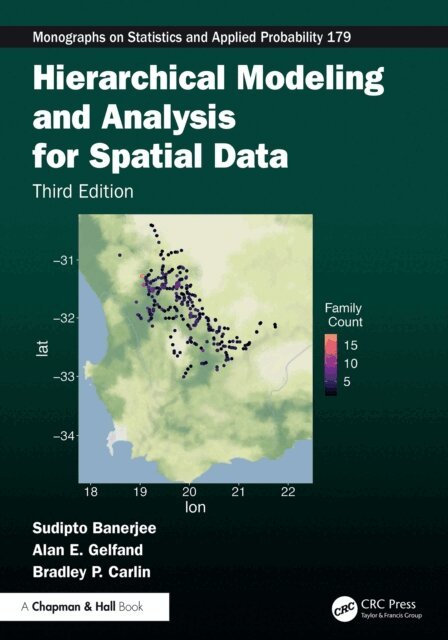
Hierarchical Modeling and Analysis for Spatial Data, Third Edition is the latest edition of this popular and authoritative text on Bayesian modeling and inference for spatial and spatial-temporal data. The text presents a comprehensive and up-to-date treatment of hierarchical and multilevel modeling for spatial and spatio-temporal data within a Bayesian framework. Over the past decade since the second edition, spatial statistics has evolved significantly driven by an explosion in data availability and advances in Bayesian computation. This edition reflects those changes, introducing new methods, expanded applications, and enhanced computational resources to support researchers and practitioners across disciplines, including environmental science, ecology, and public health.
Key features of the third edition:
A dedicated chapter on state-of-the-art Bayesian modeling of large spatial and spatio-temporal datasets Two new chapters on spatial point pattern analysis, covering both foundational and Bayesian perspectives A new chapter on spatial data fusion, integrating diverse spatial data sources from different probabilistic mechanisms An accessible introduction to GPS mapping, geodesic distances, and mathematical cartography An expanded special topics chapter, including spatial challenges with finite population modeling and spatial directional data A thoroughly revised chapter on Bayesian inference, featuring an updated review of modern computational techniques A dedicated GitHub repository providing R programs and solutions to selected exercises, ensuring continued access to evolving software developmentsWith refreshed content throughout, this edition serves as an essential reference for statisticians, data scientists, and researchers working with spatial data. Graduate students and professionals seeking a deep understanding of Bayesian spatial modeling will find this volume an invaluable resource for both theory and practice.

912 kr
Läs direkt efter köp
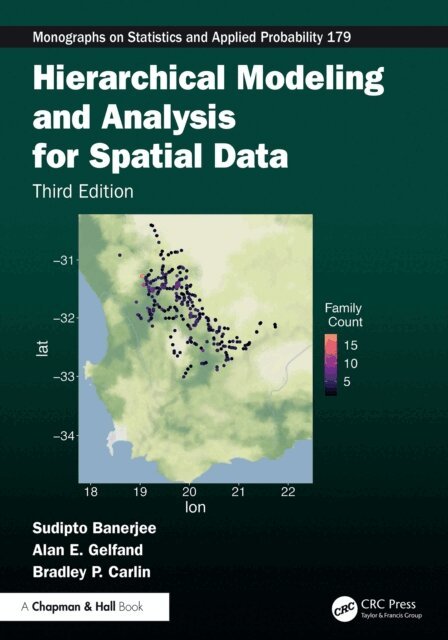
Hierarchical Modeling and Analysis for Spatial Data, Third Edition is the latest edition of this popular and authoritative text on Bayesian modeling and inference for spatial and spatial-temporal data. The text presents a comprehensive and up-to-date treatment of hierarchical and multilevel modeling for spatial and spatio-temporal data within a Bayesian framework. Over the past decade since the second edition, spatial statistics has evolved significantly driven by an explosion in data availability and advances in Bayesian computation. This edition reflects those changes, introducing new methods, expanded applications, and enhanced computational resources to support researchers and practitioners across disciplines, including environmental science, ecology, and public health.
Key features of the third edition:
A dedicated chapter on state-of-the-art Bayesian modeling of large spatial and spatio-temporal datasets Two new chapters on spatial point pattern analysis, covering both foundational and Bayesian perspectives A new chapter on spatial data fusion, integrating diverse spatial data sources from different probabilistic mechanisms An accessible introduction to GPS mapping, geodesic distances, and mathematical cartography An expanded special topics chapter, including spatial challenges with finite population modeling and spatial directional data A thoroughly revised chapter on Bayesian inference, featuring an updated review of modern computational techniques A dedicated GitHub repository providing R programs and solutions to selected exercises, ensuring continued access to evolving software developmentsWith refreshed content throughout, this edition serves as an essential reference for statisticians, data scientists, and researchers working with spatial data. Graduate students and professionals seeking a deep understanding of Bayesian spatial modeling will find this volume an invaluable resource for both theory and practice.
1 385 kr
Läs direkt efter köp
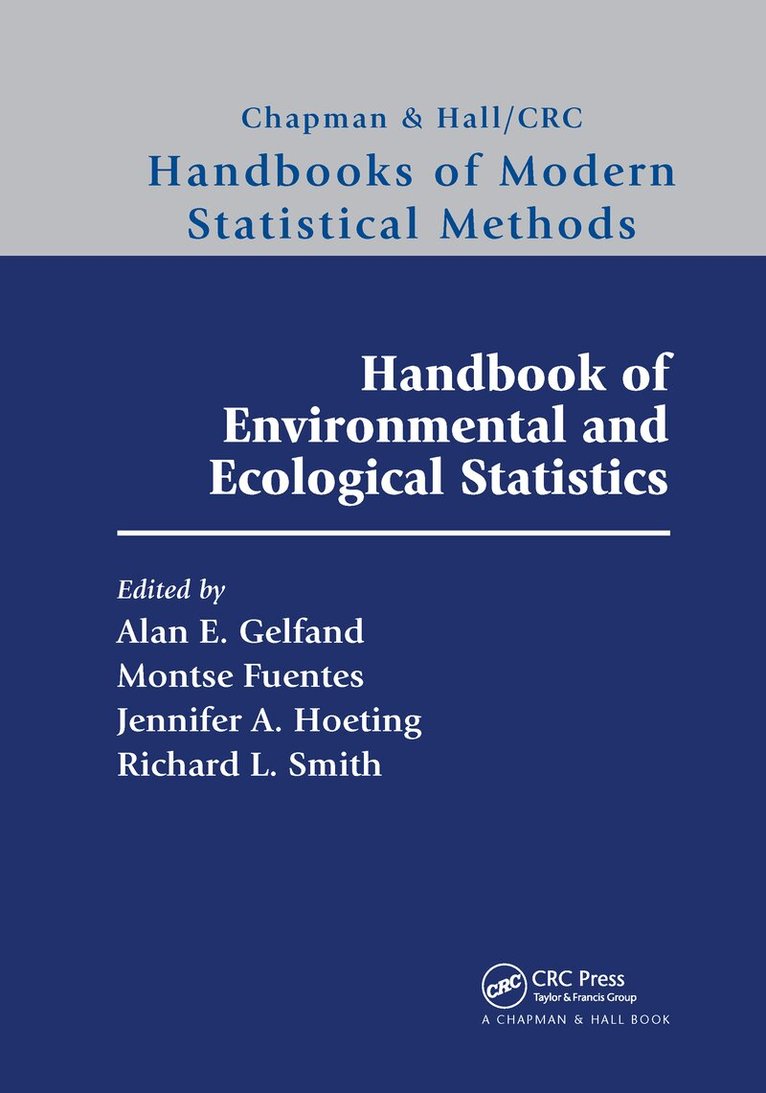
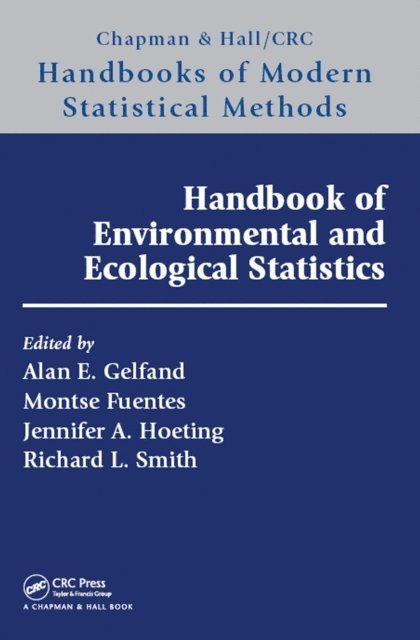
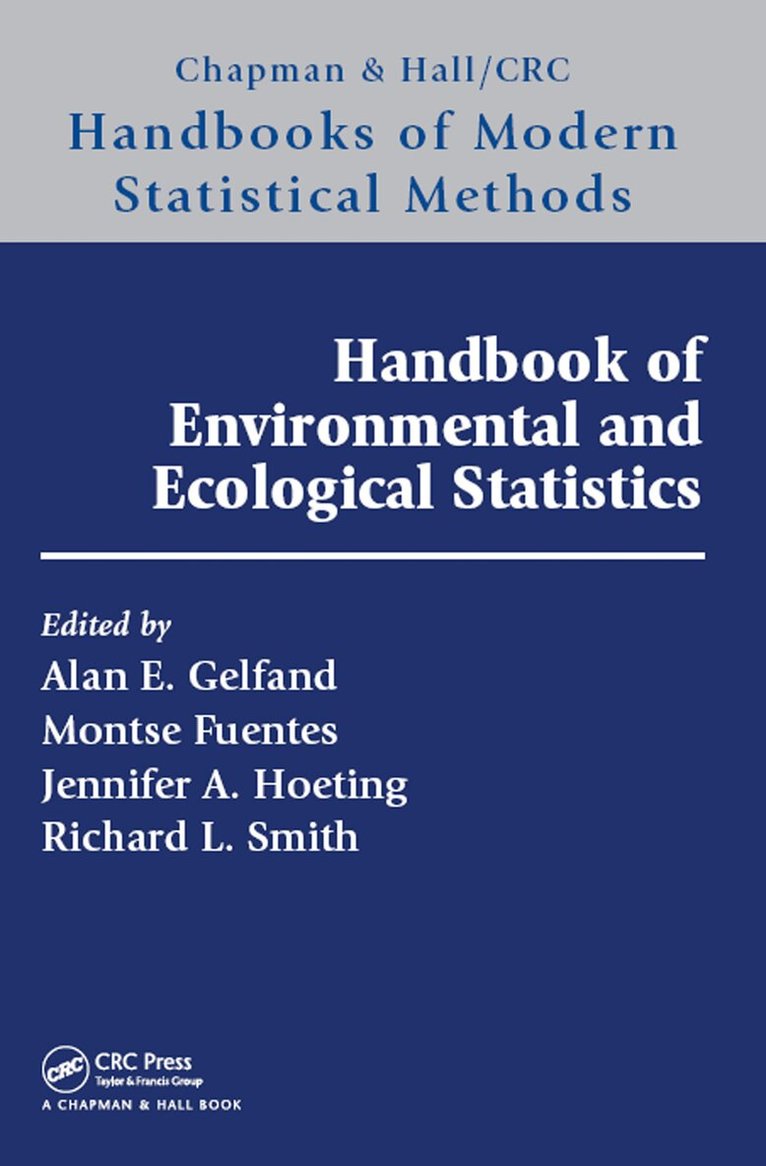
This handbook focuses on the enormous literature applying statistical methodology and modelling to environmental and ecological processes. The 21st century statistics community has become increasingly interdisciplinary, bringing a large collection of modern tools to all areas of application in environmental processes. In addition, the environmental community has substantially increased its scope of data collection including observational data, satellite-derived data, and computer model output. The resultant impact in this latter community has been substantial; no longer are simple regression and analysis of variance methods adequate. The contribution of this handbook is to assemble a state-of-the-art view of this interface.
Features:
An internationally regarded editorial team.
A distinguished collection of contributors.
A thoroughly contemporary treatment of a substantial interdisciplinary interface.
Written to engage both statisticians as well as quantitative environmental researchers.
34 chapters covering methodology, ecological processes, environmental exposure, and statistical methods in climate science.
2 515 kr
Skickas inom 10-15 vardagar
1 022 kr
Läs direkt efter köp
1 015 kr
Läs direkt efter köp
3 815 kr
Skickas inom 10-15 vardagar
1 385 kr
Läs direkt efter köp
This handbook focuses on the enormous literature applying statistical methodology and modelling to environmental and ecological processes. The 21st century statistics community has become increasingly interdisciplinary, bringing a large collection of modern tools to all areas of application in environmental processes. In addition, the environmental community has substantially increased its scope of data collection including observational data, satellite-derived data, and computer model output. The resultant impact in this latter community has been substantial; no longer are simple regression and analysis of variance methods adequate. The contribution of this handbook is to assemble a state-of-the-art view of this interface.
Features:
An internationally regarded editorial team.
A distinguished collection of contributors.
A thoroughly contemporary treatment of a substantial interdisciplinary interface.
Written to engage both statisticians as well as quantitative environmental researchers.
34 chapters covering methodology, ecological processes, environmental exposure, and statistical methods in climate science.
1 076 kr
Tillfälligt slut