2 435 kr
Skickas inom 11-20 vardagar
2 435 kr
Skickas inom 11-20 vardagar
3 392 kr
Läs direkt efter köp
1 032 kr
Skickas inom 10-15 vardagar
1 975 kr
Kommande
2 043 kr
Kommande
2 300 kr
Skickas inom 7-10 vardagar
2 656 kr
Läs direkt efter köp
A comprehensive guide to an explosively popular and transformative technology
Nanotechnology has revolutionized the manipulation of matter at the molecular level, with extraordinary consequences for a huge range of technological and scientific fields. Metallic, magnetic and carbon-based nanomaterials have been at the forefront of this revolution, with their impact felt especially strongly in biomedical industries. The future of drug delivery, imaging, diagnostics, and more will be transformed by nanotechnology and its ever-growing applications.
Metallic, Magnetic and Carbon-Based Nanomaterials offers a comprehensive introduction to these materials and their recent developments. Beginning with the foundational concepts of nanotechnology, its characterization, and its methods, the book moves through major categories of nanotechnology in turn. Detailed discussion of applications and future areas of research rounds out an indispensable volume.
Metallic, Magnetic and Carbon-Based Nanomaterials readers will also find:
Fully up-to-date data on major nanotechnology synthesis techniquesDetailed discussion of nanotechnologies including quantum dots, magnetic nanoparticles, graphene, and many moreAnalysis of applications including tumor biology investigation, in vivo animal imaging, and othersMetallic, Magnetic and Carbon-Based Nanomaterials is ideal for graduate students in pharmaceutical sciences, biomedical engineering, and materials sciences. It is also a useful reference book for researchers working in the areas of biomedical engineering and nanomaterials synthesis, as well as those working in toxicology, especially nanotoxicology.
1 248 kr
Läs direkt efter köp
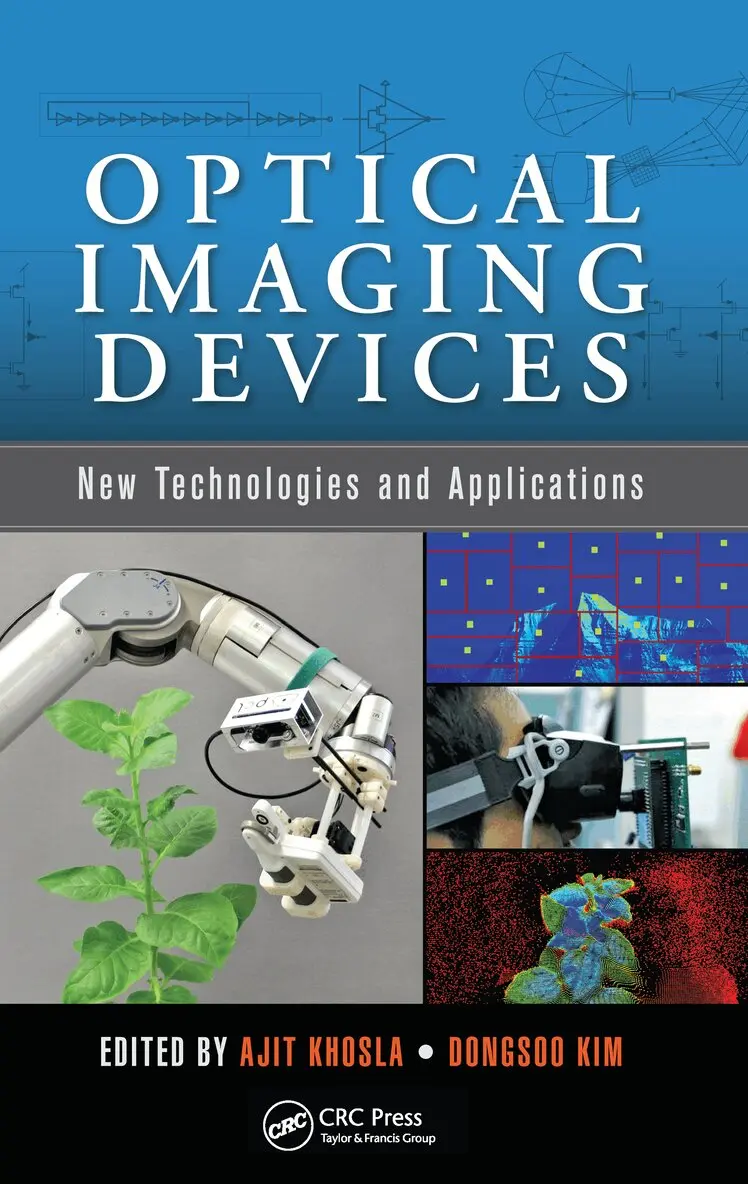
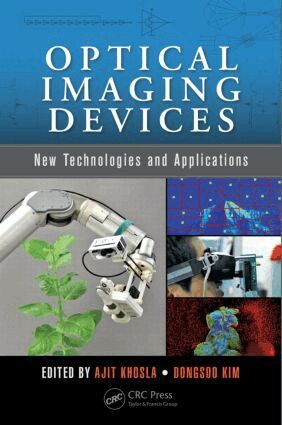
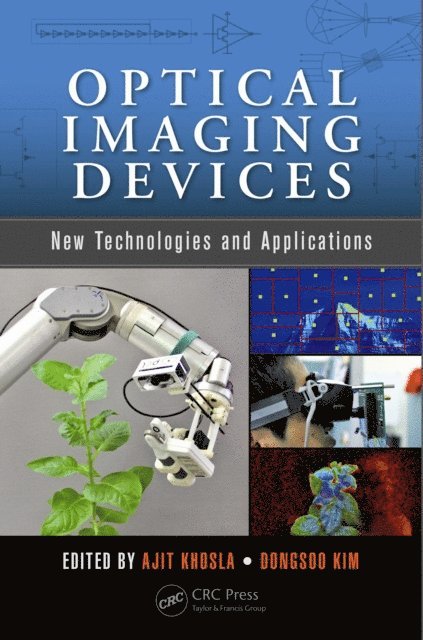
Optical Imaging Devices: New Technologies and Applications delivers a comprehensive introduction to optical imaging and sensing, from devices to system-level applications. Drawing upon the extensive academic and industrial experience of its prestigious editors and renowned chapter authors, this authoritative text:
Explains the physical principles of optical imaging and sensing Covers topics such as silicon-based imaging characteristics, nanophotonic phased arrays, thin-film sensors, label-free DNA sensors, and in vivo flow cytometry Presents the contributions of leading researchers, real-world examples from biomedicine, recommendations for further reading, and all measurements in SI unitsOptical Imaging Devices: New Technologies and Applications provides an essential understanding of the design, operation, and practical applications of optical imaging and sensing systems, making it a handy reference for students and practitioners alike.
4 665 kr
Skickas inom 11-20 vardagar
5 245 kr
Läs direkt efter köp
5 323 kr
Läs direkt efter köp
2 448 kr
Kommande
2 760 kr
Skickas inom 10-15 vardagar
1 221 kr
Läs direkt efter köp
Optical Imaging Devices: New Technologies and Applications delivers a comprehensive introduction to optical imaging and sensing, from devices to system-level applications. Drawing upon the extensive academic and industrial experience of its prestigious editors and renowned chapter authors, this authoritative text:
Explains the physical principles of optical imaging and sensing Covers topics such as silicon-based imaging characteristics, nanophotonic phased arrays, thin-film sensors, label-free DNA sensors, and in vivo flow cytometry Presents the contributions of leading researchers, real-world examples from biomedicine, recommendations for further reading, and all measurements in SI unitsOptical Imaging Devices: New Technologies and Applications provides an essential understanding of the design, operation, and practical applications of optical imaging and sensing systems, making it a handy reference for students and practitioners alike.
1 317 kr
Kommande
By providing a comprehensive yet accessible guide to both the theory and practical implementation of data augmentation, this book will equip researchers, engineers, and practitioners to enhance their sensor systems, ensuring more accurate, robust, and scalable predictive models that can handle complex real-world scenarios.
In recent years, chemical gas sensors have become crucial to diverse real-world applications, from monitoring air quality in urban areas to ensuring safety in industrial environments. However, one of the most critical limitations of these sensors is the challenge of obtaining sufficient, high-quality data to train predictive models. Sensor data collection is often labor intensive, costly, and limited in scope, particularly when attempting to capture the dynamic behavior of multiple gases in varying environmental conditions. These challenges make it difficult to build predictive models that are widely effective in real-world scenarios, where gas concentrations fluctuate unpredictably.
This book aims to tackle this issue by providing a comprehensive introduction to data augmentation techniques in the context of chemical gas sensing. The objective is to show how artificial data generation can overcome the limitations of real-world sensor data, thus enhancing the accuracy and generalization of machine learning models. The book will cover traditional data augmentation methods, such as geometric transformations as well as more advanced techniques like recurrent neural networks (RNNs), Long Short-Term Memory (LSTM) networks, Generative Adversarial Networks (GANs), and Variational Autoencoders (VAEs).
What makes this book unique is its blend of theory and hands-on application. It will provide a solid foundation for readers who may not have advanced knowledge in machine learning, making it accessible to those with basic programming skills. Each chapter will not only explain the theoretical concepts behind various data augmentation methods but also provide practical and ready-to-use code snippets in Python. These code examples will allow readers to quickly implement and test the techniques described, enabling them to apply the methods directly to real-world sensor data.
John Wiley and Sons Ltd
2 713 kr
Tillfälligt slut