150 kr
Skickas inom 7-10 vardagar
150 kr
Skickas inom 7-10 vardagar
45 kr
Läs direkt efter köp
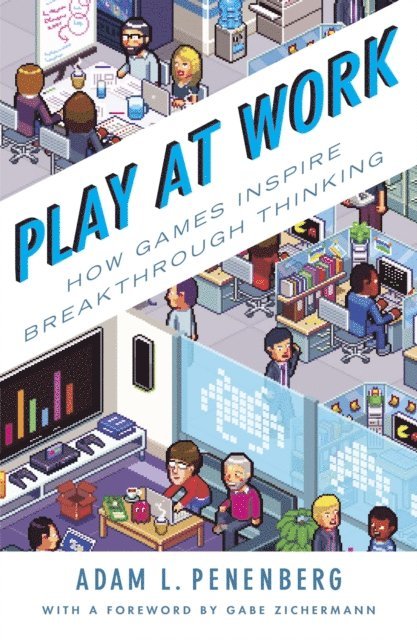
Once thought to be nothing more than diversions for children and nerds, games have become an integral part of everyday life. Educators are trying to make learning more fun by introducing games into the classroom while cutting-edge managers are doing the same in the workplace. Doctors, scientists, and entrepreneurs are deploying games to help solve some of the world''s most pressing problems.But according to Adam Penenberg, it''s not the games themselves that improve our lives, but rather smart game design and its impact on the brain that can lead us to become immersed in a task we find enjoyable. The individuals and institutions that have used games to achieve this effect are often rewarded with astounding results.Examples include:* A software developer who changed Microsoft''s mind-numbing code review process into a fun, team based game.* Google, which indexed its massive image database with unpaid volunteers by turning the process into a game.* A medical student who created a simple game that helped her overcome distractions and dramatically increased her productivity.Drawing on the latest brain science on attention and engagement plus his own firsthand reporting, Penenberg shows how organizations like Google, Microsoft, hospitals, and the military have used game design in bold new ways.
103 kr
Kommande
236 kr
Läs direkt efter köp
Harnessing the power of games sounds like a New-Age fantasy, or at least a fad that’s only for hip start-ups run by millennials in Silicon Valley. But according to Adam L. Penenberg, the use of smart game design in the workplace and beyond is taking hold in every sector of the economy, and the companies that apply it are witnessing unprecedented results. “Gamification” isn’t just for consumers
chasing reward points anymore. It’s transforming, well, just about everything.
Penenberg explores how, by understanding the way successful games are designed, we can apply them to become more efficient, come up with new ideas, and achieve even the most daunting goals. He shows how game mechanics are being applied to make employees happier and more motivated, improve worker safety, create better products, and improve customer service.
For example, Microsoft has transformed an essential but mind-numbing task—debugging software—into a game by having employees compete and collaborate to find more glitches in less time. Meanwhile, Local Motors, an independent automaker based in Arizona, crowdsources designs from car enthusiasts all over the world by having them compete for money and recognition within the community. As a result, the company was able to bring a cutting-edge vehicle to market in less time and at far less cost than the Big Three automakers.
These are just two examples of companies that have tapped the characteristics that make games so addictive and satisfying. Penenberg also takes us inside organizations that have introduced play at work to train surgeons, aid in physical therapy, translate the Internet, solve vexing scientific riddles, and digitize books from the nineteenth century. Drawing on the latest brain science as well as his firsthand reporting from these cutting-edge companies, Penenberg offers a powerful solution for businesses and organizations of all stripes and sizes.
61 kr
Läs direkt efter köp
92 kr
Läs direkt efter köp
60 kr
Läs direkt efter köp
55 kr
Läs direkt efter köp
207 kr
Skickas inom 7-10 vardagar
235 kr
Skickas inom 7-10 vardagar
182 kr
Skickas inom 7-10 vardagar
173 kr
Skickas inom 7-10 vardagar