The Supreme Court’s intervention in the 2000 election will shape American law and democracy long after George W. Bush has left the White House. This vitally important book brings together a broad range of preeminent legal scholars who address the larger questions raised by the Supreme Court’s actions. Did the Court’s decision violate the rule of law? Did it inaugurate an era of super-politicized jurisprudence? How should Bush v. Gore change the terms of debate over the next round of Supreme Court appointments?The contributors—Bruce Ackerman, Jack Balkin, Guido Calabresi, Steven Calabresi, Owen Fiss, Charles Fried, Robert Post, Margaret Jane Radin, Jeffrey Rosen, Jed Rubenfeld, Cass Sunstein, Laurence Tribe, and Mark Tushnet—represent a broad political spectrum. Their reactions to the case are varied and surprising, filled with sparkling argument and spirited debate. This is a must-read book for thoughtful Americans everywhere.
In this provocative book, two leading law professors challenge the existing campaign reform agenda and present a new initiative that avoids the mistakes of the past.Bruce Ackerman and Ian Ayres build on the example of the secret ballot and propose a system of “secret donation booths” for campaign contributions. They unveil a plan in which the government provides each voter with a special credit card account containing fifty “Patriot dollars” for presidential elections. To use this money, citizens go to their local ATM machine and anonymously send their Patriot dollars to their favorite candidates or political organizations. Americans are free to make additional contributions, but they must also give these gifts anonymously. Because candidates cannot identify who provided the funds, it will be much harder for big contributors to buy political influence. And the need for politicians to compete for the Patriot dollars will give much more power to the people.Ackerman and Ayres work out the operating details of their plan, anticipate problems, design safeguards, suggest overseers, and show how their proposals satisfy the most stringent constitutional requirements. They conclude with a model statute that could serve as the basis of a serious congressional effort to restore Americans’ faith in democratic politics.
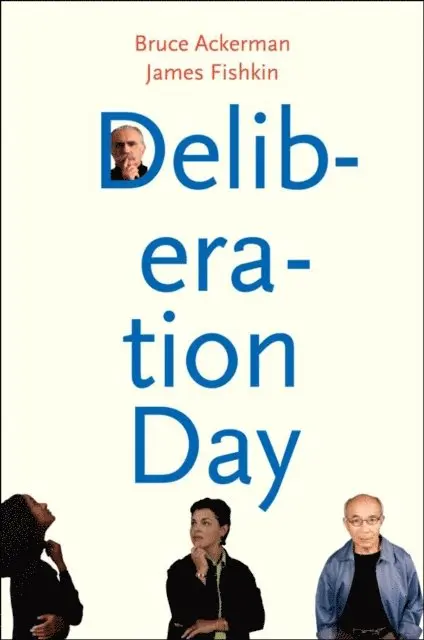
Two leading political thinkers offer an audacious proposal to energize the electoral process Bruce Ackerman and James Fishkin argue that Americans can revitalize their democracy and break the cycle of cynical media manipulation that is crippling public life. They propose a new national holiday—Deliberation Day—for each presidential election year. On this day people throughout the country will meet in public spaces and engage in structured debates about issues that divide the candidates in the upcoming presidential election.Deliberation Day isa bold new proposal, but it builds on a host of smaller experiments. Over the past decade, Fishkin has initiated Deliberative Polling events in the United States and elsewhere that bring random and representative samples of voters together for discussion of key political issues. In these events, participants greatly increase their understanding of the issues and often change their minds on the best course of action.Deliberation Day isnot merely a novel idea but a feasible reform. Ackerman and Fishkin consider the economic, organizational, and political questions raised by their proposal and explore its relationship to the larger ideals of liberal democracy.; In this provocative book, two leading political thinkers offer a proposal to energize the electoral process-a new national holiday to be held each presidential election year, during which people engage in structured debates about issues and candidates. They show the feasibility of their idea by discussing the experiments that have preceded it and the economic, organizational, and political issues it raises.
Terrorist attacks regularly trigger the enactment of repressive laws, setting in motion a vicious cycle that threatens to devastate civil liberties over the twenty-first century. In this clear-sighted book, Bruce Ackerman peers into the future and presents an intuitive, practical alternative. He proposes an “emergency constitution” that enables government to take extraordinary actions to prevent a second strike in the short run while prohibiting permanent measures that destroy our freedom over the longer run.Ackerman’s “emergency constitution” exposes the dangers lurking behind the popular notion that we are fighting a “war” on terror. He criticizes court opinions that have adopted the war framework, showing how they uncritically accept extreme presidential claims to sweeping powers. Instead of expanding the authority of the commander in chief, the courts should encourage new forms of checks and balances that allow for decisive, but carefully controlled, presidential action during emergencies. In making his case, Ackerman explores emergency provisions in constitutions of nations ranging from France to South Africa, retaining aspects that work and adapting others. He shows that no country today is well equipped to both fend off terrorists and preserve fundamental liberties, drawing particular attention to recent British reactions to terrorist attacks. Written for thoughtful citizens throughout the world, this book is democracy's constitutional reply to political excess in the sinister era of terrorism.
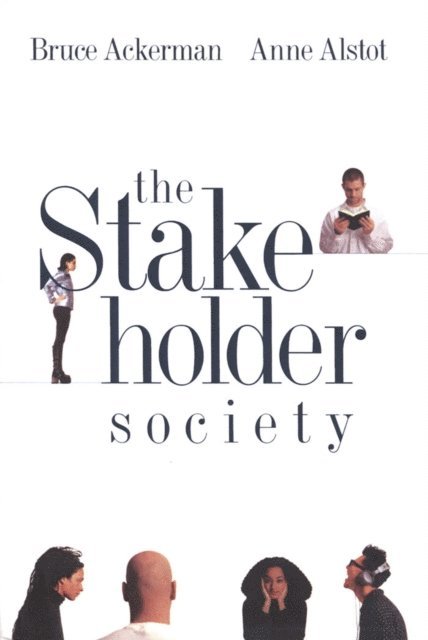
A quarter century of trickle-down economics has failed. Economic inequality in the United States has dramatically increased. Many, alas, seem resigned to this growing chasm between rich and poor. But what would happen, ask Bruce Ackerman and Anne Alstott, if America were to make good on its promise of equal opportunity by granting every qualifying young adult a citizen's stake of eighty thousand dollars? Ackerman and Alstott argue that every American citizen has the right to share in the wealth accumulated by preceding generations. The distribution of wealth is currently so skewed that the stakeholding fund could be financed by an annual tax of two percent on the property owned by the richest forty percent of Americans.Ackerman and Alstott analyze their initiative from moral, political, economic, legal, and human perspectives. By summoning the political will to initiate stakeholding, they argue, we can achieve a society that is more democratic, productive, and free. Their simple but realistic plan would enhance each young adultis real ability to shape his or her own future. It is, in short, an idea that should be taken seriously by anyone concerned with citizenship, welfare dependency, or social justice in America today.
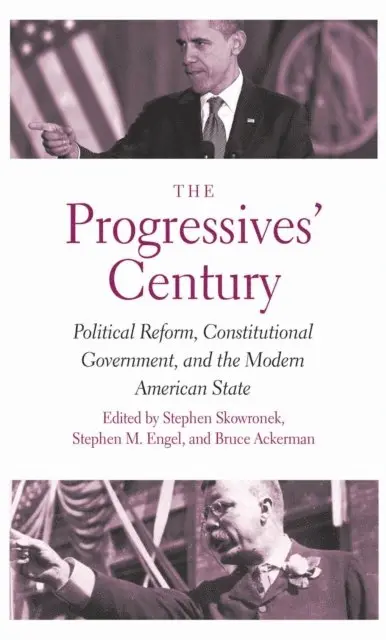
A landmark work on how the Progressive Era redefined the playing field for conservatives and liberals alike. During the 1912 presidential campaign, Progressivism emerged as an alternative to what was then considered an outmoded system of government. A century later, a new generation of conservatives criticizes Progressivism as having abandoned America’s founding values and miring the government in institutional gridlock. In this paradigm-shifting book, renowned contributors examine a broad range of issues, including Progressives’ interpretation of the Constitution, their expansion and redistribution of individual rights, and reforms meant to shift power from political parties to ordinary citizens.
One of our most influential political theorists offers a boundary-breaking—and liberating—perspective on the meaning of life in the internet age Human beings have taken one thing for granted since our earliest days: we are bodily creatures dealing with one another on a face-to-face basis. The internet has shattered this fundamental feature of human existence. We are suddenly living our lives in two worlds at once—shifting endlessly from virtual to physical reality as we reach out to others. Worse yet, we are developing different personal identities in our two worlds. We say and do things in virtual reality that flatly contradict our face-to-face commitments to family, friends, and fellow-workers—and vice versa. The Postmodern Predicament explores these dilemmas at each phase of the life cycle, beginning at the moment a young child picks up a cell phone. The existentialist tradition of the twentieth century provides a precious perspective on our postmodern dilemmas. Thinkers and doers like Simone de Beauvoir and Jean-Paul Sartre considered the fragmentation of modern life as a central source of contemporary anxieties. Like them, Ackerman views the challenges of the internet age as a political, no less than personal, problem—and proposes concrete reforms that that could mobilize broad-based support for democracy against demagogic assaults on its very foundations.