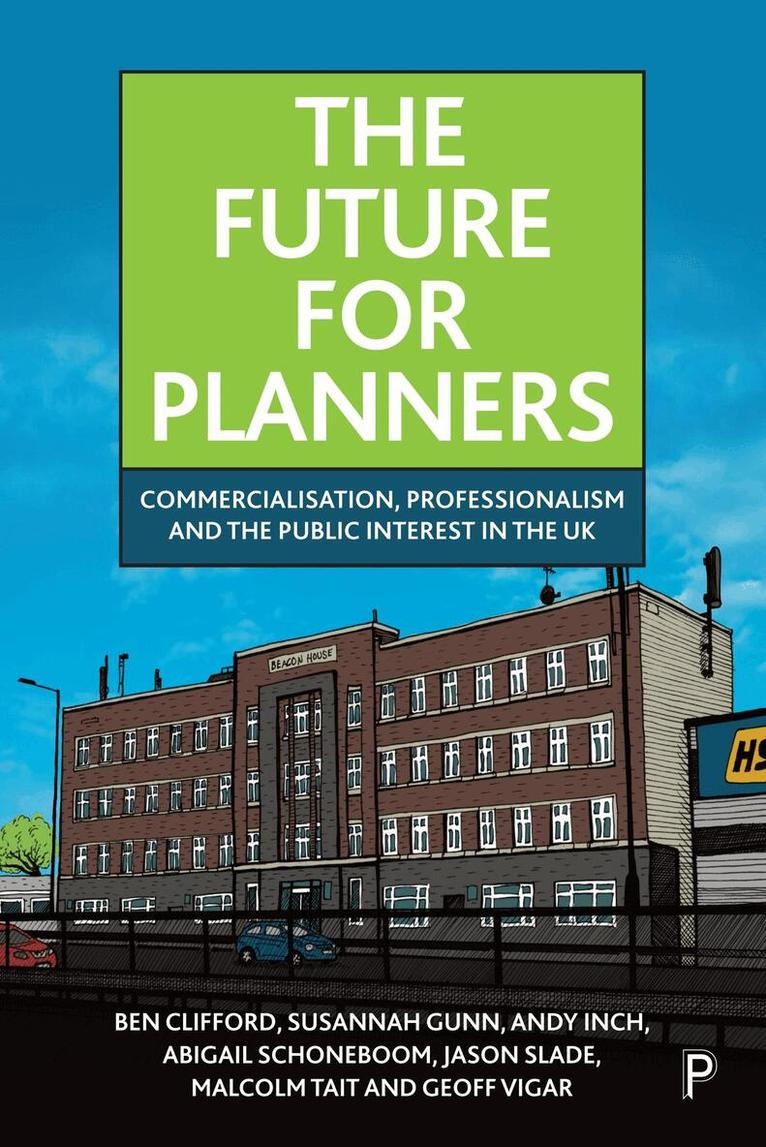
Presenting the complexities of doing planning work, with all its attendant moral and practical dilemmas, this rich ethnographic study analyses how places are made through stories of four diverse public and private sector working environments.The book provides a unique insight for educators, students and researchers into the everyday lives of planners and those in associated built environment occupations. This exceptional account of the micro-politics of a knowledge-intensive profession also provides an excellent resource for sociologists of contemporary work. The authors use team ethnography to push the methodological frontiers of planning research and to advance organisational ethnography into new areas.
Winner of the Royal Town Planning Institute Patsy Healey Award for Academic Excellence 2025.Spatial planning is at a crossroads, with government reform undermining the traditional vision of state-employed planners making decisions about urban development in a unified public interest. Nearly half of UK planners are now employed in the private sector, with complex inter-relations between the sectors including supplying outsourced services to local authorities struggling with centrally-imposed budget cuts. Drawing on new empirical data from a major research project, ‘Working in the Public Interest’, this book reveals what it’s like to be a UK planner in the early 21st century, and how the profession can fulfil its potential for the benefit of society and the environment.