266 kr
Skickas inom 7-10 vardagar
266 kr
Skickas inom 7-10 vardagar
2 526 kr
Skickas inom 10-15 vardagar
551 kr
Skickas inom 10-15 vardagar
1 004 kr
Läs direkt efter köp
1 004 kr
Läs direkt efter köp
266 kr
Skickas inom 7-10 vardagar
794 kr
Skickas inom 7-10 vardagar
1 270 kr
Skickas inom 7-10 vardagar
430 kr
Läs direkt efter köp
504 kr
Skickas inom 10-15 vardagar
754 kr
Skickas inom 10-15 vardagar
754 kr
Skickas inom 10-15 vardagar
754 kr
Skickas inom 10-15 vardagar
857 kr
Skickas inom 10-15 vardagar
794 kr
Skickas inom 10-15 vardagar
710 kr
Skickas inom 10-15 vardagar
Nuclear power plants, new vaccines and drugs, pesticides designed to improve agricultural production, and a plethora of other technological advances hold great promise of improving the quality of human life, but also pose great risks to human well-being.
826 kr
Läs direkt efter köp
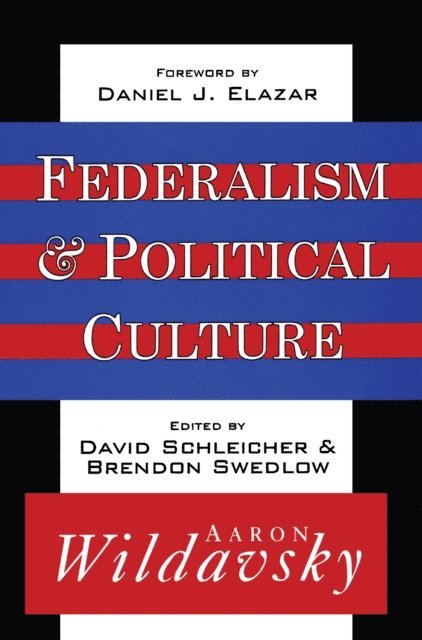
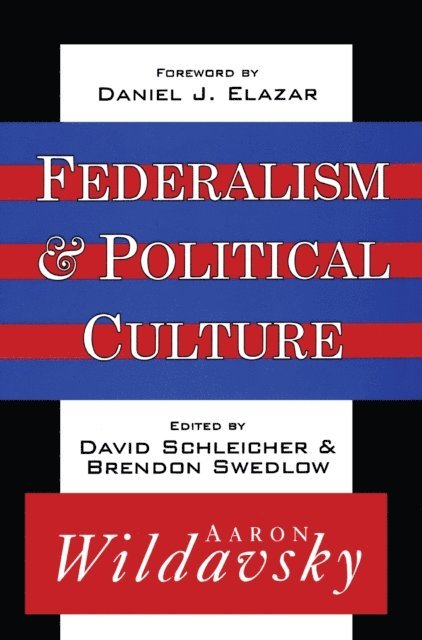
Aaron Wildavsky well understood that federalism is about freedom and diversity - not hierarchy and decentralization. His was an intensely normative concern with the promise of federalism and its abandonment in the United States. Over time, he became increasingly focused on political culture, federalism, and the Western domains of social life as fields of cultural competition. Although his interest in federalism was overshadowed by his work on political culture, it remained a visible theme in his writing. Federalism and Political Culture is a collection of Wildavsky''s essays on federalism over the latter part of his career. It is the second in a series, of his posthumous collected writings. Federalism is not a conventional collection on comparative federal systems, but deals with what federalism means, how it should work, and how it has been abused by those in power who protested their commitment to federal principles and practices but acted otherwise. Wildavsky''s analyses concentrate mainly on American federalism after the Great Society of the 1960s which brought major changes to the American federal system. The essays trace the progress of his thought as he first argues that true federalism is noncentralization, then to federalism as competition, and then combines both in reasserting that real federalism is possible only in a confederation.
754 kr
Skickas inom 10-15 vardagar
754 kr
Skickas inom 10-15 vardagar
2 526 kr
Skickas inom 10-15 vardagar
2 526 kr
Skickas inom 10-15 vardagar
2 455 kr
Skickas inom 10-15 vardagar
2 526 kr
Skickas inom 10-15 vardagar
2 526 kr
Skickas inom 10-15 vardagar
2 526 kr
Skickas inom 10-15 vardagar
2 526 kr
Skickas inom 10-15 vardagar
1 221 kr
Läs direkt efter köp
779 kr
Läs direkt efter köp
883 kr
Läs direkt efter köp
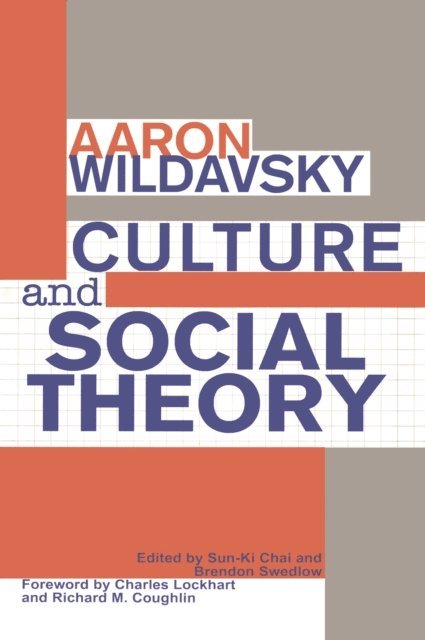
Aaron Wildavsky, along with Mary Douglas, identified what they called grid-group theory. Wildavsky began calling this "cultural theory," and applied it to an astounding array of subjects. The essays in this volume exemplify the theory''s potential contributions to three seemingly disparate, but related, areas: the social construction of meaning, normative/analytic political philosophy, and a theory of rational choices. This book is the first in a series of Aaron Wildavsky''s collected writings being published posthumously by Transaction. Wildavsky selected, sequenced, and grouped all but three of the essays included in Culture and Social Theory prior to his death. Some are presented here for the first time. Wildavsky''s cultural theory provides ways to organize and interpret the world.
In the first section, he shows how social scientists, particularly economists and sociologists, apply the theory. Wildavsky argues that concepts such as externalities, public goods, altruism, and even risk and rape are tools of rival, ubiquitous cultures engaged in perpetual struggle with one another. The second section deals with cultural theory as a way to interpret the works of normative and analytic political philosophers, including Thomas Hobbes and John Stuart Mill, on competing human objectives. Wildavsky argues that particular types of interaction among a society''s cultures are necessary for effective realization of basic concepts such as democracy. In the third section, Wildavsky applies cultural theory in conjunction with instrumental rationality, the former as a theory of preference formation, the latter as a device for realizing preferences efficiently. High-priority objectives, and thus the character of norms and rational action, shift across cultures. The world and its various elements comprise a complex, frequently changing, and thus ambiguous reality, nowhere more so than in the dynamic contours of the United States. For cultural theory, individualistic, hierarchical, and egalitarian interpretations of the world are the only ones capable of forming and sustaining institutions and related patterns of social relations that will support human social groups.
Wildavsky''s central objective is to strip away the camouflage and to reveal varying domains of social life as fields of cultural competition. Culture and Social Theory will be a necessary addition to the libraries of political scientists, economists, and policymakers, not to mention all those who admire Aaron Wildavsky and his work.