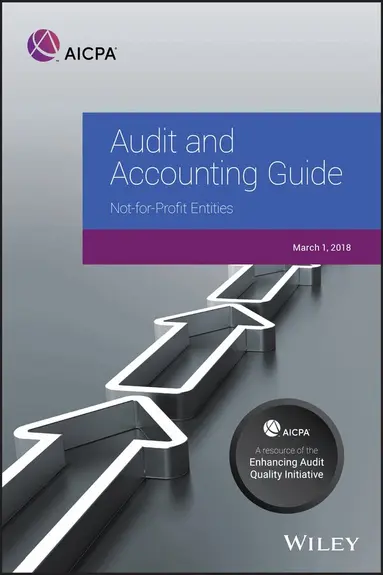
Auditing and Accounting Guide
Not-for-Profit Entities, 2017
1 505 kr
Tillfälligt slut. Bevaka för att få ett mejl när produkten kan beställas.
Fler format och utgåvor
Beskrivning
Produktinformation
- Utgivningsdatum:2017-10-31
- Språk:Engelska
- ISBN:9781119449812
- Förlag:John Wiley & Sons Inc
- Serie:AICPA Audit and Accounting Guide
- Dimensioner:150 x 250 x 15 mm
Utforska kategorier
Mer om författaren
Founded in 1887, the American Institute of Certified Public Accountants (AICPA) represents the CPA and accounting profession nationally and globally regarding rule-making and standard-setting, and serves as an advocate before legislative bodies, public interest groups, and other professional organizations. The AICPA develops standards for audits of private companies and other services by CPAs; provides educational guidance materials to its members; develops and grades the Uniform CPA Examination; and monitors and enforces compliance with the accountingprofession's technical and ethical standards.The AICPA's founding estabiished accountancy as a profession distinguished by rigorous educational requirements, high professional, standards, a strict code of professional ethics, a licensing status and commitment to serving the public interest.
Innehållsförteckning
- Table of Contents xviiChapter Paragraph1 Introduction 01-27Scope 01-12Entities 01-06Basis of Accounting 07-10Level of Service 11-12GAAP for NFPs 13-19Fund Accounting and Net Asset Classes 20-25Other Resources for Financial Reporting by NFPs 26-272 General Auditing Considerations 01-150Overview 01-02Purpose of an Audit of Financial Statements 03-08Audit Risk 05-08Terms of Engagement 09-11Audit Planning Considerations 12-59Group Audits 14-18Using the Work of an Auditor’s Specialist 19-24Materiality 25-33Related-Party Transactions 34-37Consideration of Errors and Fraud 38-41Compliance With Laws and Regulations 42-56Processing of Transactions by Service Organizations 57-59Use of Assertions in Assessment of Risks of Material Misstatement 60-64Risk Assessment Procedures 65-88Risk Assessment Procedures and Related Activities 67-69Analytical Procedures 70-72Discussion Among the Audit Team 73Understanding of the Entity and Its Environment, Including the Entity’s Internal Control 74-88Using Risk Assessment to Design Further Audit Procedures 89-111Identifying and Assessing the Risks of Material Misstatement 90-92Risks That Require Special Audit Consideration 93-94Designing and Performing Further Audit Procedures 95-110Evaluating the Sufficiency and Appropriateness of Audit Evidence 111Evaluation of Misstatements Identified During the Audit 112-114Communication With Those Charged With Governance 115-121Completing the Audit 122-149Going-Concern Considerations 122-132Written Representations 133-141Audit Documentation 142-149Appendix A—Consideration of Fraud in a Financial Statement Audit 1503 Financial Statements, the Reporting Entity, and General FinancialReporting Matters 01-193Introduction 01-05Statement of Financial Position 06-27Effects of Restrictions, Designations, and Other Limitations on Liquidity 09-23Classification of Net Assets 24-27Statement of Activities 28-45Reporting Expenses, Including in a Statement of Functional Expenses 40-45Statement of Cash Flows 46-54Comparative Financial Information 55-57Reporting of Related Entities, Including Consolidation 58-121Relationships With Another NFP 63-71Relationships With a For-Profit Entity 72-99Consolidation of a Special-Purpose Leasing Entity 100-101Consolidated Financial Statements 102-119Parent-Only and Subsidiary-Only Financial Statements 120Combined Financial Statements 121Mergers and Acquisitions 122-135Merger of Not-for-Profit Entities 124-125Acquisition by a Not-for-Profit Entity 126-135Collaborative Arrangements 136-137The Use of Fair Value Measures 138-171Definition of Fair Value 141-147Valuation Approaches and Techniques 148-154The Fair Value Hierarchy 155-158Additional Guidance for Fair Value Measurement in Special Circumstances 159-167Disclosures 168Fair Value Option 169-171Financial Statement Disclosures Not Considered Elsewhere 172-184Noncompliance With Donor-Imposed Restrictions 173-175Risks and Uncertainties 176Subsequent Events 177-180Related Party Transactions 181-184Auditing 185-192Financial Statement Close Process 186-187Operating and Nonoperating Classifications in the Statement of Activities 188Consolidation 189Liquidity 190Mergers and Acquisitions 191Noncompliance With Donor-Imposed Restrictions 192Supplement A—Flowcharts 193Table of Contents xix4 Cash, Cash Equivalents, and Investments 01-117Cash and Cash Equivalents 01-04Investments Discussed in This Chapter 05-10Initial Recognition and Measurement of Investments 11-12Valuation of Investments Subsequent to Acquisition 13-43Equity Securities With Readily Determinable Fair Value (Other Than Consolidated Subsidiaries and Equity Securities Reported Under the Equity Method) and All Debt Securities 17Investments That Are Accounted for Under the Equity Method or a Fair Value Election 18-27Derivative Instruments 28-36Other Investments 37Decline in Fair Value After the Date of the Financial Statements 38Fair Value Measurements 39-43Investment Income and Expenses 44-52Unrealized and Realized Gains and Losses 53-55Investments Held as an Agent 56Investment Pools 57-63Self-Managed Investment Pools 57Investment Pools Managed by a Financially Interrelated Entity 58Investment Pools Managed by Third Parties 59-63Endowment Funds 64-78Financial Statement Presentation 79-88Cash and Cash Equivalents 79-82Investments 83-88Disclosures 89-101Auditing 102-117Endowment Funds 107Investment Pools 108-113Audit Objectives and Procedures 114-116Appendix A—Determining Fair Value of Alternative Investments 1175 Contributions Received and Agency Transactions 01-242Introduction 01-04Distinguishing Contributions From Other Transactions 05-57Agency Transactions 07-22Variance Power 23-27Financially Interrelated Entities 28-32Similar Transactions That Are Revocable, Repayable, or Reciprocal 33-38Exchange Transactions 39-57Core Recognition and Measurement Principles for Contributions 58-88Recognition Principles 59-66Measurement Principles 67-70Recognition If a Donor Imposes a Condition 71-74Recognition If a Donor Imposes a Restriction 75-88Additional Accounting Considerations for Certain Contributions 89-179Promises to Give 89-111Contributed Services 112-117Special Events 118-122Gifts in Kind 123-149Contributed Items to Be Sold at Fund-raising Events 150-151Contributed Fund-raising Material, Informational Material, or Advertising, Including Media Time or Space 152-163Contributed Utilities and Use of Long-Lived Assets 164-166Guarantees 167-171Below-Market Interest Rate Loans 172-174Contributed Collection Items 175Split-Interest Agreements 176Administrative Costs of Restricted Contributions 177-179Measurement Principles for Contributions Receivable 180-212Present Value Techniques 183-186Organization of the Measurement Guidance 187Initial Measurement 188-196Subsequent Measurement 197-212Financial Statement Presentation 213-215Disclosures 216-222Illustrative Disclosures 222Auditing 223-240Contributions Receivable 237-239Agency Transactions 240Appendix A—Excerpt From AICPA Financial Reporting White Paper Measurement of Fair Value for Certain Transactions of Not-for-Profit Entities 241Appendix B—Technical Questions and Answers About Financially Interrelated Entities 2426 Split-Interest Agreements and Beneficial Interests in Trusts 01-96Introduction 01Types of Split-Interest Agreements 02-03Recognition and Measurement Principles 04-45Use of Fair Value Measures 05-06Recognition of Revocable Agreements 07Recognition of Irrevocable Agreements 08-12Initial Recognition and Measurement of Unconditional Irrevocable Agreements Other Than Pooled Income Funds or Net Income Unitrusts 13-27Initial Recognition and Measurement of Pooled Income Funds and Net Income Unitrusts 28Recognition and Measurement During the Agreement’s Term for Unconditional Irrevocable Agreements Other Than Pooled Income Funds or Net Income Unitrusts 29-40Recognition and Measurement During the Agreement’s Term for Pooled Income Funds and Net Income Unitrusts 41Recognition Upon Termination of Agreement 42Purchase of Annuity Contracts to Make Distributions to the Beneficiaries 43-45Financial Statement Presentation 46-53Statement of Financial Position 46Statement of Activities 47Disclosures 48-53Examples of Split-Interest Agreements 54-88Charitable Lead Trust 55-61Perpetual Trust Held by a Third Party 62-66Charitable Remainder Trust 67-73Charitable Gift Annuity 74-78Pooled (Life) Income Fund 79-83Life Interest in Real Estate 84-88Auditing 89-94Appendix A—Excerpt From AICPA White Paper Measurement of Fair Value for Certain Transactions of Not-for-Profit Entities 95Appendix B—Journal Entries 967 Other Assets 01-45Introduction 01Inventory 02-10Acting as an Agent in a Sale of Commodities 10Prepaid Expenses, Deferred Costs, and Similar Items 11-15Collections and Works of Art, Historical Treasures, or Similar Assets 16-28Financial Statement Presentation of Collections 25-27Illustrative Disclosures About Collections 28Goodwill 29-31Intangible Assets Other Than Goodwill 32-35Auditing 36-45Inventory 37Goodwill 38-39Collection Items 40-458 Programmatic Investments 01-71Introduction 01-07Core Considerations for Accounting and Reporting 08Loans 09-52Effective Interest Rate Approach 11-17Inherent Contribution Approach 18-33Loans That Contain a Right to Profit From the Sale or Refinancing of Property 34Forgiveness of Programmatic Loans 35-37Impairment of Programmatic Loans 38-50Disclosures About Programmatic Loans 51-52Equity Instruments 53-61Programmatic Equity Investments That Are Consolidated 55Programmatic Equity Investments Reported Using the Equity Method 56-58Programmatic Equity Investments Reported Using Fair Value 59Programmatic Equity Investments Reported Using a Cost Method 60Disclosures About Programmatic Equity Instruments 61Guarantees 62Concentrations of Risk 63Presentation of Programmatic Investments 64-69Contributed Resources for Making Programmatic Investments 64-66Agency Resources for Making Programmatic Investments 67-69Program-Related Investments of Private Foundations 70Auditing 719 Property and Equipment 01-49Introduction 01-02Recognition and Measurement Principles 03-33Contributed Property and Equipment 04-07Use of Property and Equipment Owned by Others 08-13Capitalized Interest 14-19Depreciation and Amortization 20-23Expiration of Restrictions on Property and Equipment 24Impairment or Disposal of Long-Lived Assets 25-29Asset Retirement Obligations 30-32Gains and Losses 33Financial Statement Presentation 34-40Auditing 41-49Property and Equipment Additions 43-46Account Balances 47-4910 Debt and Other Liabilities 01-117Introduction 01Fair Value Measurement 02-08Municipal Bond Financing and Other Long-Term Debt 09-87Joint and Several Liability Arrangements 14-17Conduit Bonds That Trade in Public Markets 18-20Credit Enhancement 21-23Issuance of Municipal Bonds 24-25Extinguishment and Modification Transactions 26-53IRS Considerations 54-58Financial Statement Presentation and Disclosure 59-86Annual Filing Requirements 87Tax Liabilities 88Deferred Revenue 89Refunds Due to and Advances From Third Parties 90Promises to Give 91-95Split-Interest Obligations 96Amounts Held for Others Under Agency Transactions 97Revenue Sharing and Other Agreements 98Exit or Disposal Activities 99Guarantees 100-101Contingencies 102Pension and Other Defined Benefit Postretirement Plan Obligations 103-110Single-Employer Plans 103-105Multiemployer Plans 106-110Auditing 111-115General 111-113Debt 114-115Appendix A—Municipal Securities Regulation 116Appendix B—Auditor Involvement With Municipal Securities Filings 11711 Net Assets and Reclassifications of Net Assets 01-63Introduction 01-02Fiduciary Responsibilities to Meet Donor Restrictions 03-08Failure to Meet a Donor’s Restriction 08Net Asset Classes 09-25Permanently Restricted Net Assets 12-14Temporarily Restricted Net Assets 15-17Unrestricted Net Assets 18-25Noncontrolling Interests 26-28Reclassifications 29Expiration of Donor-imposed Restrictions 30-52Using Restricted Contributions First 33-36Expiration of Restrictions on Promises to Give 37-45Expiration of Restrictions on Gifts of Long-Lived Assets or Gifts for Their Purchase 46-49Expiration of Restrictions on Donor Restricted Endowment Funds 50-51Restrictions That Are Met in the Same Year as the Contribution Was Received 52Disclosures 53-59Changing Net Asset Classifications Reported in a Prior Year 60Auditing 61-6312 Revenues and Receivables From Exchange Transactions 01-24Introduction 01-02Difference Between Revenues and Gains 03-05Recognition, Measurement, and Display of Revenue 06-14Discounts 12Membership Dues 13-14Receivables From Exchange Transactions 15-17Auditing 18-2413 Expenses, Gains, and Losses 01-134Introduction 01Expenses 02-06Expense Recognition Issues 07-34Fund-raising Costs 08-14Financial Aid and Other Reductions in Amounts Charged for Goods and Services 15Advertising Costs 16-18Services Received From an Affiliate 19-23Start-Up Costs 24-26Internal Use Computer Software Costs 27Contributions Made 28-34Gains and Losses 35-50Reporting Costs Related to Sales of Goods and Services 42-44Reporting the Cost of Special Events and Other Fund-raising Activities 45-49Investment Revenues, Expenses, Gains, and Losses 50Functional Reporting of Expenses 51-124Program Services 53-64Supporting Services 65-70Classification of Expenses Related to More Than One Function 71-118Support to Related Local and National NFPs 119-120Distributions From Financially Interrelated Fund-raising Foundations to Specified Beneficiaries 121-123Expenses of Federated Fund-raising Entities 124Income Taxes 125Auditing 126-130Expense Recognition Issues 128Gains and Losses 129Functional Reporting of Expenses 130Supplement A—Accounting for Joint Activities 131Supplement B—Examples of Applying the Criteria ofPurpose, Audience, and Content to Determine Whether a Program or Management and General Activity Has Been Conducted 132Supplement C—Allocation Methods 133Supplement D—Examples of Disclosures 13414 Reports of Independent Auditors 01-30Reports on Financial Statements 01-02Reports on Comparative Financial Statements and Presentation of Comparative Information 03-08Unmodified Opinions 09Modified Reports and Departures From Unmodified Opinions 10Going Concern 11Reporting on Supplementary Information 12-14Special Considerations 15-16Reporting Under Other Technical Standards 17-21Reporting on Prescribed Forms 22-25Reports Required by Government Auditing Standards, the Single Audit Act Amendments of 1996, and the Uniform Guidance 26-3015 Tax and Regulatory Considerations 01-74Introduction 01-03Internal Revenue Service 04-38Basis of Exemption 04-23IRS Filing Requirements 24-27Unrelated Business Income 28-31Alternative Investments 32Tax Shelters 33Employment Taxes 34-36Private Foundations 37-38Income Tax Positions 39-43Deferred Tax Assets and Liabilities 44-45State and Local Regulations 46-56State Charitable Solicitation Laws 46-49State and Local Gaming Regulations 50Uniform Prudent Management of Institutional Funds Act 51-56Securities Regulation 57-60Sarbanes Oxley and Governance Policies 61-63Executive Compensation 64-67Other Regulatory Activities 68-70US Department of the Treasury Anti-Terrorist FinancingGuidelines: Voluntary Best Practices for US-BasedCharities 68-70Auditing 71-7416 Fund Accounting 01-25Introduction 01Fund Accounting and External Financial Reporting 02-05Unrestricted Current (or Unrestricted Operating or General) Funds 06-07Restricted Current (or Restricted Operating or Specific-Purpose) Funds 08-09Plant (or Land, Building, and Equipment) Funds 10-15Loan Funds 16-17Endowment Funds 18-21Annuity and Life-Income (Split-Interest) Funds 22-23Agency (Or Custodian) Funds 24Summary 25AppendixA The New Not-for-Profit Financial Reporting Model Standards: FASB ASU No 2016-14B The New Revenue Recognition Standard: FASB ASU No 2014-09C FASB Accounting Standards Codification 958, Not-For-Profit Entities, Topic HierarchyD Information SourcesE Overview of Statements on Quality Control StandardsF Schedule of Changes Made to the Text From the Previous EditionGlossaryIndex of Pronouncements and Other Technical Guidance
Mer från samma författare
Alert: Developments in Preparation, Compilation, and Review Engagements, 2017/18
AICPA
624 kr