Del 44 - Wolverhampton Military Studies
A Naval History of the Middle East
500-2020
Inbunden, Engelska, 2025
388 kr
Skickas
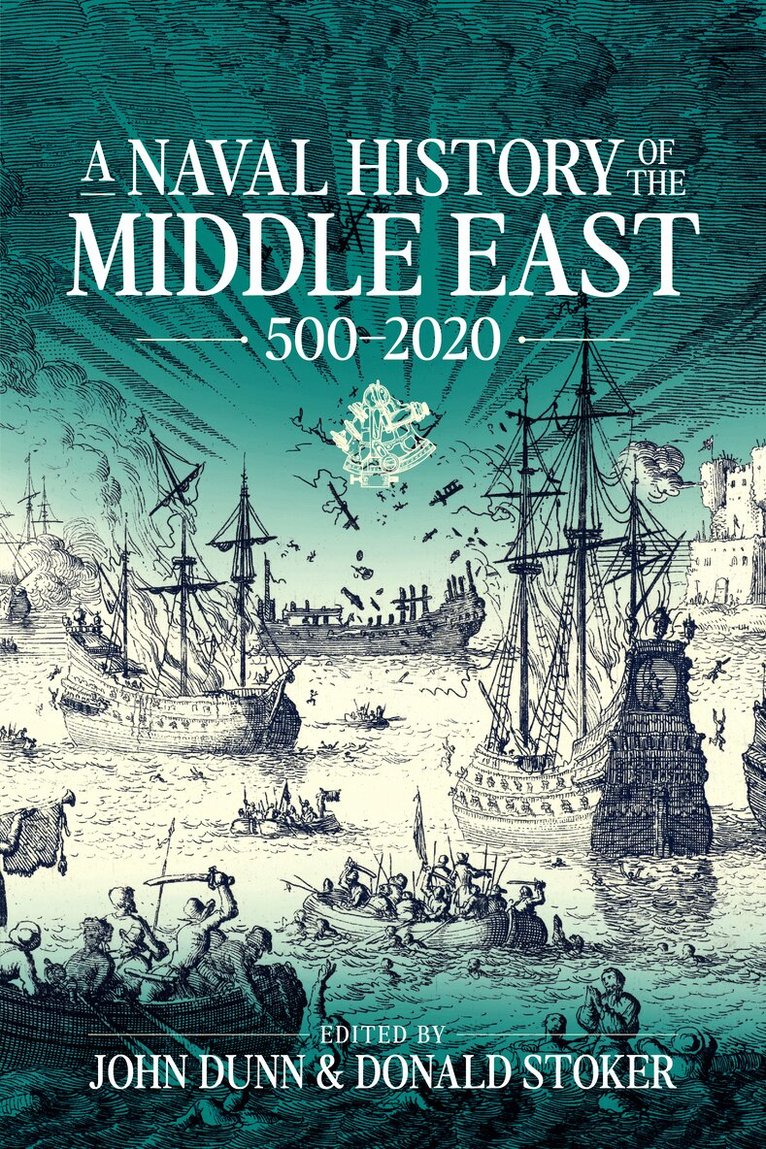
A Naval History of the Middle East, 500-2020 examines how sea power impacted on a wide range of nations. But just what is the Middle East? The editors definition is broad, ranging from Morocco to Iran, and the Black Sea to the Indian Ocean. Our start point connects readers to the last war between the Byzantine Empire and Sassanid Iran, results of which benefit the rapid expansion of Islam.Naval force originally came from warships propelled via oars and sails. These protected sailing ships used to transport soldiers or supplies. Combat mainly involved missile fire and boarding actions. As human rowers pulled the oars, strategy focused on securing food and water. Ships did not carry much of either, and needed frequent resupply.Ports were prizes of great value, their control allowing admirals to advance, or halt an opponent whose crews seldom had more than a few days of water. Galley warfare had been this way since ancient times, but changed as new technologies like Greek Fire added new military options, or larger sailing ships extended storage capabilities, thus expanding an admirals reach.Although early Muslim fleets did not have the naval traditions of the Byzantines, their leaders recognized the value of sea power. One might remember that admiral comes from Arabic. Muslims fought each other, along with their traditional Byzantine opponents and European volunteers serving during the Crusades.Fighting ranged from fleet actions to amphibious operations, and piracy. Both Muslim and Christian pirates operated across the Mediterranean and Red Seas, plus the Persian Gulf and Indian Ocean. Pirates continue to operate in the 21st Century.Major change comes from Ottoman naval expansion in the 1500s. This was also a period of technological innovations with gunpowder weapons and larger sailing vessels supplanting boarding actions and galleys. Steam power, ironclads, torpedoes, aircraft, and missiles speed up these trends during the 19th and 20th Centuries.We tell this story with a historical overview, supported by specific case studies. Our goal is to show Middle Eastern powers successfully employed navies to enforce national goals, and that powerful traditions support a continuation of naval forces in the 21st Century.